Why Long-Term Storage Causes More Damage Than Most Owners Expect
A parked car might look harmless, but inactivity is genuinely hard on a vehicle. Fuel degrades, rubber seals dry out, batteries discharge, and moisture works its way into brakes and bodywork. For storage periods beyond four to six weeks, passive neglect can result in repair bills that dwarf the cost of proper preparation.
The good news is that most storage damage is entirely preventable. Whether you're putting a seasonal vehicle away for winter, leaving a second car unused during an extended trip, or transitioning between drivers, the same set of practices applies. See our year-round maintenance calendar for how seasonal storage fits into a broader upkeep schedule.
30 days
Time before untreated petrol begins to degrade
Fuel industry guidance generally indicates that standard pump petrol can begin forming varnish deposits within 30 days of storage without a stabiliser additive.
4–6 weeks
Minimum storage duration warranting formal preparation
Many automotive specialists suggest that vehicles left unused beyond four to six weeks benefit significantly from the full pre-storage preparation process.
Essential Steps Before You Park It
Preparation done before the car is left standing makes the difference between a vehicle that starts cleanly months later and one that needs remedial work. Work through these steps in the days immediately before storage:
Fill the fuel tank completely and add a fuel stabiliser.
A full tank leaves less air space for moisture condensation, which can contaminate fuel and cause internal corrosion. Untreated petrol begins to degrade within 30 days, forming varnish deposits that clog fuel injectors and carburettors. Stabiliser extends usable life to 12 months or more.
Change the engine oil before storage, not just after.
Used oil contains combustion by-products and acids that, left in contact with engine components over months, cause gradual corrosion and wear. Fresh oil provides a neutral, protective film throughout the storage period.
Clean the car inside and out before covering it.
Organic debris, bird droppings, road salt, and food residue all accelerate corrosion and attract pests. A thorough wash and interior clean removes these hazards before they can cause damage over weeks or months.
Plug the exhaust pipe and air intake to deter rodents.
Rodents seek warm, enclosed spaces and can cause significant damage by nesting in engine bays, chewing wiring insulation, and blocking exhaust pipes. Physical plugs — such as a steel wool-stuffed rag or a purpose-made bung — are a low-cost deterrent.
Release the handbrake and use wheel chocks instead during storage.
Leaving the handbrake engaged for extended periods can cause brake pads to bond to the disc or drum surfaces, particularly in damp conditions. Wheel chocks placed against the tyres hold the car securely without this risk.
Protecting the Battery, Tyres, and Bodywork
Three areas account for the majority of storage-related damage: the electrical system, the tyres, and the exterior. Each needs targeted attention.
Battery: Even with the ignition off, modern vehicles draw a small continuous current to power electronics and security systems. Over weeks this drains the battery below a recoverable threshold. A battery maintainer — sometimes called a trickle charger or tender — connects to a wall socket and keeps charge at a safe level without overcharging. If mains access isn't available, disconnecting the negative terminal slows discharge significantly. For more detail on how batteries behave over time, see our guide on battery health and why cars fail to start.
Tyres: Stationary weight flattens the contact patch of a tyre over time, creating flat spots that cause vibration on initial drives. Inflating to the upper end of the manufacturer's recommended range before storage reduces this effect. Moving the car a few feet every couple of weeks, if practical, helps significantly.
Bodywork: Clean the car thoroughly before covering it — trapped dirt and moisture accelerate paint and metal corrosion. Use a breathable fitted cover rather than a plastic tarpaulin, which traps humidity. Apply a wax or paint sealant beforehand for an added protective layer.
Choose Indoor Storage Where Possible
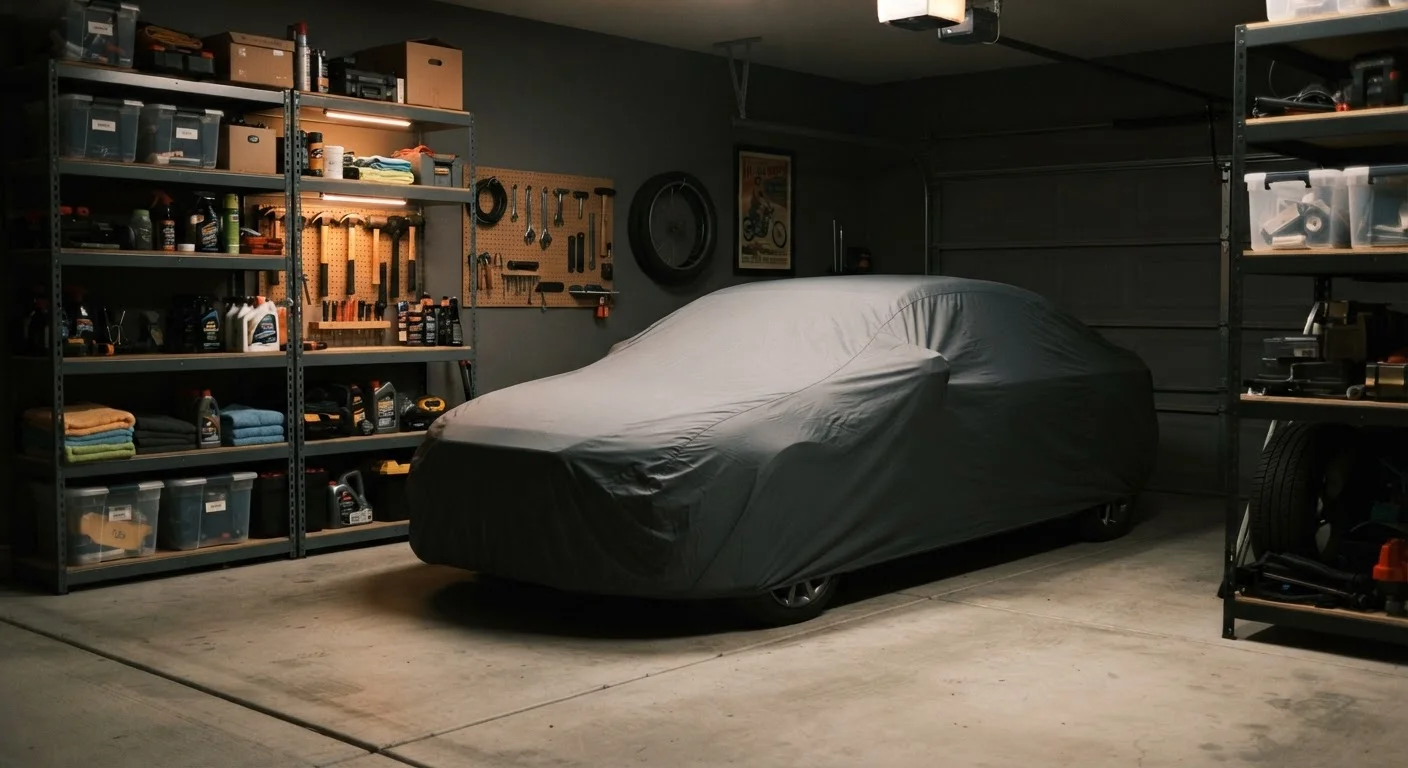
A garage or covered structure dramatically reduces exposure to UV light, temperature swings, rain, and frost — all of which accelerate wear on seals, paint, and tyres. If indoor storage isn't available, a breathable, fitted outdoor car cover provides meaningful protection. Avoid storing a car on bare soil, which retains moisture and promotes underbody rust.
Getting the Car Back on the Road Safely
Before driving a stored vehicle, treat it like a pre-journey inspection rather than a routine startup. Check tyre pressures and look for any visible sidewall cracking. Inspect brake discs visually for surface rust — some light surface oxidation is normal and clears after a few gentle stops, but heavy pitting warrants professional attention. Check all fluid levels, including coolant, brake fluid, and engine oil.
Start the engine and let it idle for several minutes before moving. Listen for anything unusual. If the car has sat for more than three months, have the brakes assessed by a qualified mechanic before returning to normal road use. Our pre-long-journey car check covers the key inspection points in detail. For new or less-experienced owners, the vehicle maintenance guide for new drivers offers useful grounding in general upkeep habits that apply equally after storage.