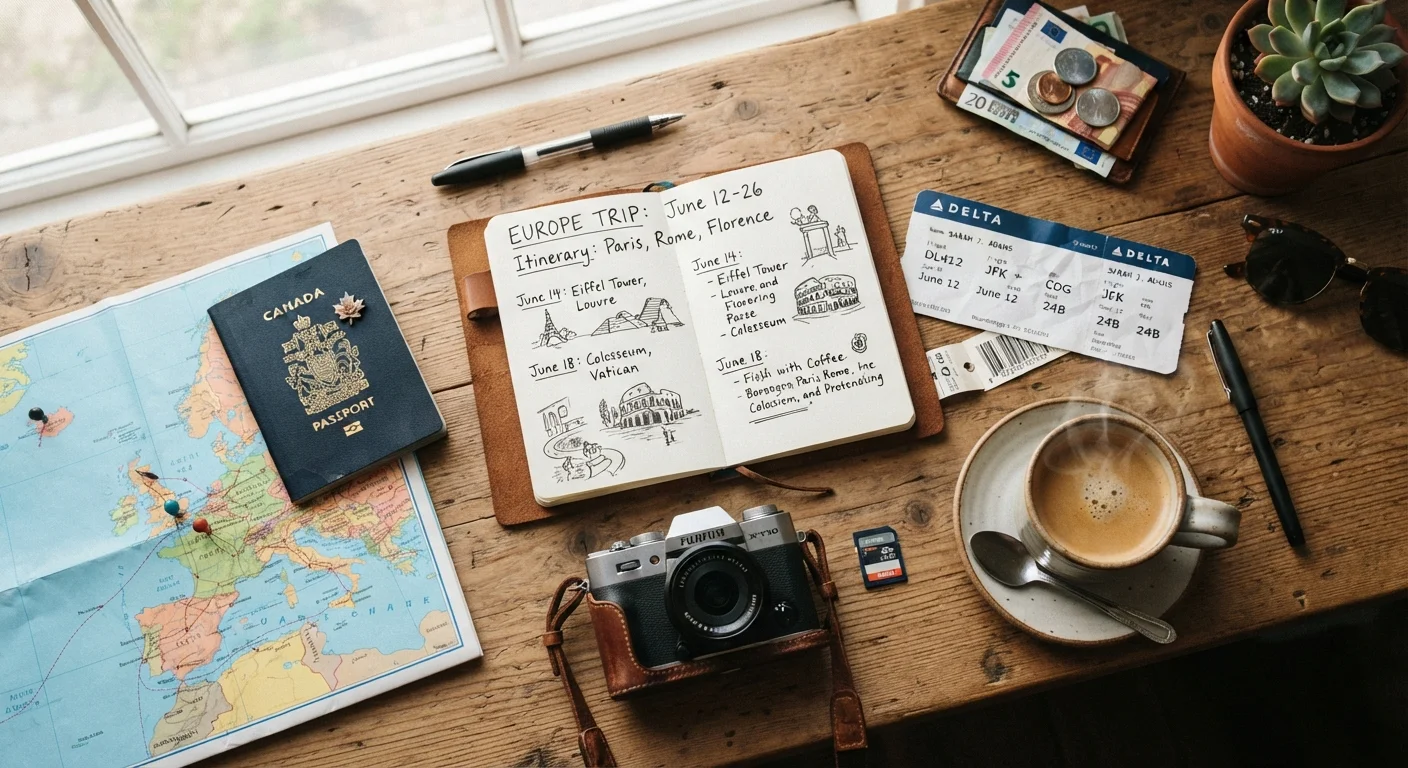
Start With Purpose: Defining Your Trip
Every well-executed trip begins not with a flight search, but with a clear intention. Before comparing destinations, ask yourself what you actually want from this travel experience — rest and recovery, cultural immersion, adventure, family connection, or a mix of several. Your honest answer shapes every decision that follows, from how long to travel to how much flexibility you need in your schedule.
Consider your travel style and physical expectations. A two-week itinerary packed with day hikes suits a different traveler than one built around slow mornings in coastal towns. The planning priorities for short trips versus extended travel differ significantly — aligning your trip length with your goals prevents over-planning or under-preparing.
Also think about who is traveling with you. A solo trip affords maximum flexibility; group travel requires negotiation and shared decision-making from the start. Locking in purpose before booking keeps every co-traveler aligned.
Write your trip's core intention in a single sentence before opening any booking platform. Returning to that sentence when decisions get complicated keeps your planning grounded.
Experienced planners know that destination fatigue — getting overwhelmed by options — is most common when the underlying goal isn't clearly defined.
Build your budget in a simple spreadsheet with projected and actual columns from day one, even before you've booked anything. Updating it as you confirm bookings reveals gaps early.
A living budget document reduces the chance of arriving at your departure date with unaccounted expenses — one of the most common sources of travel stress.
Research, Budgeting, and Booking
Once your destination and travel style are clear, structured research begins. Look beyond tourism highlights to understand seasonal conditions, entry requirements, local customs, and practical logistics like transportation between cities. Government travel advisory pages and destination-specific tourism boards are reliable starting points — always verify visa and entry requirements directly with official sources, as rules change frequently.
10–15%
Recommended contingency budget buffer
Travel industry planners broadly recommend reserving this margin above projected costs to absorb unexpected expenses without disrupting the trip.
6 months
Minimum passport validity many countries require
Travelers should verify entry requirements with official government sources, as validity rules differ by destination and nationality.
Budgeting before booking is critical. Map out your projected costs across five categories: transportation, accommodation, food, activities, and a contingency reserve of at least 10–15% for the unexpected. This framework applies whether you're planning a weekend road trip or a multi-country journey. Locking in a number early prevents scope creep as you add experiences.
When booking, sequence matters. Secure flights or major transit first, then accommodation, then tours or ticketed experiences. Popular destinations and peak seasons fill quickly — booking accommodation early gives you more options and typically more flexibility with cancellation policies.
Verify Entry Requirements Directly
Visa rules, vaccination requirements, and entry conditions change without widely publicized notice. Never rely solely on third-party travel blogs or booking platforms for this information. Check the official government or embassy website of your destination country and cross-reference with your own government's travel advisory page before finalizing any booking.
Pre-Departure Essentials
The weeks before departure are where many travelers lose time and confidence. A structured pre-departure checklist prevents last-minute scrambles. The full pre-departure checklist covers documents, finances, home security, and communication plans in detail — use it as your baseline.
Document management is foundational. Confirm passport validity (many destinations require six months beyond your travel dates), apply for visas with ample lead time, and store digital copies of all key documents in a secure cloud folder. Carry physical copies separately from originals.
Health preparation deserves its own timeline. Consult a travel medicine professional or your primary care provider well in advance — some vaccine courses require multiple doses weeks apart. Review your existing health insurance coverage for international travel and consider whether supplemental travel health coverage is appropriate for your situation. For more detail on safety across all stages, see the complete travel safety resource.
Packing With Intention
Packing is a skill, not a last-minute task. The goal is bringing exactly what you need — no more — organized so you can find it quickly. Start by listing all planned activities and the clothing each requires, then look for overlap. Most travelers overpack by defaulting to "just in case" logic rather than evidence-based probability.
Build your packing list from categories: clothing, toiletries, electronics and chargers, travel documents, health supplies, and any destination-specific gear. Check weather forecasts close to departure and adjust accordingly. For carry-on-only travel, a 7–10 day trip is entirely manageable with a thoughtful capsule wardrobe in neutral colors.
The One-Week Rule for Packing
Lay out everything you plan to pack, then remove one-third of it. Most travelers find they use far fewer clothing items than anticipated — especially on trips of seven days or more where laundry facilities are accessible. Overpacking adds weight, increases bag-check fees, and reduces flexibility when moving between accommodations.
Accessibility and medication needs require additional planning. Travelers managing chronic conditions or mobility requirements should research destination-specific resources in advance. Pack all medications in original labeled containers and carry a written list from a healthcare provider. For guidance on travel essentials across all trip types, the hub is a useful ongoing reference.
On the Ground: Staying Organized and Safe
Once you arrive, the quality of your pre-trip planning becomes apparent. Travelers who've prepared itineraries — even loose ones — spend less time making decisions under pressure and more time engaged with the experience. Keep your documents, transport passes, and accommodation details accessible but secure, ideally in a cross-body bag or money belt in high-traffic areas.
Stay connected responsibly. Know your accommodation's address in the local language, have offline maps downloaded, and keep an emergency contact list accessible without cell service. Familiarize yourself with local emergency numbers — they vary by country.
Offline Access Is Non-Negotiable
Cell service and Wi-Fi availability vary significantly by destination, neighborhood, and carrier. Download offline maps (such as those available through widely used mapping apps), save your accommodation address in multiple formats, and keep key phone numbers written on paper. Assuming constant connectivity is one of the most common and disruptive planning oversights.
Remain aware of your surroundings without becoming anxious. Most destinations are safer than pre-departure media coverage suggests, but situational awareness — knowing where you are, avoiding poorly lit areas at night, and trusting your instincts — is a universal travel habit. The travel safety hub offers broader guidance for staying prepared in any destination.
Post-Trip Reflection and Next Steps
Returning home is not the end of the trip — it's the final stage of the planning cycle. Taking time to reflect while details are fresh transforms one trip into a foundation for the next. Within a few days of returning, jot down what worked well, what you'd change, and any logistics that caused friction.
Review your actual spending against your budget. Were any categories consistently over or under? This data is more useful than any generic travel budget guideline you'll find online — it's calibrated to your real travel style. File it with your trip notes for reference when planning your next journey.
Organize your photos, back up any important files, and settle any outstanding expenses. If you kept a travel journal, add a final entry. Over time, these records become a personal travel knowledge base — one that makes every subsequent trip faster and more confident to plan.
“The real voyage of discovery consists not in seeking new landscapes, but in having new eyes.”
— Marcel Proust, French novelist and essayist