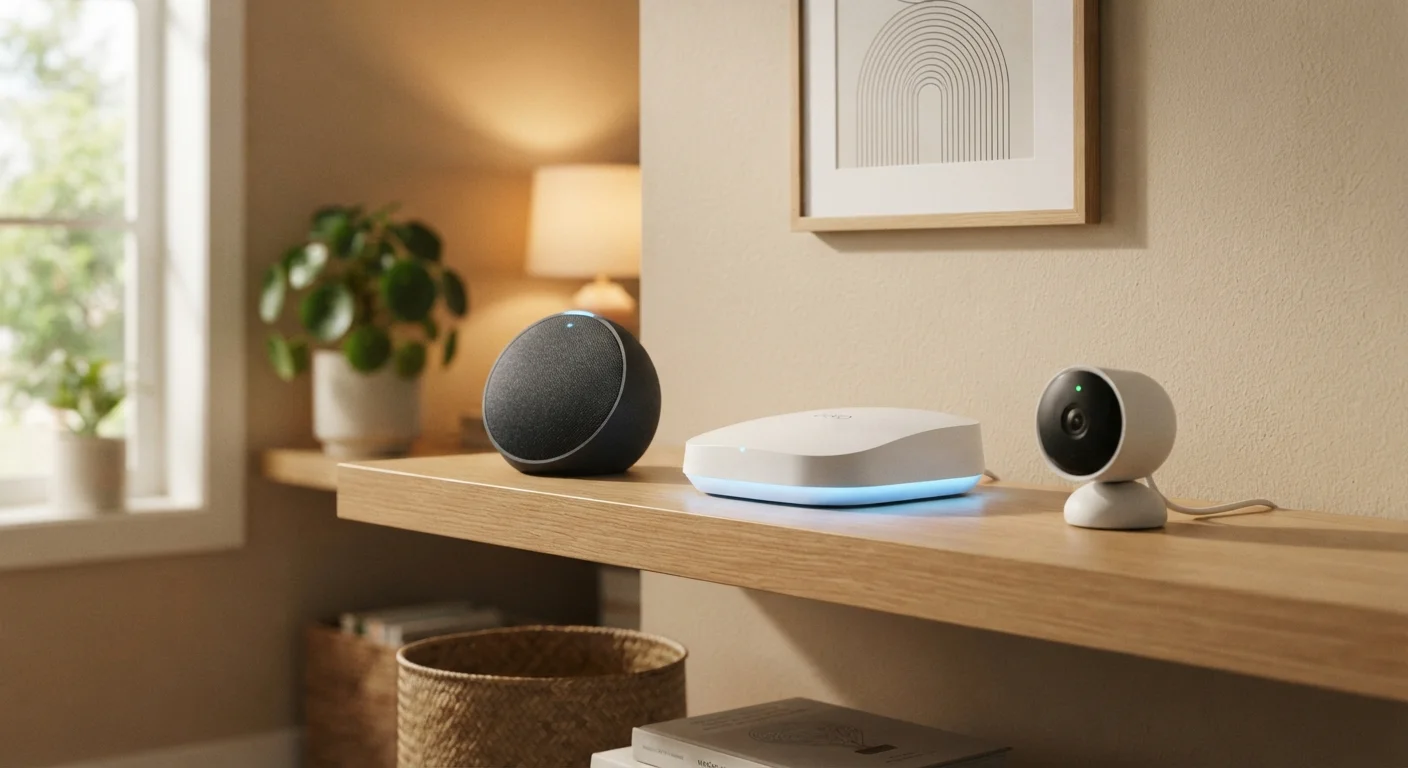
Why Smart Home Security Deserves Serious Attention
A smart home is really a small private network — one that may include your door locks, security cameras, baby monitors, and financial account-linked speakers. If you're thinking about adding more devices, our practical look at smart home devices covers the questions worth asking first.
The challenge is that each connected device is a potential entry point. Unlike a laptop with antivirus software and regular updates, many smart home gadgets run stripped-down software that manufacturers update infrequently — and that owners rarely think to check.
57%
IoT devices vulnerable to medium- or high-severity attacks
According to a Palo Alto Networks Unit 42 report, more than half of connected devices are vulnerable due to unpatched firmware or weak credentials.
15+
Average connected devices per US household
Deloitte's research on US digital media trends has found that the average American home now has more than 15 internet-connected devices.
The good news: most breaches exploit simple, preventable weaknesses. You don't need technical expertise to meaningfully improve your home network's security — you need the right habits applied consistently.
Foundational Practices Every Household Should Apply
These steps address the most common vulnerabilities in connected home setups. Start here before worrying about more advanced configurations.
If you want to understand how network segmentation works in more depth — and how mesh Wi-Fi fits into a secure smart home — see our guide on running a smart home on a mesh Wi-Fi network.
Quick Steps You Can Take Right Now
Not every improvement requires a deep-dive into settings menus. Several of the most impactful changes take under five minutes.
Password Managers Make This Easier
If managing unique passwords for a dozen device accounts sounds daunting, a password manager does the heavy lifting for you. It generates, stores, and autofills strong passwords so you never need to remember them individually. Most offer free tiers that cover everyday household needs.
For a broader look at protecting the accounts connected to these devices, keeping your digital accounts secure walks through the same principles applied to email, banking, and social media. And if two-factor authentication is unfamiliar territory, two-factor authentication without the confusion explains it in plain language.
One More Layer: Understanding What's on Your Network
UPnP: A Hidden Risk Worth Knowing
UPnP (Universal Plug and Play) is a feature that lets devices on your network automatically open connections to the internet. It's convenient for gaming consoles and some smart devices, but it can also be exploited by malware to open ports without your knowledge. Unless you have a specific need for it, many security professionals recommend disabling UPnP in your router settings.
Security isn't a one-time setup — it's an ongoing posture. Smart home ecosystems evolve, devices get discontinued, and new vulnerabilities emerge. Staying informed about how your chosen platform handles privacy and updates is part of the picture. Our overview of smart home ecosystems is a useful reference if you're evaluating your current setup.
If you notice unusual device behavior — unexpected reboots, sluggish responses, or unfamiliar activity — don't dismiss it. Our article on signs your device may have been compromised outlines what to look for and the sensible first steps to take.
“Security is always excessive until it's not enough.”
— Robbie Sinclair, Head of Security, Country Energy (widely cited in cybersecurity contexts)
The most secure smart home is one where security is treated as a habit rather than a single event. Small, consistent actions — updating firmware, reviewing connected devices, isolating your IoT network — compound over time into meaningful protection.