The Lock No One Else Has a Key For
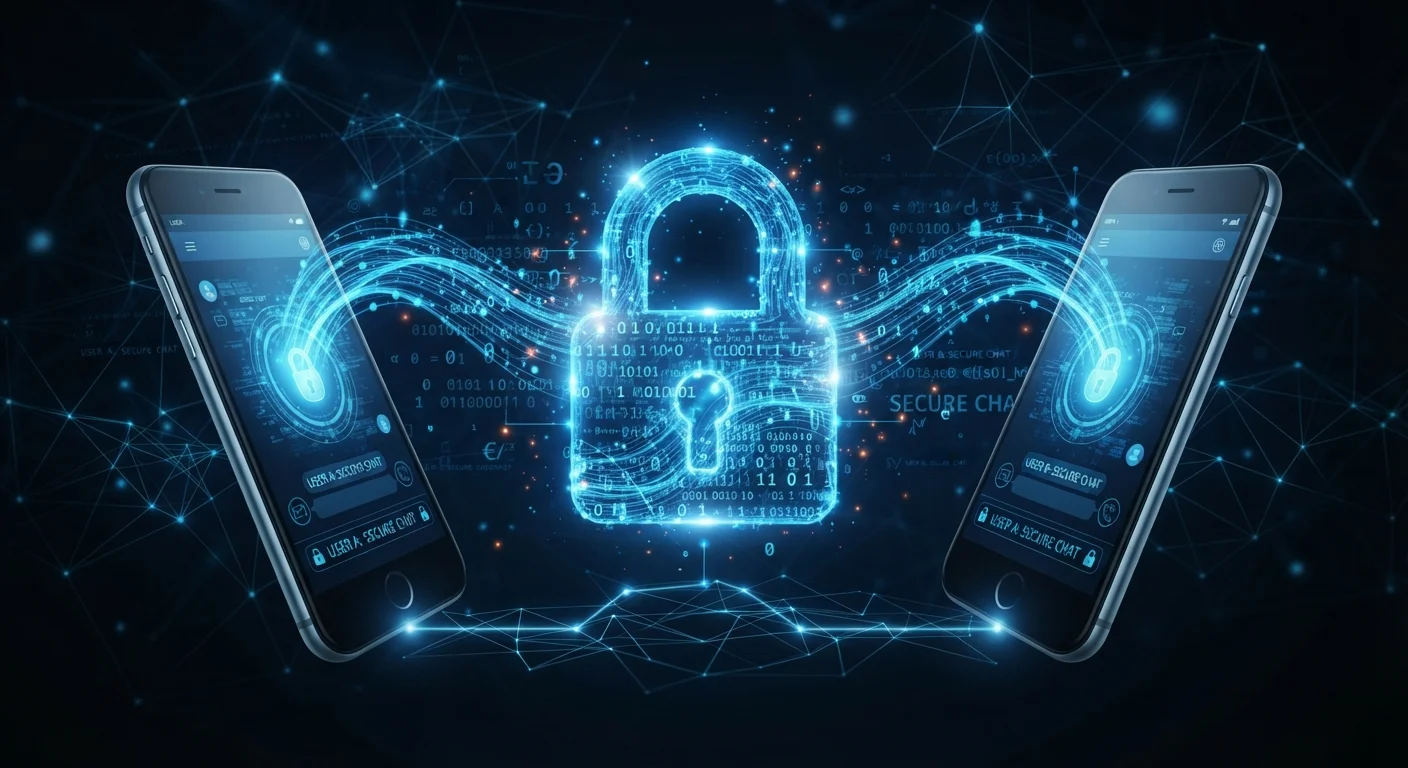
Imagine sealing a letter inside a tamper-proof box that only your friend can open. Even the postal service handling the box can't peek inside. That's essentially what end-to-end encryption does for your digital messages, calls, and files.
When you send a message using an E2EE-enabled app, your device mathematically scrambles the content before it leaves. The scrambled data travels through servers — potentially passing through your internet provider, the app's infrastructure, and various network points — but it arrives as meaningless noise to anyone who intercepts it. Only the recipient's device holds the key to unscramble it.
This matters because digital communications, by default, are not always private. Without encryption, messages can be read by the platforms delivering them, exposed in a server breach, or intercepted on an unsecured network. E2EE eliminates those vulnerabilities at the content level.
“Arguing that you don't care about the right to privacy because you have nothing to hide is no different than saying you don't care about free speech because you have nothing to say.”
— Edward Snowden, Former intelligence contractor and privacy advocate
Why "Nothing to Hide" Is the Wrong Frame
A common reaction to encryption discussions goes something like: "I'm not doing anything wrong, so why do I need this?" But privacy isn't about secrecy from guilt — it's about autonomy over your own information.
Consider what flows through your messages daily: health questions asked to a friend, financial concerns shared with a spouse, a disagreement at work, a child's school schedule. None of it is illegal. All of it is personal. You close the bathroom door not because you're hiding a crime, but because certain things simply aren't meant for public view.
Data that exists unprotected is also data that can be breached, subpoenaed, sold, or misused. Breaches at major platforms have exposed millions of private messages over the years. E2EE means that even if a company's servers are compromised, the content of your conversations remains unreadable. See how layered habits — like keeping your digital accounts secure — work together with encryption to build real protection.
Check Your App's Encryption Settings
Not every messaging feature within an app uses E2EE automatically. Some platforms enable end-to-end encryption only in specific modes — such as "secret" or "private" conversations. It's worth checking the privacy settings of your most-used communication apps to confirm what's actually protected.
Where You Already Encounter E2EE
End-to-end encryption isn't reserved for tech insiders. It's quietly embedded in tools many people use every day.
- Messaging apps: Several popular messaging platforms have adopted E2EE by default, meaning your chats are protected without any setup required on your part.
- Video and voice calls: Many video-calling services encrypt calls end-to-end, particularly in private one-on-one sessions.
- Email: Standard email is not end-to-end encrypted by default, but specialized services and add-ons exist that provide this protection for those who need it.
- Cloud storage: Some storage services offer end-to-end encrypted vaults for files, meaning even the provider cannot access your documents. This is distinct from standard cloud storage — understanding how cloud storage actually works helps clarify the difference.
4.5B+
People using E2EE messaging apps globally
Widely cited industry estimates suggest over 4.5 billion users worldwide rely on apps with end-to-end encrypted messaging features.
83%
Of data breaches involve stored personal data
Verizon's Data Breach Investigations Report consistently finds that personal and credential data are the primary targets in breach incidents.
~$4.9M
Average cost of a data breach
IBM's Cost of a Data Breach Report has placed the global average cost of a breach in this range in recent reporting cycles, underscoring the stakes of unprotected data.
What E2EE Doesn't Protect — And What Else to Consider
E2EE is a powerful tool, but understanding its limits keeps your expectations realistic. It protects content, not metadata. Metadata includes things like who you communicated with, how often, and at what time — information that can still be stored and, in some cases, accessed by service providers or authorities.
It also doesn't protect you if your device itself is compromised. A message is unencrypted on your screen — if someone has access to your unlocked phone or your device has malware, E2EE provides no defense at that point.
When traveling, these risks increase. Using public Wi-Fi without precautions can expose other aspects of your digital life even if your messages are encrypted. Our guide on digital security while traveling covers the broader picture of protecting your data on the road.
Smart home devices add another dimension: they collect data in ways that encryption doesn't address. What your smart devices actually record is a separate privacy conversation worth having alongside your approach to encrypted messaging.
E2EE and Legal Access
End-to-end encryption does not make communications immune from all legal processes. In some jurisdictions, authorities may compel a user — not the platform — to provide decrypted content. The platform itself, however, genuinely cannot provide what it cannot access. This distinction is important when evaluating what E2EE actually promises.