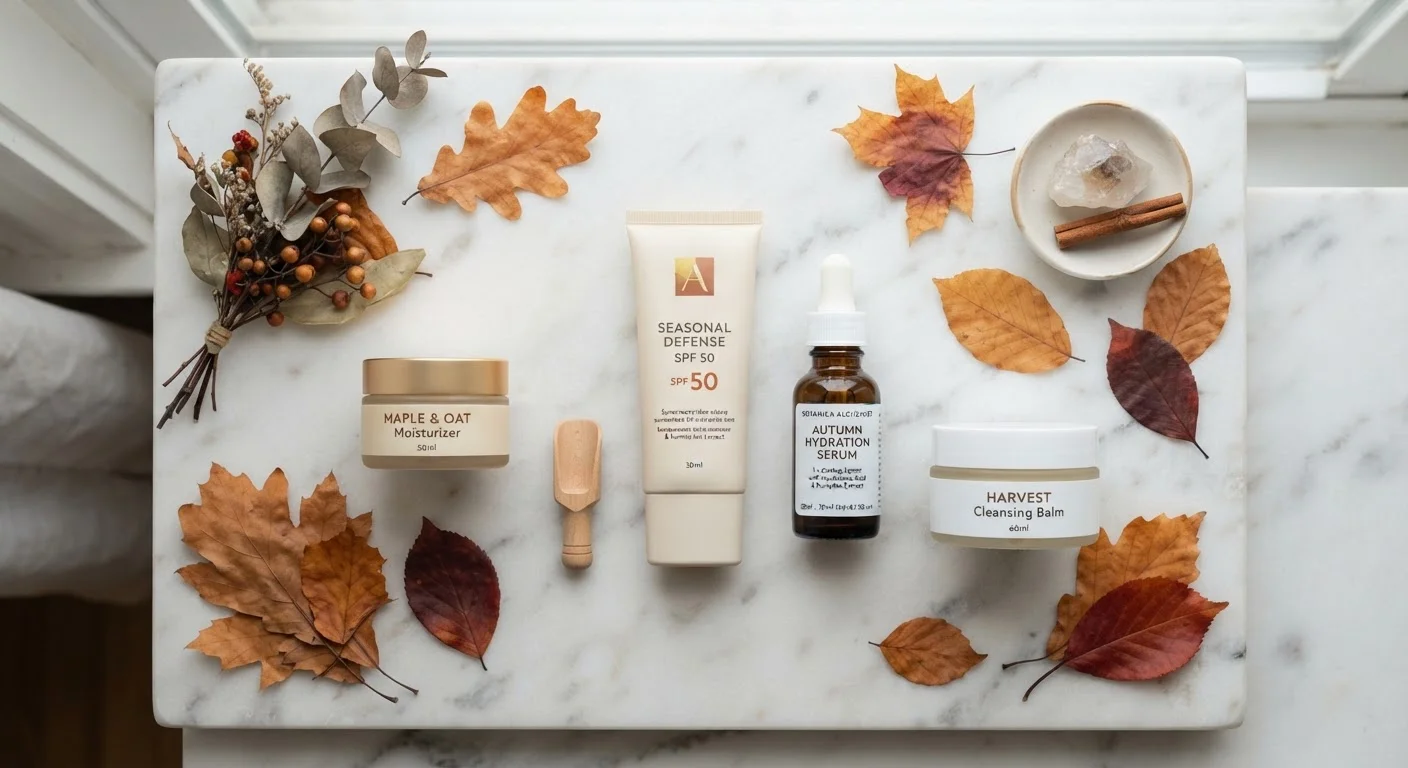
Why Your Skin Behaves Differently Each Season
Your skin is a dynamic organ that responds continuously to its environment. When humidity drops in autumn and winter, the skin's natural moisture barrier faces greater evaporative stress, often leading to tightness, flakiness, or increased sensitivity. Conversely, summer heat and humidity can stimulate sebum production, making previously balanced skin feel oilier or more prone to congestion.
UV intensity also shifts across the year, peaking in summer and at higher altitudes but remaining meaningful even on overcast winter days. Temperature swings between outdoor cold and heated indoor air add another variable that many people underestimate. Understanding your skin type provides a useful baseline, but that baseline shifts with the climate — and your routine should shift with it.
A seasonal audit is simply a structured pause to check whether your current products still match your skin's current needs. Think of it similarly to how drivers review seasonal maintenance checks to keep systems running safely — the principle of proactive reassessment applies equally to your skin.
How to Use This Checklist
This audit is designed to be completed four times a year — ideally at the transition point between seasons, before noticeable skin changes become problems. Set aside 20–40 minutes in a well-lit space with all your current skincare products accessible.
Work through each group in order: begin with your product inventory, then move through cleansing, hydration, sun protection, and actives. Use the tool cards below to support your review.
Skin journal or notes app
Track how your skin looks and feels week to week so you can spot seasonal patterns over time.
Period-after-opening guide
Reference the PAO symbol (an open jar icon with a number) on product packaging to determine safe use duration after opening.
UV index app or weather tool
Check your local UV index daily to calibrate sunscreen application and reapplication frequency.
Hygrometer or smart home display
Monitor indoor humidity levels, particularly in winter, to understand when a humidifier might support skin hydration.
For each item, ask yourself two questions: Is my skin currently experiencing the issue this step addresses? And is the product I am using appropriate for the season ahead? Your AM and PM routines may need different adjustments — a richer night cream is often the first seasonal swap worth making.
If you wear makeup daily, a seasonal audit is also a good time to review your base products. Heavier foundations that blended seamlessly in dry winter air may separate or oxidize faster in summer humidity. See our quick makeup check-in guide for finish-specific tips.
Skin Changes May Signal More Than Seasons
Sudden or significant shifts in skin behavior — persistent redness, unexplained breakouts, or rapidly worsening dryness — may not be purely climate-related. These changes can reflect hormonal shifts, nutritional factors, or underlying conditions. Always consult a licensed dermatologist if skin changes are severe, sudden, or not responding to routine adjustments.
Seasonal Skincare Audit Checklist
Work through these grouped items at each seasonal transition. Mark each item as current, needs adjustment, or not applicable for your skin type and climate.
Product Inventory Review
Cleanser and Exfoliation Check
Moisturizer and Barrier Support
Sun Protection Reassessment
Active Ingredients Audit
Don't Over-Adjust All at Once
Changing multiple products simultaneously makes it difficult to identify what is helping or causing a reaction. Introduce seasonal changes one product at a time, waiting at least one to two weeks between swaps. If your skin reacts adversely to any change, discontinue and consult a dermatologist.
SPF Is Non-Negotiable Year-Round
UV-A rays, which contribute to photoaging, penetrate clouds and glass and remain present even in winter. Skipping sunscreen during cooler months is one of the most common and costly skincare mistakes. Reapply every two hours if you are spending extended time outdoors.
This article is for general informational and educational purposes only and does not constitute medical or dermatological advice. Consult a licensed dermatologist for concerns about your skin health or before making significant changes to a prescription skincare regimen.