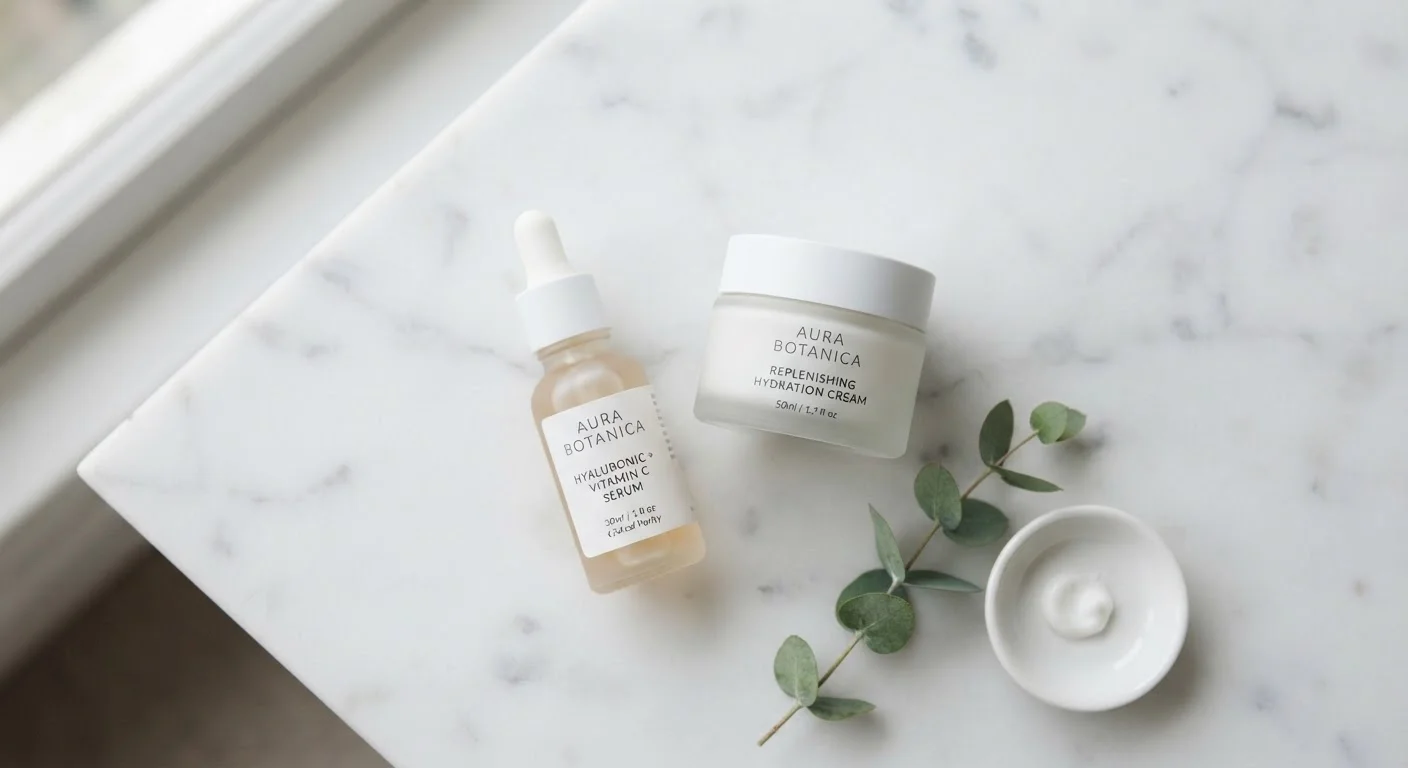
What a Serum Actually Is — and Does
A serum is a lightweight, fast-absorbing formula designed to deliver a high concentration of active ingredients directly to the skin. Because serums have smaller molecules and a thinner consistency than moisturisers, they penetrate more deeply into the skin's upper layers, making them effective vehicles for ingredients with specific corrective or preventive goals.
Common serum actives include vitamin C (for brightening and antioxidant protection), niacinamide (for pore appearance and barrier support), hyaluronic acid (for deep hydration), and retinol (for cell turnover). For a closer look at one powerful serum ingredient, see our guide to retinoids.
What serums generally don't do well: seal in moisture or form a protective film on the skin's surface. That's not a flaw — it's simply not their job.
| Criterion | Serum | Moisturiser |
|---|---|---|
| Primary function | Targeted treatment of specific concerns | Hydration and barrier protection |
| Texture | Lightweight, watery or gel-like | Thicker cream, lotion, or balm |
| Molecule size | Smaller — penetrates deeper layers | Larger — works on skin's surface |
| Active ingredient concentration | High — formulated to deliver actives | Lower — prioritises skin comfort |
| Addresses TEWL (water loss) | Minimally | Yes — core function |
| Application order | Applied first, after cleansing | Applied after serum |
| Essential for most skin types | Optional but beneficial | Yes — generally recommended daily |
What a Moisturiser Actually Is — and Does
A moisturiser's primary role is to hydrate the skin's outer layers and, critically, to prevent that hydration from escaping — a process called transepidermal water loss (TEWL). Most moisturisers achieve this through a combination of three ingredient types: humectants (such as glycerin or hyaluronic acid) that draw water to the skin, emollients (such as fatty acids or squalane) that soften and smooth, and occlusives (such as shea butter or petrolatum) that form a seal on the skin's surface.
This barrier-reinforcing function is what makes moisturiser a foundational step for almost every skin type. Even naturally oily skin benefits from appropriate hydration — dehydration can actually trigger excess oil production. Understanding your skin's baseline needs is essential; our article on identifying your skin type can help you choose the right moisturiser texture for your complexion.
30–40%
Skin water loss prevented by occlusive ingredients
Research published in dermatology literature consistently shows that occlusive agents in moisturisers meaningfully reduce transepidermal water loss in dry and compromised skin.
~15–30 min
Average serum absorption time before moisturiser
Dermatologists generally advise waiting at least 30 seconds to a few minutes after serum application to allow actives to settle before applying the next layer.
How They Differ: A Side-by-Side View
At first glance, both products seem to deal with hydration — and there's overlap in some ingredients. But their purpose, texture, and mechanism are distinct. Serums prioritise potency and penetration; moisturisers prioritise protection and comfort. Knowing this distinction helps you choose products with intention rather than doubling up without benefit.
For readers curious about the specific hydrating ingredients that appear in both serums and moisturisers, our comparison of hyaluronic acid vs. glycerin breaks down how these popular humectants differ.
When a Product Claims to Do Both
Some products are marketed as 'serum-moisturiser hybrids.' While these can be convenient for minimal routines, they typically make trade-offs — either the active concentration is lower than a dedicated serum, or the barrier-sealing effect is lighter than a true moisturiser. They're a reasonable option for simple routines but may not deliver the same results as using both products separately.
Do You Need Both — or Just One?
For most people, using both a serum and a moisturiser produces noticeably better results than relying on either alone. The serum targets specific concerns; the moisturiser seals everything in and maintains baseline skin health. They're designed to work in sequence, not to replace each other.
That said, individual needs vary. Someone with very oily skin in a humid climate may find a hydrating serum alone sufficient in the warmer months. Someone with dry or compromised skin may prioritise a richer moisturiser above all else. Context — skin type, climate, and specific concerns — shapes the answer.
If budget or simplicity is a constraint, prioritise the moisturiser as your non-negotiable step and add a serum only when targeting a specific issue. Our morning vs. evening routine guide can help you decide where each product fits into your day.
How to Layer Them Correctly
Order matters. As a general rule, apply skincare from thinnest to thickest consistency. That means serum goes on before moisturiser — always. Apply your serum to clean skin, allow it to absorb for about 30 to 60 seconds, then follow with your moisturiser to lock everything in.
Applying moisturiser first would create a film that hinders the serum's ability to penetrate — effectively wasting its concentrated actives. For a comprehensive breakdown of the full routine sequence, our guide to layering skincare products in the right order covers every step from cleanser to SPF.
This article is for general informational purposes only and does not constitute personalised skincare or medical advice. If you have a diagnosed skin condition or are managing a specific health concern, consult a qualified dermatologist before adjusting your routine.