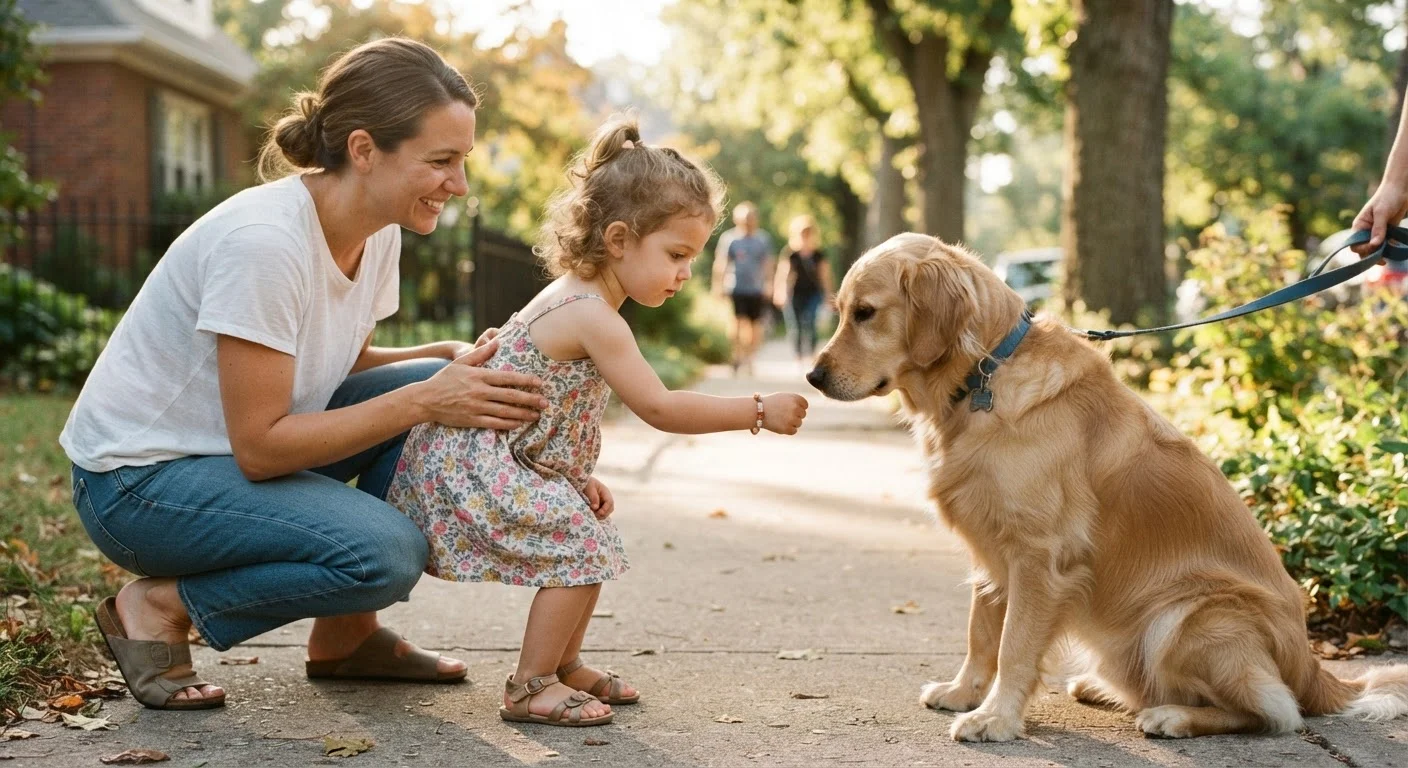
Why This Skill Matters More Than Most Parents Realize
Children are naturally drawn to animals — the impulse to reach out and touch a dog on the street or approach a neighbor's cat feels instinctive. But most dog bites reported to emergency rooms each year involve children, and the majority happen during interactions with dogs the child knows, let alone strangers. Teaching your child a clear, repeatable protocol for meeting unfamiliar animals isn't about creating fear — it's about channeling enthusiasm into habits that protect them.
This is a skill set, not a one-time conversation. Just as children learn to look both ways before crossing the street, they can learn a predictable approach to any new animal. Building these habits early means they become automatic — which matters most in the moment a child spots an appealing dog and excitement overtakes caution.
Core Practices for Safe Animal Interactions
The following evidence-informed practices reflect guidance from veterinary and child safety organizations. Walk through each with your child in low-stakes settings before they encounter unfamiliar animals in the real world.
Always ask the owner before approaching any unfamiliar animal.
Even a friendly-looking dog may be anxious, in pain, or reactive in ways that aren't immediately visible. The owner knows their animal's temperament and can advise on the safest way to interact — or let you know the animal prefers not to be approached at all.
Offer a closed fist at the animal's nose level rather than reaching over the head.
Reaching over an unfamiliar animal's head can feel threatening to the animal, triggering a defensive response. A loosely closed hand offered below the animal's chin gives it the chance to sniff and decide whether contact is welcome.
Stand still and stay calm if an unfamiliar dog approaches without an owner present.
Running triggers a dog's chase instinct; flailing arms and loud noises can escalate a tense situation. A still, quiet child is far less likely to provoke a fearful or excited animal.
Never disturb an animal that is eating, sleeping, or caring for young.
Animals are most likely to react defensively when they feel their resources or offspring are threatened. Even a normally gentle pet may snap if startled while sleeping or approached near food or puppies.
Keep adult supervision in place for every interaction with an unfamiliar animal.
Young children lack the experience to recognize escalating warning signs in real time. An adult nearby can intervene early, redirect the child, or read the situation with more context.
Reading What Animals Are Telling You
Children who understand basic animal body language are far better equipped than those who only know the rules. Help your child understand that animals communicate discomfort before they act on it — and that recognizing those signals is a form of respect.
Make Body Language Practice Fun
Use illustrated books, kid-friendly videos, or even simple drawings to help children identify comfortable versus uncomfortable animal signals. Making it a game — 'what is this dog telling us?' — builds fluency without pressure. Children who can name what they observe are more likely to pause and check before rushing in.
A dog with a relaxed, wiggly body, loose ears, and a gently wagging tail is typically comfortable. Contrast that with a dog holding its body stiff, ears pinned back, tail tucked or raised rigidly, or making prolonged eye contact — these are signals to give space, not engage. Cats often show discomfort through flattened ears, a lashing tail, or a puffed-up coat. Practice identifying these signals using books, videos, or by observing your own pet at home. For families navigating fear in the other direction, helping a child who is afraid of the family pet calls on many of the same observational skills.
Start Now: Quick Wins to Practice Today
You don't need a formal curriculum to teach these habits. A few deliberate moments each week — reinforced consistently — build real competence over time. Start with the interactions that already happen in your household.
For a broader look at how children and animals thrive together under one roof, see what actually makes living with kids and pets work. And if your family is thinking ahead to a first pet, understanding what traits make animals more tolerant of young children is a helpful next step.
This article is for general educational purposes only. Always supervise young children around animals and consult a qualified professional — such as a certified animal behaviorist or your child's pediatrician — if you have specific safety concerns.