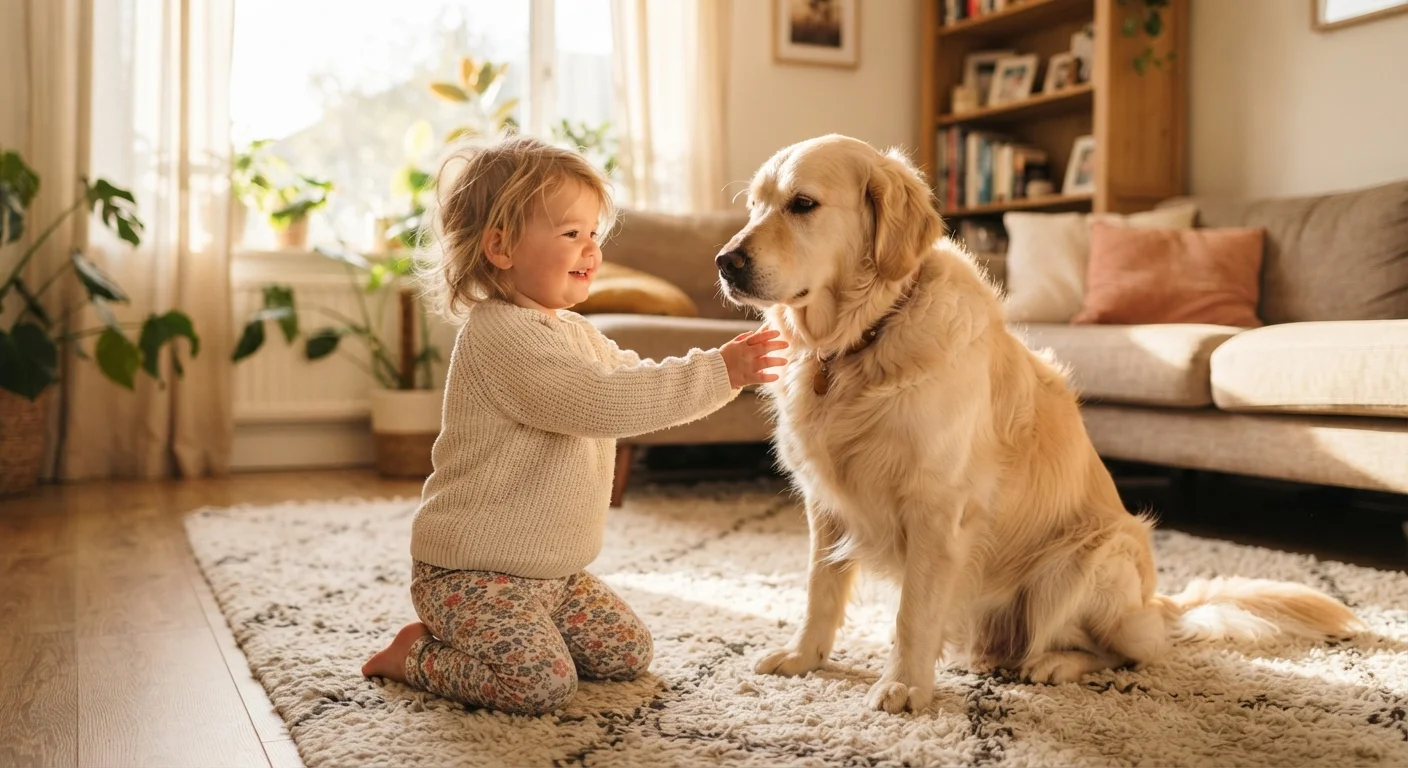
Why Toddlers Require a Different Pet-Selection Lens
Toddlers love with their whole bodies. They lunge, squeeze, shriek with delight, and have little awareness of how their enthusiasm lands on another creature. That's developmentally normal — but it does mean that choosing a family pet during these years deserves extra thought.
The question isn't just which animal your family loves most, but which animal's temperament, size, and stress tolerance are realistically compatible with a two-year-old's daily orbit. Understanding a few core traits can make that decision much clearer. See our comprehensive first-pet guide for the broader picture before you commit.
Individual Animals Vary Enormously
Breed and species provide general guidance, but individual temperament, socialization history, and past experiences shape behavior far more than any broad category. Two dogs of the same breed can respond to toddlers very differently. Always assess the specific animal — not just its label — and consult a veterinarian or certified animal behaviorist when in doubt.
The list below covers traits and general animal types — not an exhaustive ranking. Every individual animal is different, and a family's specific lifestyle, living space, and supervision capacity all matter. Always consult a veterinarian or animal behaviorist before making your choice.
Even, Predictable Temperament
The single most important trait in a toddler-friendly pet is a reliably calm, even temperament. Animals that startle easily, guard resources aggressively, or have a low frustration threshold are a poor match for the chaotic energy of a young child — no matter how loveable they are in quiet moments.
For dogs, this often means breeds or individuals that score well on standardized temperament assessments and have been socialized broadly from an early age. For cats, it typically means a confident, non-fearful personality rather than a shy or skittish one. An adult animal with a documented history in a home with children often offers more predictability than a puppy or kitten whose adult temperament is still unknown.
A calm, even temperament predicts toddler compatibility far better than breed alone.
Tolerance for Unpredictable Handling
Toddlers pat hard, accidentally pull fur, and may approach from unexpected angles. A pet that can tolerate these moments without reacting defensively is essential. This isn't about expecting the animal to endure mistreatment — it means the animal has a high enough threshold that an accidental clumsy touch doesn't trigger a fear response.
Larger, sturdier dog breeds known for patient dispositions have historically been popular with families for this reason. Some rabbit breeds are gentle and sturdy enough for supervised toddler interaction, though rabbits as a species can be more fragile and anxious than many families anticipate. Always prioritize the animal's comfort, not just its tolerance.
High handling tolerance buys crucial seconds for parents to redirect a clumsy toddler.
Low Prey Drive or Reactive Instincts
Certain animals are hardwired with strong instincts to chase, nip, or react to fast movement — and toddlers move fast and unpredictably. A pet with a pronounced prey drive or hair-trigger reactive instincts poses an elevated risk in a household with young children, even with the best intentions on everyone's part.
This is one reason some herding dog breeds, despite being affectionate family dogs, may nip at young children's heels — it's instinct, not aggression. Understanding a specific animal's innate drives, not just its general breed reputation, is critical. Ask breeders, rescue organizations, or your veterinarian about individual history before bringing an animal home.
Prey drive and reactivity are instincts, not personality flaws — but they matter enormously with toddlers.
Comfort with Noise and Sudden Stimulation
Toddlers are loud. They bang pots, cry suddenly, laugh at full volume, and run. A pet that is easily overwhelmed by noise or sudden environmental changes will spend much of its time in a chronic stress state — which is both unkind to the animal and a safety concern for the family.
Noise sensitivity varies widely between individual animals. Some dogs are sound-sensitive from puppyhood; others are unfazed. Guinea pigs, often recommended as starter pets, can adapt well to household noise once acclimated, but individual animals vary. Choosing an animal that has already lived in a noisy environment and handled it well is a meaningful advantage. Visit pet care basics for guidance on supporting your pet's wellbeing at home.
A noise-tolerant pet is a calmer, safer pet in any home with young children.
Manageable Size Relative to the Child
Size cuts both ways. Very large dogs may accidentally knock a toddler over during enthusiastic play. Very small animals — such as hamsters, mice, or certain small birds — can be easily injured by a toddler's grip and may respond defensively with bites or scratches.
Medium-sized animals with gentle dispositions often strike a useful balance. A medium-sized, calm dog can hold its ground without being fragile, while still being manageable for adults to handle safely. Whatever the size, always consider the animal's vulnerability as well as the child's — protection runs in both directions. For families weighing their first major decision between species, our dog vs. cat comparison may help clarify priorities.
Size matters in both directions — protect the toddler and protect the animal.
A Demonstrated History Around Children
When possible, choosing an animal that has already lived successfully with young children removes much of the guesswork. Rescue organizations and shelters often have detailed behavioral histories for adult animals, and many actively match pets to families based on household composition.
This matters because an animal's reaction to children isn't always predictable from breed alone — individual experience, early socialization, and past trauma all shape behavior. An adult rescue dog with a documented, positive history around toddlers may be a safer match than a puppy from any background. Always ask detailed questions about an animal's past before adoption. If you're also welcoming a baby to the home alongside a new pet, see our guidance on introducing a pet to a baby for a thoughtful, safe approach.
A proven history with children is the most reliable data point of all.
Building a Safe, Lasting Bond
Whichever animal joins your family, the work doesn't stop at selection. Toddlers need consistent, age-appropriate guidance on how to behave around pets — and that starts with adults modeling calm, respectful interaction every single day. Our article on teaching children to interact safely with animals offers evidence-informed strategies for building that foundation.
Give Every Pet a Safe Retreat
Every animal in a toddler household needs access to a quiet, child-free space where it can decompress — a crate, a high shelf, a separate room. This isn't optional. Animals that have no escape route from overstimulation are more likely to respond with defensive behavior. Make the retreat off-limits to toddlers and ensure every family member respects it consistently.
Equally important: watch your pet. Animals communicate discomfort long before they react — a tucked tail, flattened ears, or a cat's twitching tail are early warnings worth heeding. Supporting the animal's ability to retreat to a safe, child-free space dramatically reduces stress for everyone under the roof. For a deeper look at the everyday dynamics of raising kids and pets together, explore what actually makes children and pets work under one roof.
This article provides general information only and is not a substitute for guidance from a qualified veterinarian or certified animal behaviorist. Every animal and family situation is unique — consult a professional before making pet ownership decisions.