Why Children Develop Fear of Household Pets
It can be deeply puzzling — even heartbreaking — when your child is frightened of the dog or cat you brought home expecting them to love. But fear of a family pet is a real experience that deserves to be understood, not minimized. In the world of raising kids and animals together, navigating these emotional dynamics is part of the journey.
Fear often has a clear starting point: a dog jumping up unexpectedly, a cat scratching during rough play, or a pet making a sudden loud noise. For younger children especially, a single startling event can create a lasting association between the animal and danger. But sometimes there is no obvious trigger. Children between ages two and six are developmentally primed to be more sensitive to unpredictable movement and loud noises — both of which animals produce naturally.
Other contributors include a child witnessing another person's fear of animals, hearing frightening stories, or simply growing into a more aware stage of development and re-evaluating what once felt safe. Fear does not mean the child is weak or that your pet has done something wrong.
Fear Is Not a Character Flaw
A child who is afraid of the family pet is not being dramatic or difficult. Fear responses in children are often physiological — driven by the nervous system's threat-detection processes, not choice. Treating the fear with respect and patience is both kinder and more effective than trying to talk a child out of it.
What Not to Do When Your Child Is Scared
The instinct to resolve the situation quickly — by placing the pet near the child or encouraging them to 'just pet it' — is understandable, but well-intentioned pressure almost always backfires. Forced contact teaches a child that their fear will be overridden rather than heard, which can deepen anxiety and erode trust.
Dismissing the fear with phrases like 'there's nothing to be scared of' is similarly unhelpful. To a child, the fear is entirely real. Acknowledging it validates their experience and is the first step toward helping them move past it. Equally important: avoid making the pet feel like a problem to hide. Shutting the animal away constantly without a clear plan does not address the underlying fear and can create tension for the pet.
Let the Child Set the Pace
Never prompt your child to touch or approach the pet before they volunteer to do so. Even moving slightly closer on their own is a meaningful step worth acknowledging. Consistent, low-pressure progress builds genuine confidence rather than temporary compliance.
A Gradual, Child-Led Approach to Building Confidence
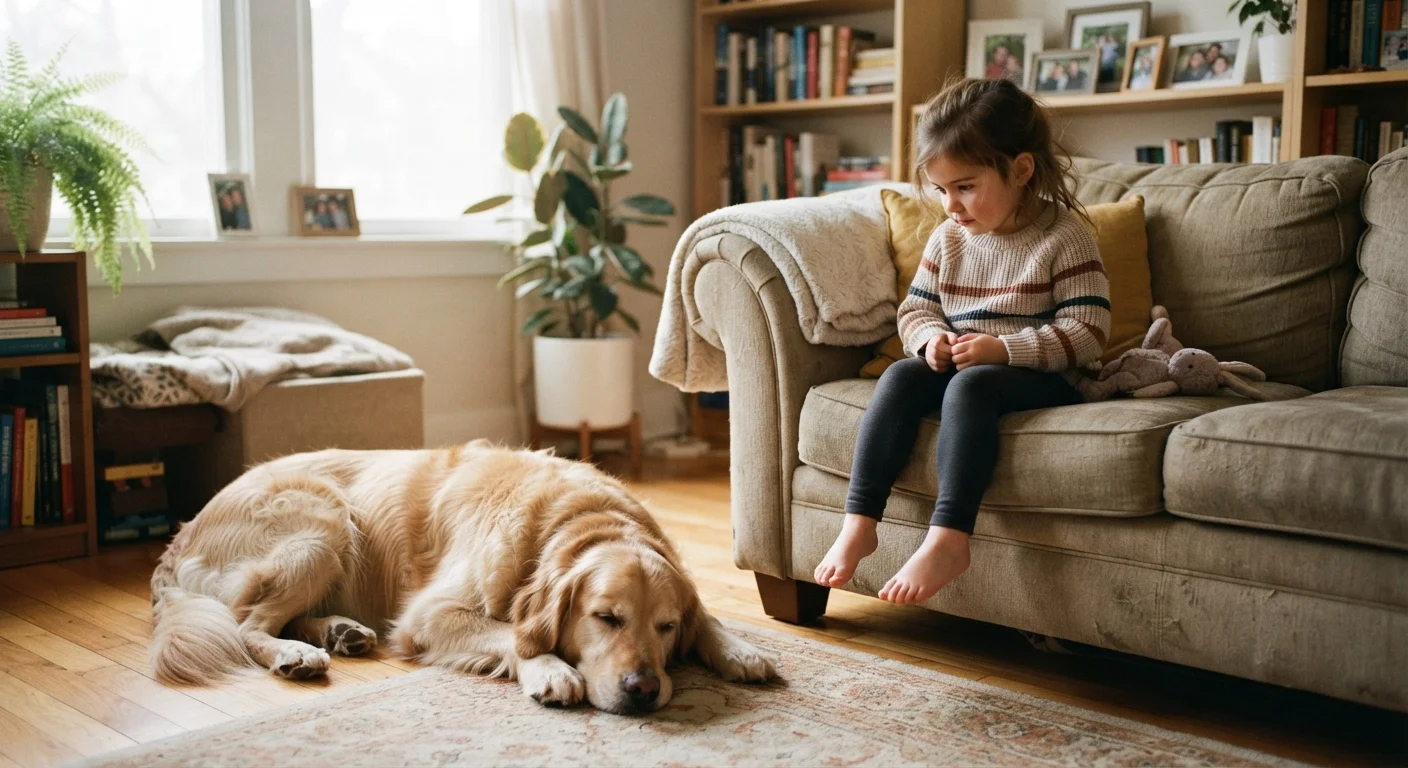
The most effective path forward is one the child controls. Start with the lowest possible level of exposure that feels manageable — often just being in the same room as the pet without any expectation of interaction. Let the child observe the animal from a distance they choose.
~5%
Children with clinically significant animal phobia
Research on specific phobias in childhood suggests animal phobias are among the most commonly reported, though most cases are mild and do not meet clinical thresholds.
Ages 2–6
Peak developmental window for new fears
Child development literature consistently identifies toddler and early childhood years as the period when fears — including fear of animals — most commonly emerge or intensify.
Over time, and only when the child is ready, you can introduce small steps: looking at the pet together, watching the pet eat calmly, or tossing a treat toward it without direct contact. Each voluntary step builds a new association — one where the child feels capable and in control. Celebrate each small act of courage without overpraising in ways that feel like pressure.
Reading age-appropriate books about animals, watching calm videos of pets, and letting the child ask questions about what pets can and cannot do all help build familiarity. For ideas on how to structure safe interactions, see our guide on teaching children to interact safely with animals.
Throughout this process, make sure the pet is also comfortable. A stressed or overstimulated animal is more likely to behave in ways that reinforce fear. Review safety habits every pet-owning family should build early to keep both child and animal calm during gradual introductions.
When to Seek Additional Support
Most children's fear of a family pet eases with patience and the right approach. However, if your child's anxiety is severe — causing sleep disruption, significant avoidance behavior, or emotional distress on a daily basis — it is worth speaking with your child's pediatrician or a licensed child psychologist. These professionals can assess whether broader anxiety is a factor and offer structured strategies tailored to your child.
You can also explore the dynamics of children and pets under one roof for broader guidance on building a household where both children and animals feel safe. Remember: the goal is not just a child who tolerates the pet, but a family environment where everyone — human and animal — can genuinely thrive.
This article is for general informational and educational purposes only. It is not a substitute for professional advice from a licensed child psychologist or pediatrician. If your child is experiencing significant anxiety, please consult a qualified healthcare professional.