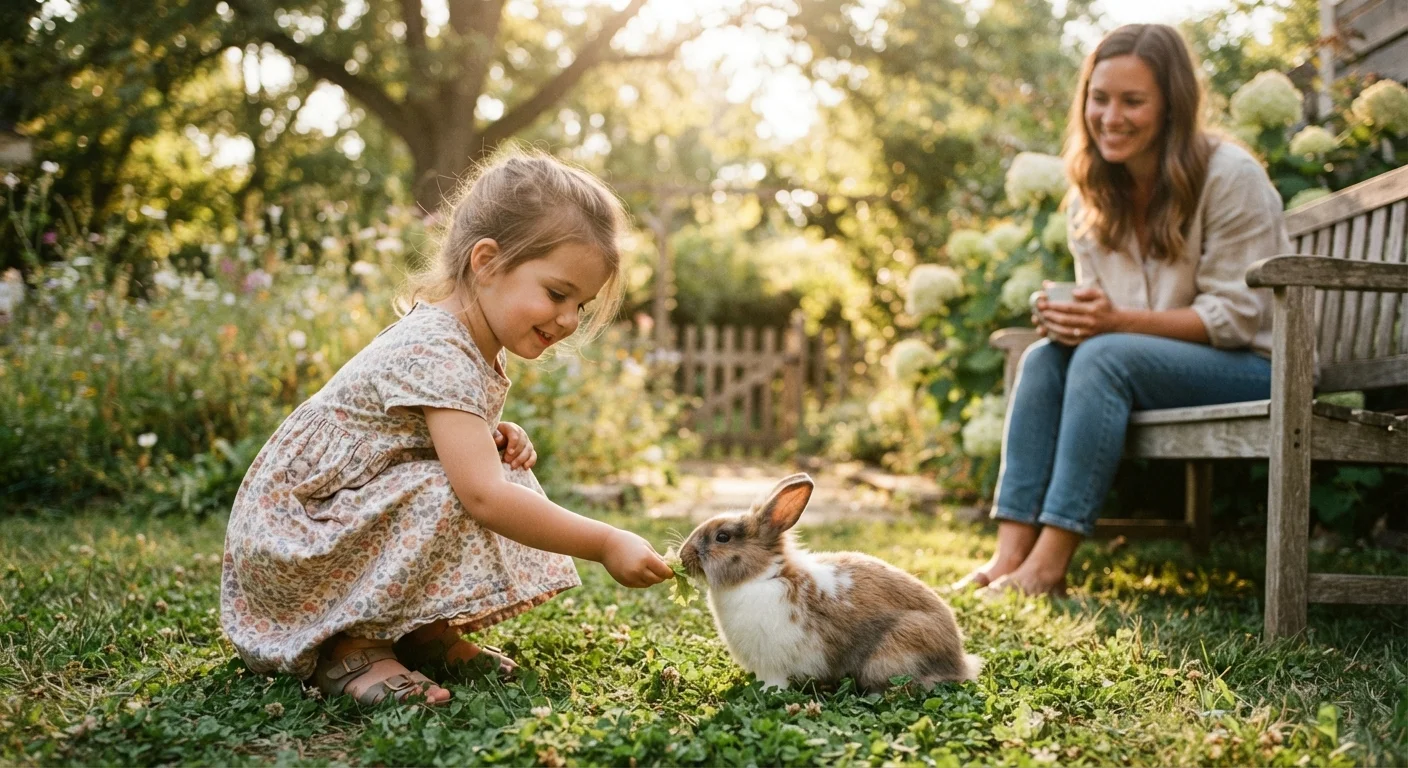
Why Animal Care Is Such Fertile Ground for Empathy
Empathy — the ability to recognize and share the feelings of another — is one of the most important social-emotional skills a child can develop. Yet it's notoriously hard to teach in the abstract. Pet care changes that. Animals have needs that are immediate, visible, and non-negotiable: they need food, water, comfort, and attention on a schedule that doesn't shift to suit a child's mood.
That consistency is the secret ingredient. When a child notices that the dog is pacing anxiously before a walk, or that the cat turns away from a food bowl left too long, they are reading emotional and physical cues without any coaching. Over time, this cross-species attunement tends to transfer — children who regularly practice noticing an animal's state often become more attuned to the people around them too.
Research exploring the relationship between pet ownership and child development generally supports this connection, though the picture is nuanced. As we explore in our look at what the evidence actually says, outcomes depend heavily on how families structure the experience.
Narrate the animal's likely feelings aloud during care routines
Young children are still developing the cognitive ability to imagine another's inner experience. Hearing an adult model that process — attaching words to an animal's visible behavior — gives children a template they can eventually use independently. This is one of the most direct ways to build perspective-taking skills.
Assign care tasks that match the child's current developmental stage
When responsibilities fit a child's actual capabilities, completing them builds genuine confidence and a sense of contribution. Tasks that are too complex breed anxiety and avoidance rather than care. The goal is consistent small wins that accumulate into a felt sense of being someone the animal depends on.
Use the animal's non-verbal cues as a teaching tool
Animals communicate entirely through body language, which gives children practice decoding signals without the help of words — a foundational empathy skill. Noticing that a dog's tail and posture signal excitement versus anxiety is excellent training for reading human emotional states later on.
Let children participate in routine veterinary visits when appropriate
Vet visits make a pet's health tangible — children see that their animal has physical needs, can feel discomfort, and relies on humans to advocate for it. This experience deepens a child's understanding that care is active and ongoing, not just pleasant.
Process difficult pet experiences as a family rather than shielding children entirely
Protecting children from every hard moment with a pet — illness, injury, or death — removes the very experiences that teach emotional resilience and genuine compassion. Age-appropriate honesty, delivered with parental support, helps children learn that love and loss are connected, and that both deserve acknowledgment.
How to Structure the Experience So Empathy Actually Grows
Owning a pet doesn't automatically produce a more empathetic child — what matters is how families engage with that experience day to day. A pet left largely in the background teaches little. A pet whose care is woven thoughtfully into family life becomes a genuine teacher.
“Children who learn to care for animals are practicing some of the most fundamental skills of human connection — noticing need, responding with kindness, and showing up consistently even when it isn't convenient.”
— American Humane, National organization focused on the welfare of children and animals
The key is narration: when adults put words to what the animal might be feeling — "The rabbit is hiding — she might feel a little overwhelmed right now, let's give her some space" — they are modeling exactly the kind of perspective-taking that defines empathy. Children absorb this framing and begin to apply it independently.
Responsibility also matters, but it has to be developmentally appropriate. Giving a five-year-old sole charge of a pet's care isn't empowering — it's a setup for failure that can produce anxiety rather than compassion. For a thoughtful breakdown of what children can realistically handle at each age, see age-by-age guidance on pet care tasks. And for a candid look at what tends to go wrong when responsibility is handed over too early, this article outlines the common pitfalls.
Make Narration a Daily Habit
You don't need a special moment to build empathy — the daily feeding, grooming, or play session is enough. Simply saying what you observe about the animal's state ("She's purring — she seems really content right now") keeps children's attention tuned to the animal's inner experience. Over weeks and months, children begin narrating those observations themselves without prompting.
Difficult Moments Are Opportunities, Not Setbacks
Not every lesson in empathy comes from a happy moment. A pet's illness, injury, or death confronts children with vulnerability and loss in a way that is real and unavoidable — and that is precisely why it can be so formative. When a family navigates these moments honestly and together, children learn that caring for others sometimes means sitting with discomfort, making hard choices, and grieving.
How parents frame a pet's death in particular has lasting significance. Honest, age-appropriate conversations — rather than euphemisms or avoidance — help children build an emotional vocabulary for loss that serves them throughout life. Our guide on talking to kids about a pet's death offers compassionate, practical guidance for those conversations. And if your child is already grieving, this resource on pet grief in children walks through how to support them in the days that follow.
The broader context of how pets shape child development makes clear that these difficult experiences, when handled with care, are among the most meaningful contributions a family pet makes to a child's emotional growth.
This article is for general informational and educational purposes. For concerns about a child's emotional development or wellbeing, please consult a qualified healthcare or child development professional.