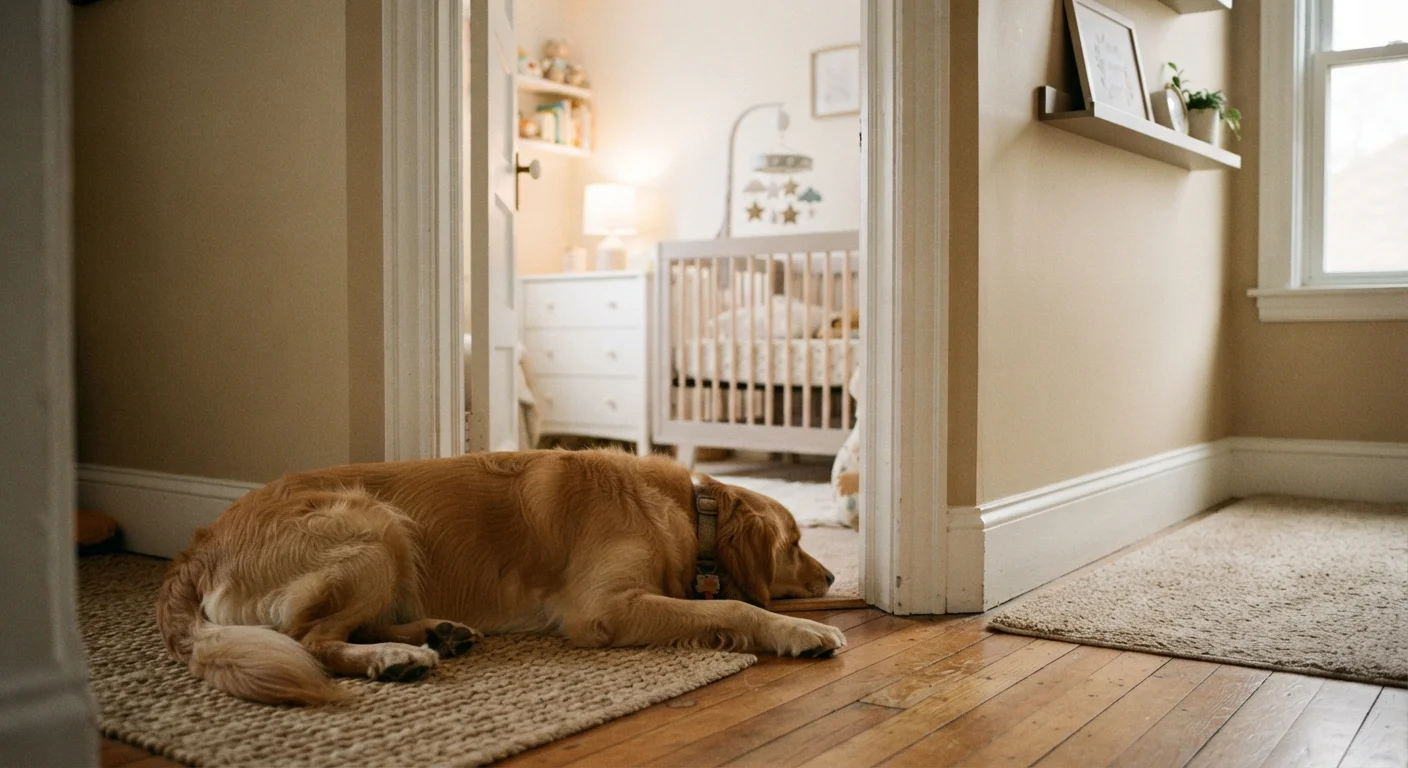
Why This Transition Is Harder on Pets Than Most Families Expect
Bringing a newborn home is one of the most joyful milestones a family can experience — and one of the most disorienting for a resident pet. Routines collapse overnight. Familiar scents are replaced by unfamiliar ones. Attention that was once freely given becomes rationed. For a dog or cat, these shifts register as significant change, and without thoughtful preparation, they can produce real behavioral and emotional strain.
The good news is that most missteps are entirely preventable. The key is recognizing them before they happen. For a broader look at the full transition process, see our guide on preparing a resident pet for a newborn.
Waiting until after the baby arrives to introduce any changes to the pet's environment or routine.
Why it happens: Parents are overwhelmed preparing for the baby and often treat pet preparation as a lower priority. The assumption is that the pet will simply adapt once the baby is home.
Giving the pet excessive extra attention right before the birth, then drastically cutting it off afterward.
Why it happens: Guilt about the upcoming change leads families to overcompensate before the birth, which makes the post-baby drop in attention feel even more abrupt to the pet.
Skipping a pre-birth veterinary checkup and behavioral assessment.
Why it happens: Families assume a healthy, well-behaved pet doesn't need extra evaluation just because a baby is coming. Stress-related behavioral changes are often underestimated.
Failing to establish clear, enforced boundaries around the baby's space before bringing the infant home.
Why it happens: Many families plan to create rules but haven't practiced them with the pet ahead of time, making early enforcement inconsistent when attention is divided.
Completely excluding the pet from family life after the baby arrives.
Why it happens: Safety concerns and exhaustion cause some parents to isolate the pet, hoping to reduce risk and chaos. This often backfires by increasing the pet's anxiety and attention-seeking behaviors.
Assuming a previously well-behaved pet will manage the transition without any behavioral support.
Why it happens: Past good behavior breeds confidence that nothing will go wrong. But a newborn introduces unpredictable sounds, smells, and schedule disruptions that can unsettle even the most easygoing animals.
Building a Plan That Works for the Whole Household
Managing a pet through a new baby's arrival isn't about choosing between your child's safety and your pet's wellbeing — it's about approaching both with equal intentionality. Families who fare best are those who start planning early, stay consistent, and ask for help when behavioral warning signs appear.
Never Leave a Pet and Baby Unsupervised
Even the most gentle, well-socialized pet should never be left alone with an infant — not even briefly. This is not a reflection of your pet's temperament; it's a basic safety principle supported by pediatric and veterinary guidance alike. Establishing this boundary from day one protects both the baby and the pet.
If your household is still weighing what pet ownership would look like with young children, the foundational questions in this family readiness checklist are worth sitting with carefully. And if your situation is reversed — bringing a pet into a home that already has a baby — introducing a new pet to a household with an infant covers that specific transition in depth.
The goal is a home where both child and pet can feel safe, settled, and loved. With realistic expectations and proactive steps, that's genuinely achievable for most families.
This article is for general informational purposes only and does not constitute veterinary or professional behavioral advice. Consult a licensed veterinarian or certified animal behaviorist for guidance specific to your pet's needs.