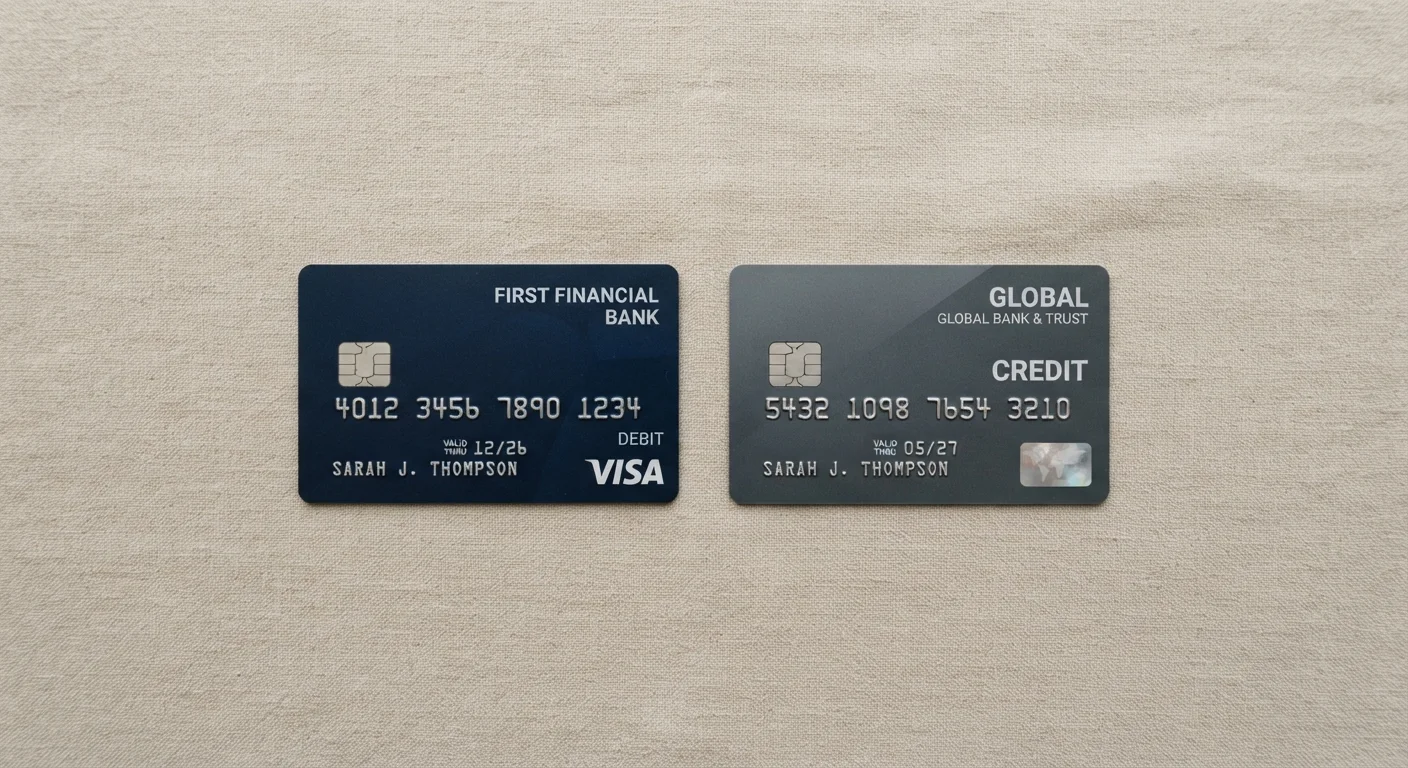
How Each Card Actually Works
The physical experience of paying with a debit or credit card is nearly identical — you tap, swipe, or insert. What happens next is where these two instruments diverge significantly.
A debit card is linked directly to your checking account. When you use it, the funds are pulled from your balance almost immediately. If the funds aren't there, the transaction is either declined or, depending on your account settings, covered by an overdraft arrangement that may carry fees.
A credit card works differently. The card issuer pays the merchant on your behalf, and you later repay the issuer — ideally in full by the due date to avoid interest charges. If you carry a balance, interest accrues, often at rates well above 20% APR. To understand exactly how that cost compounds, see how carrying a balance inflates what you owe.
| Debit Card | Credit Card | |
|---|---|---|
| Funding source | Your checking account balance | Issuer credit line, repaid later |
| Fraud liability (federal law) | Up to $500 if reported late (EFTA) | Capped at $50 (FCBA) |
| Impact on credit score | None — not reported to bureaus | Yes — payment history is reported |
| Risk of debt accumulation | Low — limited to account balance | High if balance not paid monthly |
| Common fees | Overdraft fees if balance overdrawn | Annual, late, or foreign transaction fees |
| Overspending guardrail | Natural limit: your bank balance | Limit set by issuer; may encourage overspend |
Fraud Protection: A Meaningful Legal Difference
This is where the gap between the two card types matters most to everyday consumers. Under the Fair Credit Billing Act (FCBA), your liability for unauthorized credit card charges is capped at $50 — and most major issuers go further, offering $0 liability policies voluntarily.
Debit cards fall under the Electronic Fund Transfer Act (EFTA), which offers tiered protections based on how quickly you report the loss. Report within two business days: maximum liability is $50. Wait up to 60 days after your statement: up to $500. Beyond 60 days: you could be responsible for the full amount. Critically, when fraud hits a debit card, the money is already gone from your account while the dispute is investigated — a cash flow disruption that doesn't happen with credit.
Debit Fraud Hits Your Cash Immediately
When a fraudulent charge appears on a credit card, the money is still in your account while you dispute it. With a debit card, the funds are already withdrawn. This can cause real cash flow problems — bounced bills, overdrafts, or delayed rent — even if you're ultimately reimbursed. This timing risk is worth weighing seriously, especially for larger purchases.
If you travel frequently and are concerned about card skimming at ATMs or on public networks, see our guide on protecting your data and finances on the road.
Credit Scores, Fees, and the Bigger Financial Picture
Only credit card usage appears on your credit report and influences your credit score. Responsible use — charging modest amounts and paying in full each month — can gradually build a positive payment history, which is the single largest factor in most credit-scoring models. Debit card activity is invisible to credit bureaus entirely.
That said, persistent myths about credit scores lead some people to believe they must carry a balance to build credit — that's false and costly. Paying in full each month builds credit just as effectively.
Pay in Full to Get the Best of Both Worlds
Using a credit card for everyday purchases and paying the full statement balance each month means you benefit from stronger fraud protections and credit-building — without paying a cent in interest. Set up automatic full-balance payments if your budget allows, so the due date never sneaks up on you.
On fees: debit cards may trigger overdraft fees if you spend beyond your balance. Credit cards can carry annual fees, late payment fees, and foreign transaction fees — though these vary widely. Before applying for any credit product, the questions in this checklist on evaluating new debt are a sound starting point.
Understanding your credit profile more broadly is also worthwhile. Your credit score and credit report are related but distinct — knowing what each contains helps you use credit tools more strategically.
This article provides general financial education and is not personalized financial advice. Consult a qualified financial professional for guidance specific to your situation.