How Daily Compounding Quietly Inflates Your Balance
Most people think of credit card interest as a monthly charge — a single fee applied at the end of the billing cycle. In reality, interest accrues every single day. Your card issuer takes your APR, divides it by 365, and applies that Daily Periodic Rate (DPR) to your average daily balance throughout the billing cycle.
Here's what that looks like in practice: a card with a 24% APR carries a DPR of roughly 0.066%. On a $2,000 balance, that's about $1.32 in interest per day. Over a 30-day billing cycle, that's approximately $39.60 added to what you owe — before you've made a single payment. The following month, if your balance hasn't dropped much, the interest is calculated on that slightly higher number. That's compounding: interest accruing on previously accrued interest.
~$1,000
Average annual interest paid per indebted household
Federal Reserve and consumer finance research consistently shows households carrying revolving balances pay substantial interest annually, often exceeding the cost of the original purchases.
20%+
Average credit card APR in recent years
The Federal Reserve tracks average credit card interest rates; rates have trended above 20% for new card offers in recent periods, making compounding especially costly.
15+ years
Time to repay $3,000 at minimum payments (20% APR)
This estimate, which issuers are required to disclose on statements under the Credit CARD Act, illustrates the dramatic cost of minimum-only repayment strategies.
This mechanism is why a $500 emergency purchase, left to roll over month after month, can realistically cost $650 or more by the time it's paid off — especially when minimum payments are involved.
The Minimum Payment Trap
Minimum payments are set low by design — typically 1% to 2% of the outstanding balance, or a flat dollar floor, whichever is greater. Paying only the minimum feels manageable, but the math works against you: most of each payment goes to interest charges, leaving a small fraction to reduce the actual principal you owe.
U.S. law (through the Credit CARD Act of 2009) now requires issuers to include a disclosure on statements showing how long it would take to pay off your balance making only minimum payments — and how much interest you'd pay in total. For many cardholders, the numbers are alarming. A $3,000 balance at 20% APR, paid at the minimum, can take 15 or more years to clear and generate interest that rivals or exceeds the original balance.
Use Your Statement's Payoff Estimate
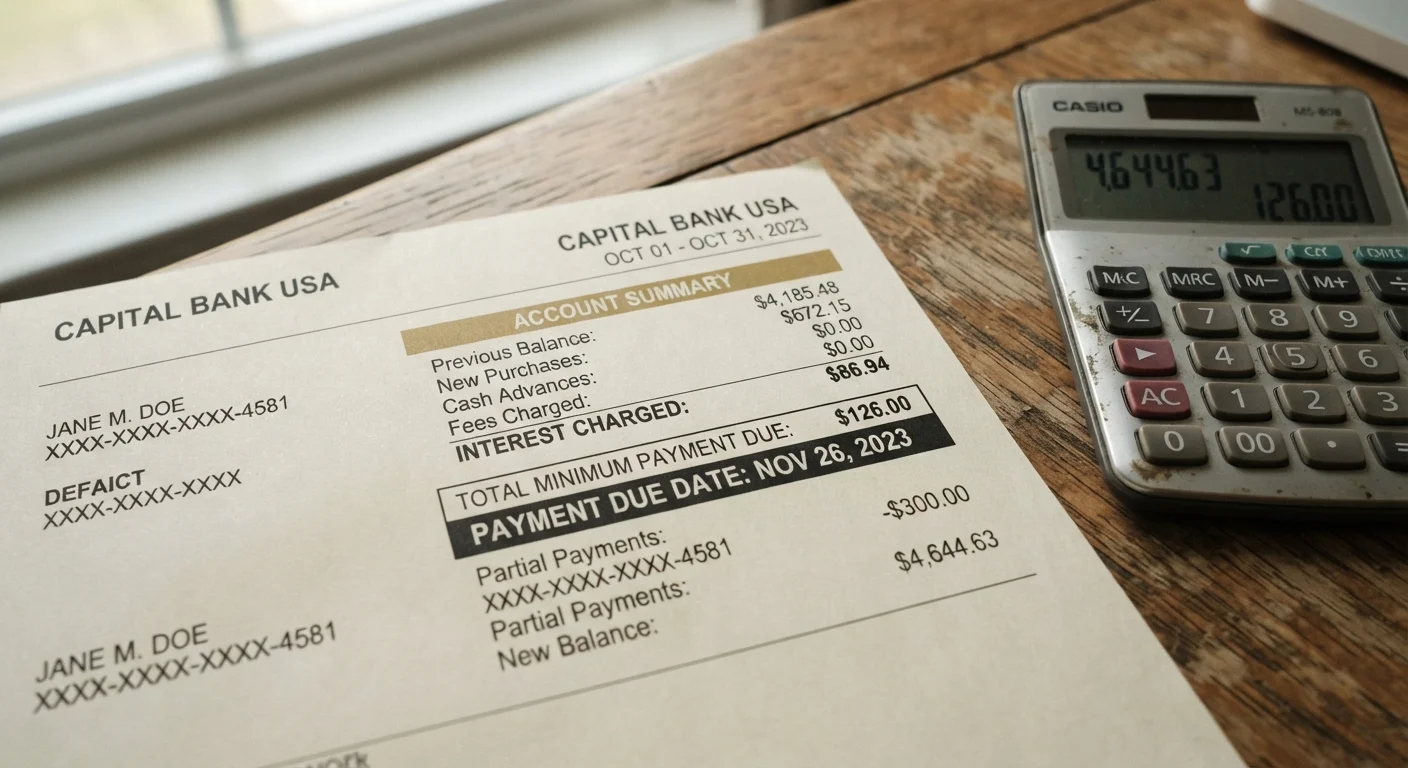
Federal law requires credit card issuers to print a payoff disclosure on every statement — showing how long it takes to pay off the balance making only minimum payments, and the total interest cost. Before deciding how much to pay, read this number. It often provides the clearest possible motivation to pay more than the minimum.
Paying even $20 or $30 more than the minimum each month can shorten that timeline dramatically and save a meaningful amount in interest. If you're evaluating whether new credit makes sense given an existing balance, our guide on questions to ask before taking on new debt is worth reviewing first.
The Grace Period — and What Losing It Means
When you pay your statement balance in full each month, your card's grace period protects you from interest on purchases entirely. The grace period — usually 21 to 25 days after your statement closes — gives you time to pay without triggering any interest charge.
Carrying a balance forward changes this. Many issuers eliminate the grace period once you have a revolving balance, meaning new purchases begin accruing interest immediately — from the day you swipe, not from the end of the billing cycle. This is a little-understood cost of partial payments: not only does your existing balance keep growing, but any new spending joins it in the daily-compounding cycle right away.
Grace Periods Disappear When You Carry a Balance
Many cardholders don't realize that carrying any balance forward can eliminate the grace period on new purchases. Once the grace period is gone, new transactions begin accruing interest immediately — from the purchase date — rather than after the billing cycle ends. This is separate from and additional to the interest on the existing balance.
High balances relative to your credit limit also affect more than your wallet. As our article on factors that drag down credit scores explains, credit utilization — how much of your available credit you're using — is one of the most influential factors in your credit score. Keeping utilization below 30% is generally recommended by financial educators.
What You Can Actually Do About It
Understanding the mechanics gives you leverage. A few practical principles help most people reduce the cost of carrying a balance:
- Pay more than the minimum whenever possible. Even modest extra payments shift money from interest to principal faster than you might expect.
- Target your highest-rate balance first. If you have multiple cards, directing extra payments to the one with the highest APR reduces compounding where it hurts most — a strategy often called the avalanche method.
- Avoid adding new purchases to a card you're trying to pay down. New spending, when the grace period is gone, compounds immediately alongside your existing balance.
- Read the disclosures on your statement. The minimum payment warning and payoff estimate are required to be there — and they're among the most useful numbers on the page.
If you're weighing the broader picture of longer-term debt obligations, our explainer on the financial trade-offs of long-term debt offers a balanced look at when carrying debt has real costs — and when it might be calculated.
This article is for general informational and educational purposes only and does not constitute personalized financial or legal advice. For guidance specific to your situation, consult a qualified financial professional.