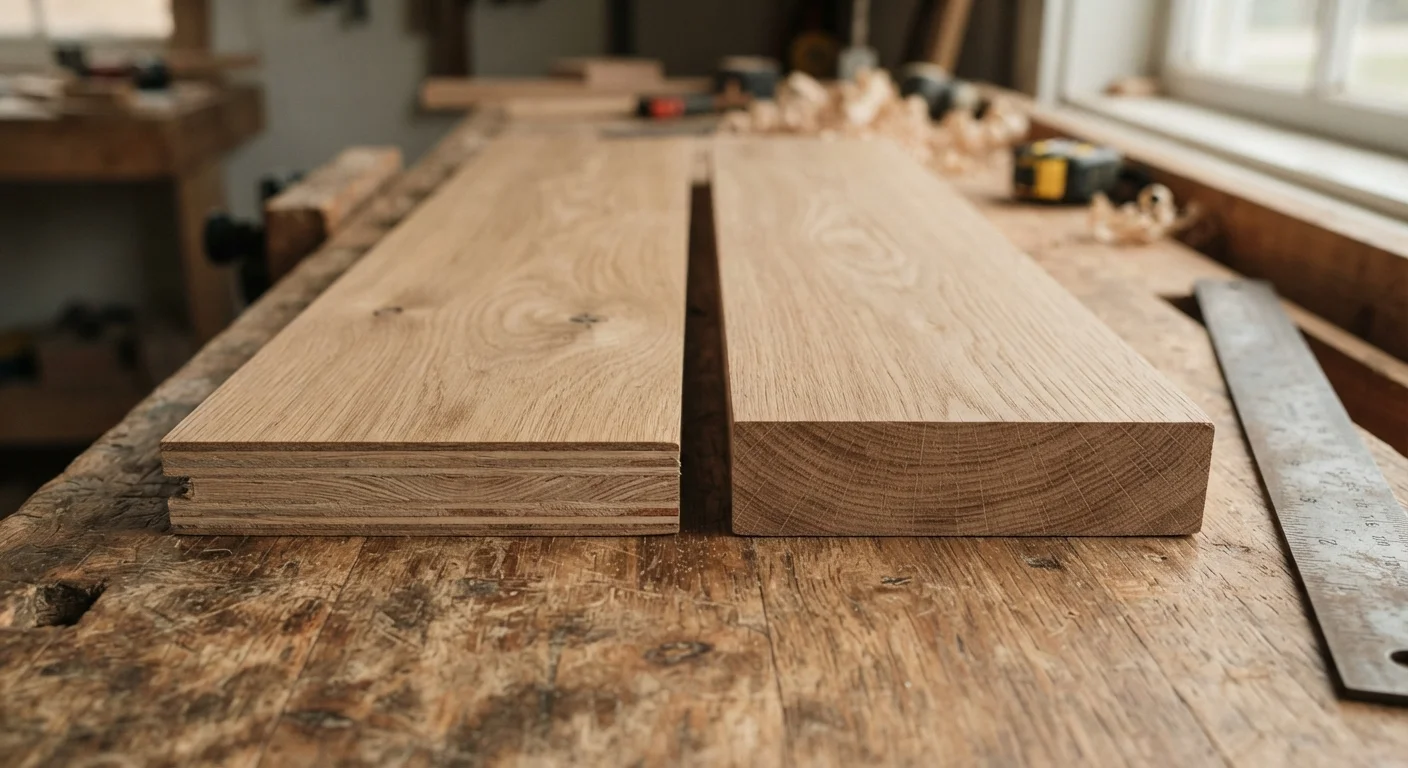
How Each Flooring Type Is Built
Understanding the construction of each product explains most of the performance differences buyers encounter.
Solid hardwood is exactly what it sounds like: a single, continuous piece of milled hardwood — typically ¾ inch thick — cut directly from a timber species such as oak, maple, or hickory. Its uniform composition means it expands and contracts as one unit with changes in humidity, which is both its greatest charm and its primary limitation.
Engineered wood is a layered product. A relatively thin veneer of real hardwood sits on top of multiple layers of plywood or high-density fiberboard (HDF), arranged in alternating grain directions. This cross-ply construction counteracts the wood's natural tendency to swell and shrink, producing a board that is measurably more dimensionally stable across a range of humidity levels.
Both products use genuine wood on their visible surfaces, which is why they can look nearly identical once installed. The difference is invisible underfoot but critical for performance.
| Criterion | Engineered Wood | Solid Hardwood |
|---|---|---|
| Construction | Hardwood veneer over plywood/HDF core | Single solid hardwood plank |
| Moisture tolerance | Good — suitable on/above/below grade | Poor below grade; on/above grade only |
| Dimensional stability | High — cross-ply resists swelling | Lower — expands and contracts with humidity |
| Refinishing cycles | 0–2 depending on veneer thickness | 3–5 over lifetime |
| Typical installation method | Float, glue, or staple | Nail-down or staple |
| DIY friendliness | High (click-lock options available) | Moderate — often best left to pros |
| Expected lifespan | 25–30+ years | 50–100 years with care |
| Compatible subfloors | Wood and concrete | Wood subfloor preferred |
Moisture, Stability, and Where You Can Install
Room location and subfloor type should drive your flooring decision more than aesthetics alone.
Solid hardwood should be installed on or above grade — meaning main floors and upper levels — over a wood subfloor. It is generally not recommended below grade (basements) because chronic moisture exposure causes cupping, gapping, and warping that are difficult to reverse. Even above grade, it requires careful acclimation to the room's humidity before installation.
Engineered wood can be installed on, above, or below grade, and is compatible with both wood and concrete subfloors. This flexibility makes it the default recommendation for slab foundations, in-floor radiant heating systems, and spaces prone to seasonal humidity swings. That said, engineered wood is not fully waterproof — standing water and persistent leaks will still cause damage.
~3–6 mm
Wear layer thickness for refinishable engineered floors
Flooring industry guidelines generally indicate that engineered veneer layers thinner than 3mm cannot be sanded without risk of exposing the core.
¾ inch
Standard solid hardwood plank thickness
This standard thickness is what allows solid hardwood floors to be sanded and refinished multiple times across decades of use.
If you are weighing how your flooring choice interacts with your room's overall layout, it is worth consulting our companion piece on open-plan vs. defined room layouts before finalizing your plan.
Refinishing, Longevity, and Long-Term Cost
One of the most cited advantages of solid hardwood is refinishability. Because the plank is solid throughout, a flooring contractor can sand away surface scratches, stains, and worn finish multiple times — often three to five times over the floor's life — and re-coat it to look nearly new. A well-maintained solid hardwood floor can last 80 to 100 years in appropriate conditions.
Engineered wood's refinishing potential depends entirely on the veneer thickness. Thinner veneers (2mm or less) can tolerate only one light sanding, if any. Products with thicker wear layers (3–6mm) allow one or two refinishes. Once the veneer is exhausted, the floor must be replaced. Typical lifespan estimates for engineered wood range from 25 to 30 years under normal use, though higher-end products with thick veneers can approach solid hardwood longevity.
Installation costs vary by method. Floating click-lock engineered floors are often accessible DIY projects for experienced homeowners; nail-down solid hardwood installation typically calls for professional labor and specialized equipment. For help deciding when to hire out versus tackle a job yourself, see our guide on DIY vs. hiring a tradesperson.
Acclimation Matters for Both Products
Both solid and engineered hardwood should be acclimated to the installation room's temperature and humidity before being installed. For solid hardwood, this typically means storing the planks in the room for at least three to five days. Engineered wood generally requires a shorter acclimation window, but always follow the manufacturer's specific guidance. Skipping this step is a leading cause of post-installation gapping and buckling.