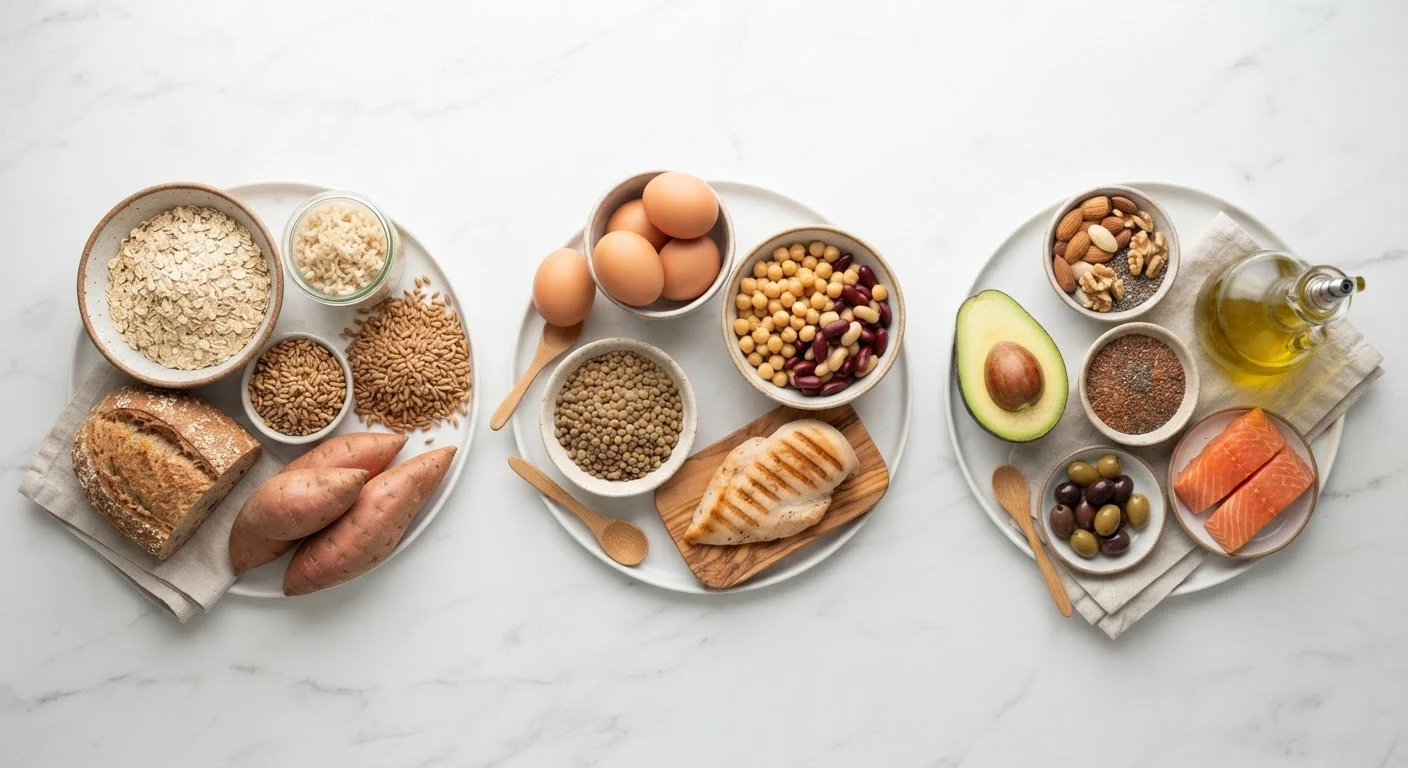
Carbohydrates: Your Body's First Choice for Fuel
Carbohydrates are the body's primary energy source, and for good reason — they break down into glucose more efficiently than any other macronutrient. The brain alone relies almost exclusively on glucose, consuming a significant portion of the carbohydrates you eat each day.
Not all carbohydrates behave the same way. Simple carbohydrates — found in refined sugar and white bread — digest quickly, causing faster rises in blood glucose. Complex carbohydrates — found in oats, legumes, whole grains, and vegetables — digest more slowly thanks to their fiber content, providing more sustained energy and supporting gut health.
Fiber, a form of carbohydrate the body cannot fully digest, deserves particular attention. It feeds beneficial gut bacteria, helps regulate cholesterol, and supports stable blood sugar levels. Most Americans fall short of the recommended daily fiber intake.
Choose Whole-Food Carbohydrate Sources
When selecting carbohydrates, prioritize foods that still contain their natural fiber — whole grains, legumes, fruits, and vegetables. These slow digestion, support gut health, and provide a more stable energy supply compared to refined or heavily processed options.
For more guidance on how these numbers appear on packaging, see our guide to reading nutrition labels.
Protein: The Body's Builder and Repairer
Protein is made up of amino acids — often described as the body's building blocks. It is involved in constructing muscle tissue, producing enzymes and hormones, supporting immune function, and transporting nutrients through the bloodstream. Unlike carbohydrates and fat, the body doesn't store excess protein for later use, making consistent daily intake important.
There are 20 amino acids in total, nine of which are classified as essential because the body cannot synthesize them on its own. Animal-based sources such as eggs, meat, fish, and dairy typically provide all nine essential amino acids in adequate proportions. Most plant-based sources — with notable exceptions like soy and quinoa — are considered incomplete proteins, meaning they are lower in one or more essential amino acids. However, eating a varied plant-based diet across the day generally covers all essential amino acid needs.
10–35%
Recommended daily calories from protein
According to the Dietary Guidelines for Americans, this range accommodates a wide variety of lifestyle needs and health goals.
~95%
Of Americans fall short of fiber goals
The FDA notes that dietary fiber is widely considered a nutrient of public health concern due to low average intake among US adults.
4 kcal/g
Energy per gram from carbs and protein
Both carbohydrates and protein provide 4 kilocalories per gram, while fat provides 9 kilocalories per gram — making fat the most energy-dense macronutrient.
Protein also contributes to satiety — the feeling of fullness after eating — which may help with appetite regulation over time. This is one reason higher-protein diets are frequently studied in the context of weight management, though research findings are nuanced and individual responses vary.
Fat: Misunderstood and Essential
Dietary fat spent decades as a nutritional villain, but the science has long since grown more nuanced. Fat is essential for absorbing fat-soluble vitamins (A, D, E, and K), producing steroid hormones including sex hormones, maintaining cell membrane integrity, and providing a concentrated energy reserve.
The type of fat matters more than the total amount. Unsaturated fats — found in olive oil, avocados, fatty fish, and nuts — are broadly associated with cardiovascular benefit in research. Saturated fats — found in butter, red meat, and coconut oil — are recommended in moderation by most major health organizations. Trans fats, largely from partially hydrogenated oils, are the most clearly harmful and have been widely phased out of the food supply in the US.
Fat also slows digestion, which means meals with adequate fat tend to be more satisfying and can prevent sharp blood sugar spikes when eaten alongside carbohydrates.
If you find yourself confused by conflicting headlines about fat, you're not alone — our article on popular nutrition myths addresses several common misconceptions directly.
Fat and Calorie Density
Because fat provides 9 kilocalories per gram — more than double the 4 kilocalories per gram from carbohydrates or protein — portions of high-fat foods can add up quickly in terms of total calories. This doesn't make fat harmful, but it's a useful piece of context when thinking about overall energy intake.
Balance Over Elimination
One of the most persistent ideas in popular nutrition is that cutting out a macronutrient — carbs, fat, or even protein — is a shortcut to better health. The evidence does not support this framing. Every macronutrient performs functions that the others cannot replicate. Eliminating any one group entirely tends to create compensatory imbalances and can be difficult to sustain.
What research consistently supports is a dietary pattern rich in whole, minimally processed foods across all three macronutrient categories — rather than fixating on precise ratios or eliminating food groups. Context matters enormously: a person recovering from surgery, an endurance athlete, and a sedentary older adult all have meaningfully different macronutrient needs.
If you frequently feel overwhelmed by nutrition headlines, that's a common and valid experience. Our article on why healthy eating feels so confusing offers a grounded perspective on navigating the noise.
This article is for general informational and educational purposes only and does not constitute medical or nutritional advice. Consult a qualified healthcare professional or registered dietitian before making significant changes to your diet.