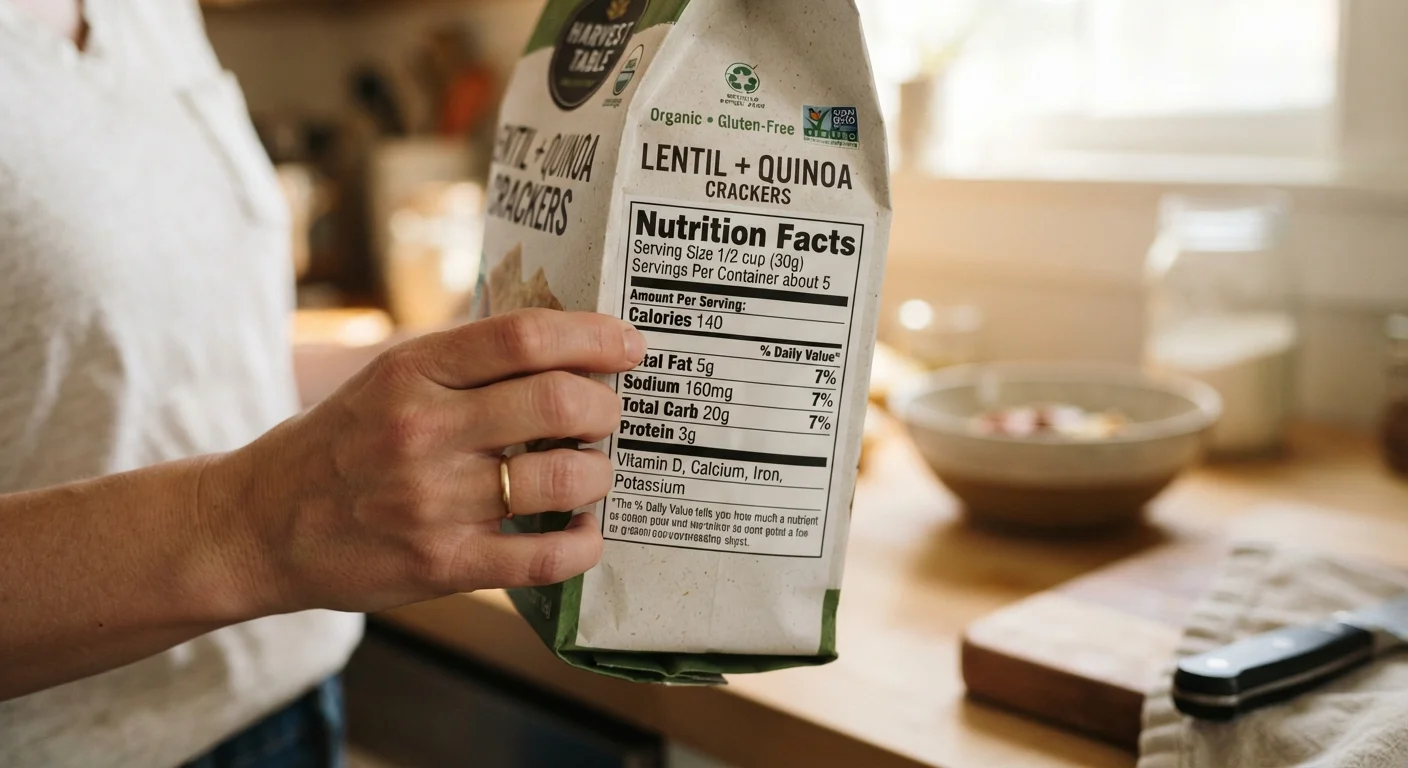
Why the Nutrition Facts Panel Exists — and What It Actually Covers
The Nutrition Facts label is a federally mandated disclosure required by the Food and Drug Administration (FDA) on virtually all packaged foods sold in the United States. Its current format, updated in 2016 with full compliance required by most manufacturers, was redesigned specifically to reflect how people actually eat and what nutrition research now considers most important.
The panel covers serving information, total calories, macronutrients (fat, carbohydrate, protein), selected micronutrients, and a % Daily Value (%DV) column based on a reference 2,000-calorie daily diet. Critically, it does not tell you everything. It doesn't show every vitamin or mineral present, it doesn't rank overall diet quality, and it doesn't account for how different nutrients interact in the context of your whole diet. For a broader view of nutrient roles, the Micronutrients at a Glance reference guide covers key vitamins and minerals the label may omit.
Understanding what the label can and cannot tell you is the starting point for using it well.
Labels Inform — They Don't Diagnose
This article provides general nutrition education, not personalized dietary or medical advice. Individual nutrient needs vary based on age, health status, activity level, and medical history. If you have a specific health condition or are managing your diet for clinical reasons, consult a registered dietitian or your healthcare provider.
Tools You'll Use
Nutrition Facts Panel
The federally standardized label found on nearly all packaged foods in the US, containing serving size, calorie count, macronutrients, and selected micronutrients.
Ingredient List
Listed beneath or beside the Nutrition Facts panel; reveals what is actually in the food, ordered from most to least by weight.
Dietary Reference Intakes (DRIs)
Published by the National Academies of Sciences; provides the scientific basis for the %Daily Value figures used on labels.
What you will need
You don't need any special app or training to read a nutrition label accurately — the label is designed to be self-contained. What you do need is the habit of looking at it before the product goes in your cart, not after it's already on the shelf at home.
Front-of-Package Claims Can Mislead
Terms like "natural," "multigrain," or "made with real fruit" are marketing language and are not regulated the same way the Nutrition Facts panel is. A product can carry a health-sounding claim and still be high in added sugars, sodium, or saturated fat. Always flip the package and read the panel before making a judgment.
Step-by-Step: Reading the Label
Find and confirm the serving size
The serving size appears at the very top of the panel, directly below the "Nutrition Facts" heading. It tells you the specific amount — in common household units and grams — that all the numbers below it refer to. This is the most critical line on the label.
Check how many servings the package contains. A bag that looks like a single portion might list 2.5 servings; every calorie and nutrient figure must be multiplied accordingly if you consume the whole package.
Look at the calorie count in context
Calories per serving appear in large type just below the serving size. Rather than treating this number as a pass/fail judgment, use it alongside the rest of the label. A 200-calorie item dense in fiber and protein is nutritionally different from a 200-calorie item that is mostly refined sugar.
Scan the nutrients to limit
The FDA requires labels to list saturated fat, trans fat, sodium, and added sugars — nutrients that most Americans already consume above recommended levels. Look at the gram amounts and the % Daily Value (%DV) column beside them.
- Saturated fat: linked to cardiovascular risk when consistently consumed in excess; most health guidelines suggest keeping it below 10% of total daily calories.
- Trans fat: the label will show 0g for most products today, but check the ingredient list for "partially hydrogenated oils," which can appear even when the rounded label reads zero.
- Sodium: average US intake is well above recommended levels; a single serving of some packaged foods can account for more than a third of a day's worth.
- Added sugars: distinct from naturally occurring sugars found in fruit or dairy. For deeper context on how added and natural sugars differ, see how added and natural sugars are labeled.
Check the nutrients to encourage
Below the nutrients-to-limit section, the label lists dietary fiber, vitamin D, calcium, iron, and potassium — nutrients that many Americans consume in insufficient amounts. A high %DV (20% or above) for these is generally a positive signal. Dietary fiber, in particular, supports digestive health and is associated with better satiety and blood sugar management.
Read the ingredient list from the top down
Ingredients are listed in descending order by weight. The first three to five ingredients make up the bulk of the product. If refined flour, sugar, or a hydrogenated oil appears first, those dominate the food — regardless of what the front label says.
Also note: sugar can appear under many names (dextrose, corn syrup, maltose, evaporated cane juice, and others). Multiple sugar-type ingredients appearing across the list may indicate a higher total sugar load than any single line suggests.
Cross-check front-of-package claims against the panel
Once you have read the Nutrition Facts panel and ingredient list, revisit any claims on the front of the package. Terms like "low-fat," "reduced sodium," or "high-fiber" have FDA definitions and can be useful — but claims like "natural" or "wholesome" do not. Let the panel verify or contradict any marketing language before the product influences your decision.
Use the 5/20 Rule as a Quick Filter
A %DV of 5% or less is generally considered low for any nutrient; 20% or more is considered high. Use this shortcut to quickly assess whether a food is a significant source of something you want more of — like fiber or calcium — or something to moderate, like sodium or saturated fat.
Practicing this sequence on even a few products per shopping trip builds the habit quickly. Within a few weeks, most readers find they can scan a new label in under 30 seconds and extract the information that matters to them most.
Putting It Into Practice
Reading labels is a skill that compounds over time. The goal isn't to scrutinize every package obsessively, but to develop a reliable instinct for which numbers actually matter given your diet and health priorities. Someone managing high blood pressure will weight-check sodium figures more heavily; someone focused on blood sugar stability may prioritize the fiber-to-added-sugar ratio.
If you find that label-reading reveals consistent gaps in your overall eating pattern, the Nutritionally Balanced Plate self-check offers a structured way to evaluate whether your meals are covering the key nutritional bases. And if you're noticing broader patterns — like regularly reaching for processed options despite good intentions — where nutrition habits often go wrong explores the behavioral dynamics behind common dietary patterns.
This article is for general informational and educational purposes only and does not constitute medical or dietary advice. Consult a qualified healthcare professional or registered dietitian for guidance specific to your health needs.