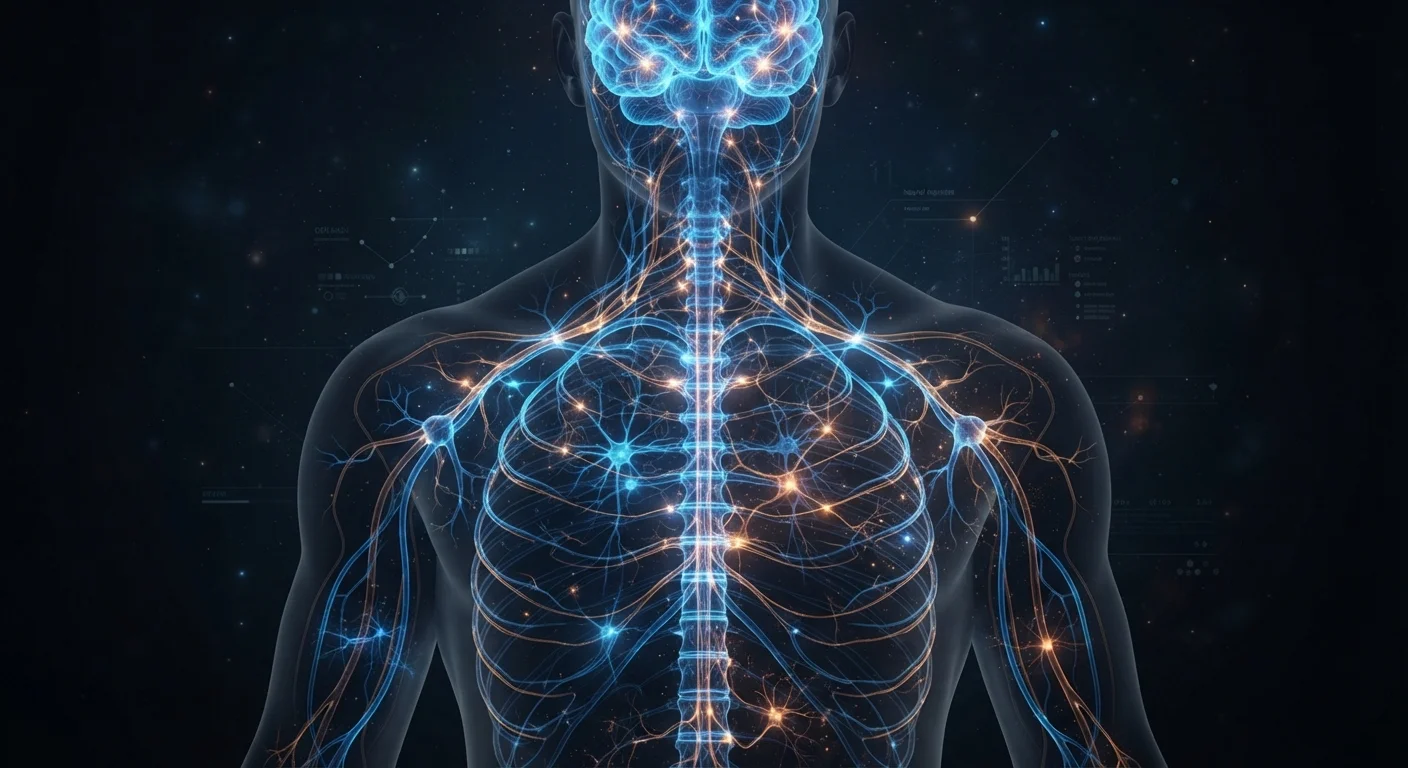
The Nervous System's Two-Speed Response
When your brain perceives a threat — whether a near-miss on the highway or a tense email from your boss — it doesn't deliberate. Within milliseconds, the autonomic nervous system shifts into high gear. Specifically, its sympathetic branch takes the lead, overriding the calmer parasympathetic state your body rests in when you feel safe.
The hypothalamus, a small but powerful region at the base of the brain, acts as the command center. It sends signals down the spinal cord to the adrenal glands, which sit atop your kidneys. Within seconds, those glands release adrenaline (also called epinephrine) into the bloodstream. This is what produces the sudden jolt you feel during a frightening moment — racing heart, rapid breathing, heightened alertness, and muscle tension. Blood is redirected away from digestion and toward the large muscle groups, priming your body to run or fight.
Understanding this hardwired sequence helps explain why stress feels so physical. It isn't just in your head — it's a coordinated biological event. For a deeper look at how different types of stress affect the body differently, see Acute Stress vs. Chronic Stress.
~30 min
Time cortisol remains elevated after an acute stressor
Research in psychoneuroendocrinology shows cortisol peaks 20–30 minutes after a stressor and can take 40–60 minutes to return to baseline in healthy adults.
75–90%
Doctor visits linked to stress-related concerns
The American Psychological Association has cited estimates suggesting a large proportion of primary care visits involve stress-related components, though exact figures vary by study.
Seconds
Time for adrenaline to reach circulation after a threat
The sympathetic-adrenal response is near-instantaneous; adrenaline is detectable in blood within seconds of a perceived threat, reflecting the speed of neural signaling.
The Slower Wave: Cortisol and the HPA Axis
While adrenaline handles the immediate alarm, a second system sustains and modulates the response. The hypothalamic-pituitary-adrenal (HPA) axis — a communication loop between the brain and adrenal glands — triggers the release of cortisol, often called the stress hormone. Unlike adrenaline's near-instant action, cortisol takes several minutes to rise but can remain elevated for an hour or more.
Cortisol's job is to keep energy available. It raises blood glucose levels, temporarily suppresses non-essential functions like digestion and reproduction, and sharpens focus. In acute bursts, this is useful — it sustains performance under pressure. The problem arises when the threat doesn't resolve. Modern stressors like financial worries, relationship conflict, or relentless notifications don't have a clear endpoint, which can keep the HPA axis chronically activated. Over time, persistently elevated cortisol is linked to disrupted sleep, impaired immune responses, and changes in mood regulation.
Cortisol Is Not the Enemy
Cortisol often gets framed negatively, but it serves essential functions — including regulating inflammation and helping the body mobilize energy when needed. The concern is chronic, unmanaged elevation, not the hormone itself. A healthy stress response that resolves fully is a sign of good physiological regulation.
What Chronic Activation Actually Means for Health
Occasional stress is a normal part of life and can even sharpen performance — a concept researchers sometimes call eustress, or beneficial stress. The concern lies with chronic, unresolved activation of the stress response. When the nervous system rarely gets the signal that the threat has passed, wear begins to accumulate across multiple body systems.
Cardiovascular strain is among the most studied consequences. Sustained high heart rate and blood pressure place extra demands on the heart and arteries. The immune system is also affected — cortisol's immunosuppressive properties, helpful in short doses, can blunt the body's ability to fight off infections when elevated chronically. Digestive discomfort, tension headaches, and disrupted sleep are other commonly reported effects.
This is why identifying your personal stress load matters. A structured stress audit can help you pinpoint where ongoing stressors are originating, and whether certain daily habits — including how many digital alerts you're absorbing — are keeping your nervous system on edge. Digital overload is a surprisingly potent trigger; notification overload has measurable effects on stress and focus.
Try the Physiological Sigh
A double inhale through the nose followed by a long, slow exhale through the mouth — called a physiological sigh — is one of the fastest ways to activate the parasympathetic nervous system. Research from Stanford suggests even a single such breath can meaningfully reduce acute physiological arousal. It requires no equipment and can be done anywhere.
Working With Your Nervous System, Not Against It
Knowing the biology creates a practical advantage: you can use it. The parasympathetic nervous system — the branch responsible for rest, digestion, and recovery — acts as a natural counterweight to the stress response. Certain deliberate behaviors can activate it even while a stressor is still present.
Slow, extended exhales are particularly effective. The vagus nerve, a key component of the parasympathetic system, responds to a lengthened exhale by reducing heart rate and signaling safety to the brain. Even a few slow, controlled breaths can measurably shift the nervous system's balance. Progressive muscle relaxation, regular aerobic exercise, and consistent sleep also support nervous system resilience over time.
None of these are substitutes for professional support when stress becomes severe or persistent. If you notice that everyday stressors feel overwhelming or that physical symptoms are mounting, speaking with a qualified healthcare provider is the appropriate next step. Mental wellbeing needs shift across life stages, and what helps at one point may need to be adapted at another.
This article is for general informational and educational purposes only and does not constitute medical advice. Consult a qualified healthcare professional for guidance specific to your health situation.