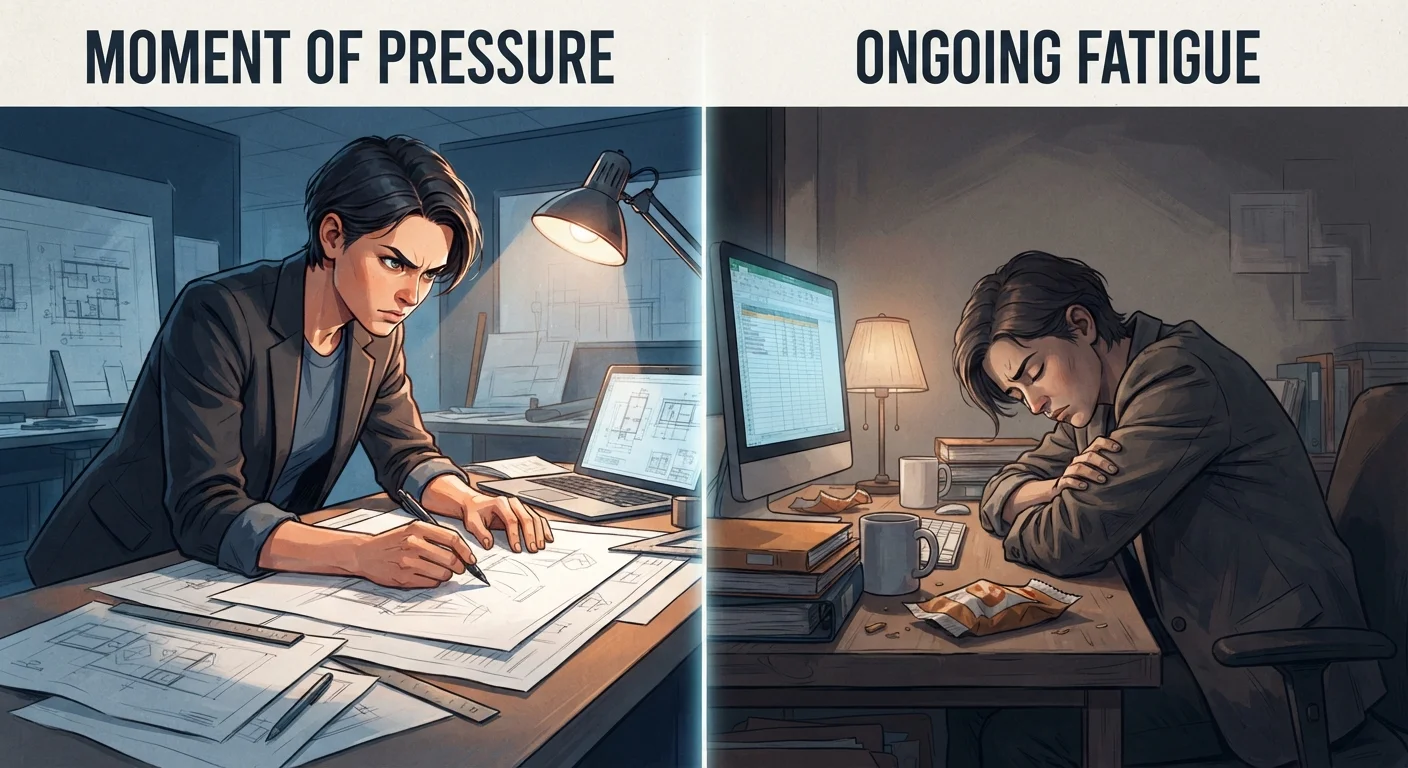
The Core Difference: Duration and Design
Stress is not inherently harmful — it is a biological signal. When the brain perceives a threat, the hypothalamic-pituitary-adrenal (HPA) axis triggers a cascade of hormones, including adrenaline and cortisol, that prepare the body to act. This response is well-designed for short-term survival.
Acute stress is what occurs in response to a discrete, identifiable event. It appears quickly, peaks, and then resolves once the situation passes. The nervous system returns to baseline, and the body recovers. To understand the biological mechanics in more detail, see what the nervous system does during a stress response.
Chronic stress, by contrast, occurs when stressors are ongoing — financial insecurity, persistent relationship conflict, long-term caregiving demands — and the stress response never fully switches off. The hormonal system stays activated at a low but continuous level. It is this prolonged activation, not the stress response itself, that research links to cumulative health risk.
| Criterion | Acute Stress | Chronic Stress |
|---|---|---|
| Duration | Minutes to hours | Weeks, months, or longer |
| Trigger | Specific, identifiable event | Ongoing or unresolved pressures |
| Hormonal activity | Sharp spike, then resolution | Persistently elevated cortisol |
| Physical impact | Functional short-term changes | Cumulative wear on multiple systems |
| Mental impact | Heightened focus and alertness | Fatigue, impaired memory, low mood |
| Recovery | Natural and relatively quick | Requires deliberate, sustained effort |
| Primary strategy | Immediate regulation techniques | Root-cause and lifestyle change |
What Each Type Does to Your Body and Mind
Because both forms recruit the same neurochemical machinery, the distinction is less about type and more about exposure time.
In acute stress, cortisol and adrenaline sharpen focus, elevate heart rate, and redirect energy to muscles and the brain. These effects are functional — they help you meet the immediate demand. Once the stressor resolves, parasympathetic activity restores calm, heart rate drops, and digestion and immune function resume normally.
In chronic stress, that recovery phase never fully arrives. Sustained elevated cortisol has been associated in research literature with impaired immune function, disrupted sleep, elevated blood pressure, changes in appetite regulation, and increased risk of anxiety and depression. The American Psychological Association and other major health bodies recognize chronic stress as a significant public health concern.
77%
Adults experiencing physical stress symptoms
According to American Psychological Association survey data, a substantial majority of US adults report physical symptoms they attribute to stress.
2–3x
Elevated cardiovascular risk from chronic stress
Research published in leading cardiovascular journals suggests prolonged psychological stress is associated with meaningfully higher heart disease risk.
33%
Adults who report feeling overwhelmed by stress
APA data consistently finds that roughly one in three US adults describe their stress level as extreme or near-extreme at some point in the year.
Mental health consequences are equally notable. Ongoing stress can erode working memory, reduce emotional regulation, and shrink the capacity for resilience over time. It is also worth noting that chronic stress can interact differently across life stages — a point explored in our article on mental wellbeing across a lifetime.
How Your Response Strategy Should Differ
Matching your approach to the type of stress you are experiencing is the practical core of this distinction.
For acute stress, evidence-backed techniques include diaphragmatic breathing (slow exhales activate the parasympathetic nervous system), brief physical movement to metabolize stress hormones, and grounding exercises that redirect attention to the immediate environment. These work because they address the immediate physiological spike.
For chronic stress, quick-fix techniques may offer momentary relief but do not resolve the underlying load. Effective approaches involve identifying and addressing root causes where possible, building consistent recovery practices — regular sleep, physical activity, social connection — and seeking professional support when stress is significantly affecting function. A structured self-check can help clarify your patterns; building a personal stress audit offers a practical framework for doing exactly that.
When to Seek Professional Support
If you find it difficult to identify whether your stress is acute or chronic, or if stress has been disrupting sleep, relationships, or work for several weeks or more, that is a meaningful signal. A licensed mental health professional — such as a psychologist or licensed counselor — can help you assess the pattern and develop a tailored plan. Do not rely on self-management alone when stress is severe or persistent.
For those exploring behavioral tools, the question of whether structured guidance or self-directed practice works better for stress reduction is worth considering. Mindfulness apps vs. unguided practice examines that question with reference to current research.
This article is for general informational and educational purposes only and does not constitute medical or psychological advice. If stress is significantly affecting your health or daily functioning, please consult a qualified healthcare professional.