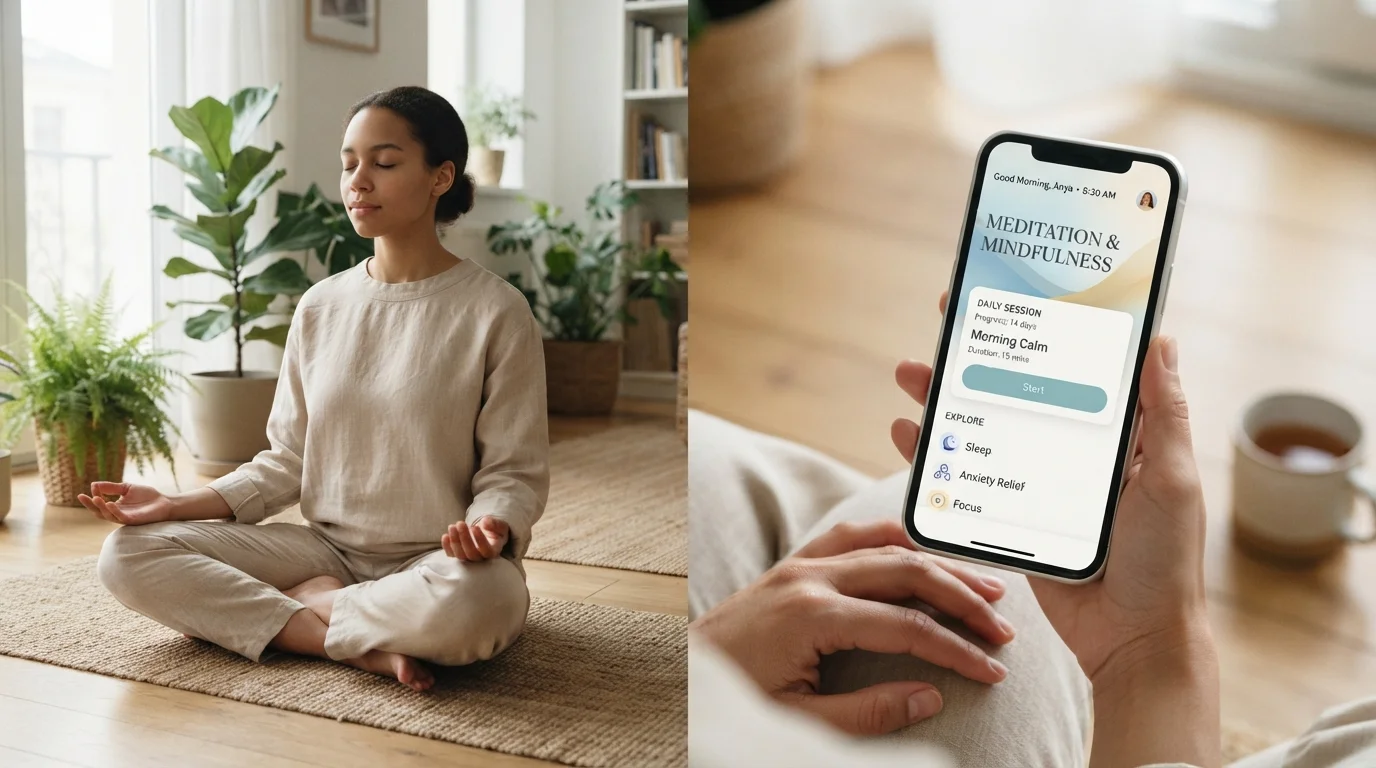
How Each Approach Works
Mindfulness apps — such as guided audio programs available on smartphones — deliver structured sessions led by recorded instructors. They typically include breathing exercises, body scans, and themed meditation series, often with progress tracking and reminders built in. The appeal is immediacy: users can start a five-minute session with no prior knowledge required.
Unguided practice, by contrast, involves sitting quietly and directing your own attention — to breath, sensation, or the present moment — without external prompts. This approach draws on centuries of contemplative tradition and is what most long-term meditators eventually move toward. It demands a degree of self-direction that apps do not require.
Understanding the trade-offs between them matters because they make different demands on the practitioner and produce somewhat different outcomes. For a broader look at how technology shapes wellbeing in everyday life, see our complete overview of technology and wellbeing.
| Mindfulness Apps | Unguided Practice | |
|---|---|---|
| Ease of entry | Very accessible, no prior experience needed | Requires self-direction; steeper initial curve |
| Evidence base | Growing short-term trial data | Strong long-term observational evidence |
| Screen exposure | Requires device use each session | Completely screen-free |
| Flexibility | On-demand, guided variety | Fully adaptable, no external dependency |
| Cost | Often subscription-based | Free once skills are established |
| Long-term skill building | May create reliance on guidance | Develops independent regulation capacity |
| Best suited for | Beginners and habit-formers | Experienced or advancing practitioners |
What the Research Actually Shows
Studies on app-based mindfulness have grown substantially over the past decade. A number of randomized controlled trials have found that using guided meditation apps for four to eight weeks is associated with measurable reductions in self-reported stress, anxiety, and burnout compared with control groups. The results are generally modest but statistically meaningful, particularly among people with no prior meditation experience.
Research on unguided practice is harder to standardize — participants vary widely in technique, duration, and frequency. However, studies of experienced meditators consistently show strong associations with reduced cortisol levels, improved emotional regulation, and greater attentional control. The challenge is that these outcomes tend to reflect years of practice, not weeks.
~30%
Reduction in perceived stress scores
A meta-analysis published in JAMA Internal Medicine found mindfulness meditation programs produced approximately a 30% reduction in psychological stress measures compared to control groups.
4–8 weeks
Typical timeframe for measurable effect
Most randomized trials of app-based mindfulness interventions use four-to-eight-week programs as the minimum window for detecting stress-related changes.
~1 in 3
Users who continue after 30 days
Retention data from app-based wellness programs generally suggests that only around a third of users maintain consistent engagement beyond the first month.
One important nuance: many app-based studies rely on self-report measures and short follow-up windows, which limits what we can conclude about long-term stress reduction. Independent reviews have also noted that commercial app developers sometimes fund or selectively publish supportive findings — a reason to weigh the evidence carefully rather than take any single study at face value.
The Screen Time Paradox
One underappreciated tension with mindfulness apps is that using them requires picking up a phone — the same device associated with distraction, social comparison, and interrupted sleep. If an app session is sandwiched between checking email and scrolling social media, the relaxation benefit may be partially offset by the ambient stress of the digital environment.
This doesn't mean apps are counterproductive, but it does suggest that context matters. A dedicated phone mode, airplane mode, or a brief digital detox before and after a session may help protect the practice. For a parallel look at how screen-management tools actually perform, the article on screen time tracking apps and unplugging explores when digital self-regulation tools fall short.
Protect Your Practice From the Feed
Before opening a meditation app, switch your phone to airplane mode or enable Do Not Disturb. This small step removes the temptation to check notifications immediately before or after your session, helping preserve the mental space you are trying to create. Even a two-minute buffer before re-engaging with other apps can meaningfully protect the session's calming effect.
Building a Practice That Lasts
Consistency matters more than method. A five-minute unguided session practiced daily will likely produce more benefit than a thirty-minute guided session done sporadically. Both approaches work best when they become habitual rather than reactive — used as a regular part of the day, not only during high-stress moments.
For those new to mindfulness, apps can reduce the friction of starting. For anyone already comfortable with the basics, gradually reducing reliance on guided audio and extending sessions in silence tends to build greater self-regulation capacity over time. This mirrors how many mindfulness teachers describe the learning curve: structured guidance as scaffolding, not a permanent fixture.
If you are unsure what role stress plays in your daily life before choosing a practice format, working through a structured self-check like the one described in building a personal stress audit may help clarify your starting point. For a candid look at the genuine limits of mindfulness as a daily habit, see the honest trade-offs of mindfulness practice.
This article is for general informational and educational purposes only and is not a substitute for professional mental health advice, diagnosis, or treatment. If you are experiencing significant stress, anxiety, or other mental health concerns, please consult a qualified healthcare professional.