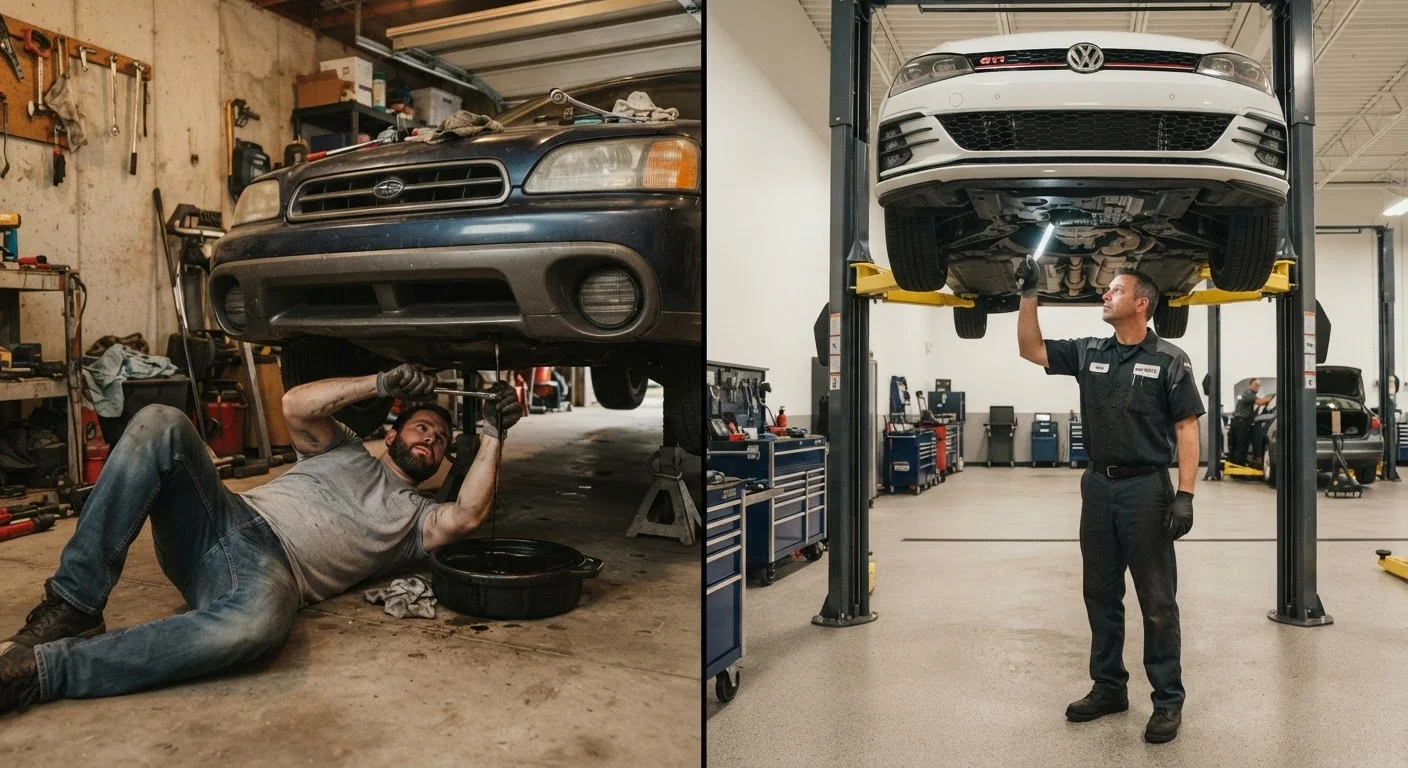
Why the DIY vs. Garage Question Matters
Car ownership comes with a running list of maintenance tasks — oil changes, tyre rotations, filter replacements, fluid top-ups, and more. For many owners, the immediate instinct is to ask: can I do this myself, or does it need a professional? The honest answer varies by task, skill level, and available equipment.
Getting this decision right matters beyond cost. Poorly executed DIY on a safety-critical system can create hazards on the road. Conversely, sending every routine task to a garage adds up quickly over a vehicle's lifetime. New car owners especially benefit from understanding where the boundary sits before forming habits around their vehicle's upkeep.
The framework below breaks down which side of the line common jobs fall on — and why.
Tasks Most Owners Can Handle at Home
A handful of routine maintenance jobs are genuinely accessible to careful, patient owners with modest tool sets. These tend to share common characteristics: clear visual access to the component, low safety risk if done imperfectly, and well-documented procedures in owner's manuals or manufacturer resources.
- Engine oil and filter changes — One of the most common DIY tasks. Requires basic tools, a drain pan, and a safe way to raise the vehicle if needed. Always use the grade specified in the owner's manual.
- Air filter replacement (engine and cabin) — Often a straightforward swap requiring no tools. Cabin air filters in particular are frequently neglected yet easy to replace.
- Wiper blade replacement — Typically tool-free and completed in minutes.
- Tyre pressure checks and top-ups — Essential for safety and fuel efficiency; requires only a tyre gauge.
- Battery terminal cleaning — Straightforward with gloves, eye protection, and a wire brush.
- Bulb replacement — Varies significantly by vehicle; some modern designs require bumper removal and are better left to a mechanic.
Always Check Your Owner's Manual First
Before starting any DIY job, cross-reference your owner's manual with a reliable source such as the vehicle manufacturer's own documentation. Procedures vary significantly between makes and models. Some tasks that appear simple — like bulb replacement — can require partial disassembly on certain vehicles, making a professional visit more sensible than it first seems.
Before starting any DIY job, cross-reference your owner's manual with a reliable source such as the vehicle manufacturer's own documentation. Procedures vary between makes and models, and what applies to one car may not apply to another.
When You Should Go Straight to a Garage
Certain systems demand professional attention — not because of complexity alone, but because errors can have serious or irreversible consequences. If you're unsure whether a job falls into this category, that uncertainty itself is a reasonable signal to seek professional input.
Don't Guess on Safety-Critical Systems
Brakes, steering, suspension, and airbag systems directly affect your ability to control the vehicle and protect occupants in a collision. If you are uncertain about any aspect of work on these systems, stop and consult a qualified mechanic. Incomplete or incorrect repairs in these areas can create hazards that are not always immediately obvious during a short test drive.
- Brake system work — Replacing brake pads is within some experienced DIYers' reach, but brake line repair, caliper replacement, or any hydraulic component work carries direct safety implications. A qualified mechanic should inspect and sign off on brake system integrity.
- Suspension and steering components — Incorrect reassembly affects vehicle handling. Wheel alignment following any suspension work requires specialist equipment.
- Transmission servicing — Complex, fluid-sensitive, and expensive to repair if mishandled.
- Airbag and advanced safety systems — These systems involve pyrotechnic components and require specialist knowledge. Attempting DIY here is genuinely dangerous.
- Engine diagnostics and fault codes — A diagnostic scanner can read a fault code, but interpreting and resolving the underlying cause often requires professional tools and training.
If your vehicle is under a manufacturer warranty, check the terms carefully. Some warranties require servicing to be carried out by authorised workshops to remain valid. Understanding how to evaluate a mechanic's estimate helps ensure you're getting fair value when you do use a professional.
Comparing the Two Approaches
Both approaches have genuine strengths. The right choice depends on the specific task, your skill and equipment, and your vehicle's circumstances.
| DIY Maintenance | Professional Garage | |
|---|---|---|
| Cost | Lower — parts cost only, no labour | Higher — includes labour rates and shop fees |
| Suitable tasks | Routine, low-risk, accessible jobs | Complex, safety-critical, specialist work |
| Equipment needed | Basic hand tools for most tasks | Specialist tools and diagnostic equipment |
| Safety risk if done incorrectly | Low for routine tasks; higher for advanced jobs | Minimised — accountable professional work |
| Warranty implications | May affect warranty if terms require authorised service | Authorised workshops preserve warranty terms |
| Time required | Variable; longer for unfamiliar tasks | Typically faster with professional workflow |
| Skill level required | Low to moderate for basic maintenance | High — trained and certified mechanics |
Building consistent maintenance habits early — whether DIY or garage-based — is ultimately more important than which route you choose for any individual job.
Making a Realistic Self-Assessment
Honest self-assessment is the most underrated part of the DIY decision. Before starting a job, ask yourself:
- Do I have the correct tools, including any specialised equipment this task requires?
- Do I have a safe, stable workspace — level ground, adequate lighting, and secure vehicle support if lifting is involved?
- Have I read the procedure in full and understood each step before beginning?
- If something goes wrong mid-task, do I have a plan — including the option to stop and call a mechanic?
A useful parallel exists with home improvement decisions: knowing when to hire a tradesperson versus tackling a job yourself follows much the same logic — match the task's risk and complexity to your honest capability. Attempting a job beyond your current skill level risks damaging components, voiding warranties, or creating safety hazards that cost more to fix than the original repair would have.
This article provides general information for educational purposes. Always consult a qualified mechanic for safety-critical repairs and refer to your vehicle's owner's manual for manufacturer-specific guidance.