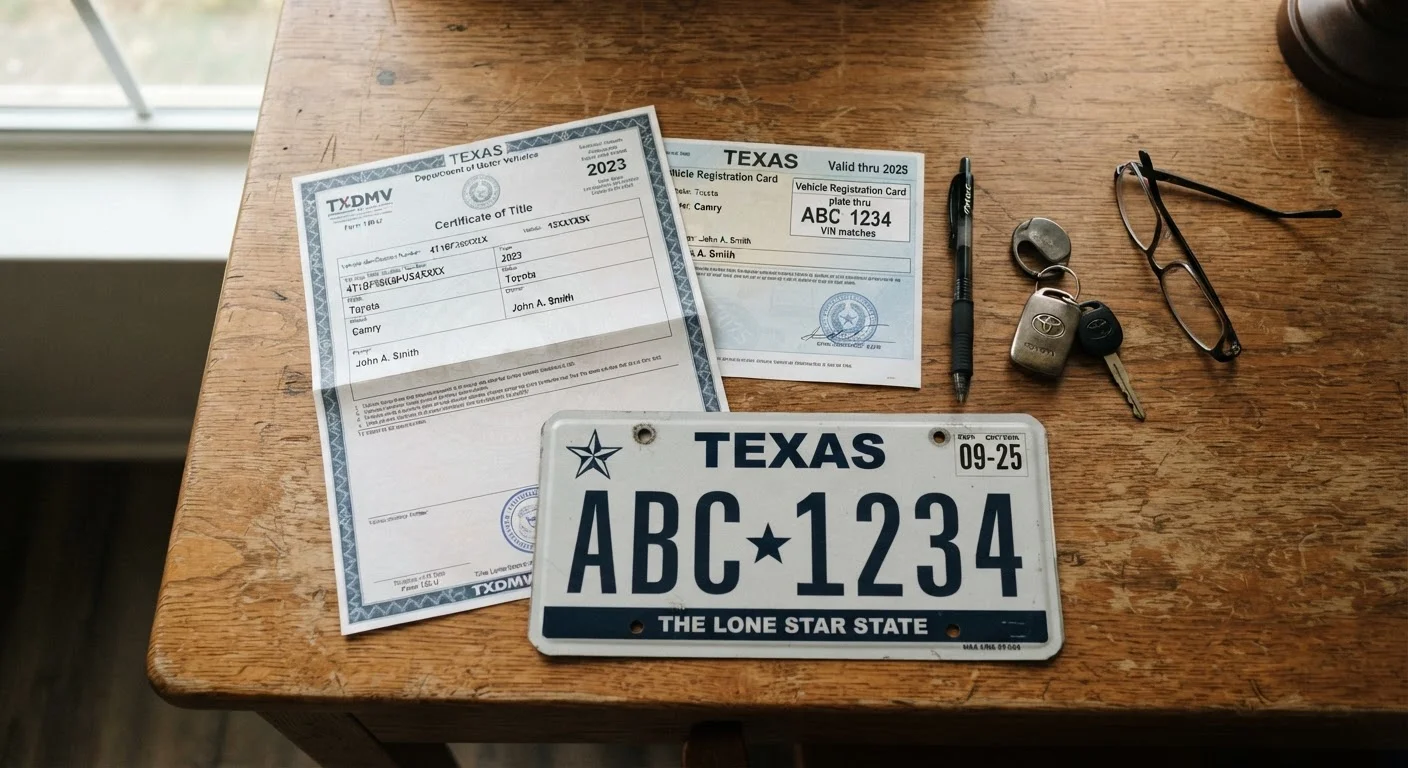
The Certificate of Title: Proof of Ownership
A certificate of title is the foundational legal document that establishes who owns a vehicle. Issued by a state agency — typically the Department of Motor Vehicles — it records the owner's name, the vehicle identification number (VIN), make, model, year, and any lien (a lender's legal claim against the vehicle when it is financed).
Think of the title as the deed to a house. You need it to legally sell or transfer the vehicle, and a buyer cannot take clear ownership without one. If you financed your car, the lender's name usually appears on the title or a lien is noted — the clean title transfers to you only once the loan is fully repaid.
Common title statuses worth knowing:
- Clean title — no known major damage history or outstanding liens.
- Salvage title — the vehicle was declared a total loss by an insurer at some point.
- Rebuilt/reconstructed title — a previously salvaged vehicle that has been repaired and passed inspection.
When buying a used vehicle, always verify the title is in the seller's name and matches the VIN on the car. For a broader look at what owning a car actually costs you beyond the paperwork, see the real cost of car ownership.
Vehicle Registration: Permission to Use the Road
While the title answers who owns the vehicle, registration answers whether the vehicle is authorized to be driven on public roads in a given state. Registration is renewed — usually annually — and is tied to a specific owner, address, and vehicle.
Requirements Vary by State
Vehicle titling, registration timelines, and plate rules differ from state to state. Always verify specific deadlines, fees, and procedures with your state's Department of Motor Vehicles (DMV) or equivalent agency before completing any paperwork. The information here is general and educational.
When you register a vehicle, the state records your information and issues a registration card (or certificate) that you are generally required to keep in the vehicle. Registration fees often fund road infrastructure and vary based on factors such as vehicle weight, age, and sometimes emissions performance.
Key registration milestones to know:
- New vehicle — must be registered within a state-specified window after purchase, often 10–30 days.
- Moving to a new state — most states require you to re-register within 30–90 days of establishing residency.
- Renewal — states send renewal notices, but the responsibility to renew on time rests with the owner. Driving with expired registration can result in fines.
Registration and title are separate transactions. You can technically hold a title without current registration (a parked, non-operating vehicle, for example), and you cannot legally register a vehicle you do not have proper title for.
If you are just starting out as a car owner, everything first-time car owners need to know covers this and much more in plain language.
License Plates: The Visible Link Between Vehicle and Record
License plates (also called tags in some states) are the physical identifiers mounted on the front and/or rear of a vehicle. They serve as a public-facing connection between the car and its registration record — allowing law enforcement, toll systems, and other agencies to quickly look up the vehicle's status.
| What a title proves | Legal ownership of the vehicle |
| What registration confirms | The vehicle is authorized to operate on public roads in that state |
| What license plates do | Publicly identify the vehicle and link it to the registration record |
| Typical registration renewal cycle | Annually (some states offer multi-year options) |
| Who holds the title when financed | The lender retains the title (or a lien is noted) until the loan is paid off |
| Time to transfer title after purchase | Varies by state — commonly 10 to 30 days |
A few practical points about plates:
- Plates follow the owner or the vehicle — this varies by state. In some states, plates stay with the car when it is sold; in others, the owner removes the plates and the buyer gets new ones.
- Specialty and vanity plates — many states offer personalized or themed plates, usually for an additional fee. These carry the same legal weight as standard plates.
- Registration stickers — most states issue a small sticker (a registration decal) that attaches to the plate to show the current registration year or month. Expired stickers are a common reason for traffic stops.
Plates alone do not prove ownership — they reflect the current registration. If you sell a vehicle without transferring the title and plates correctly, you may remain associated with that vehicle in state records until the transfer is completed.
Understanding how these documents interact is particularly useful when reading a vehicle's service history as part of a used-car evaluation.
How the Three Documents Work Together
Title, registration, and plates each play a distinct role — and all three must be in order for a car to be legally owned and driven. Here is a simple way to think about the relationship:
| Document | Purpose | Renewed? |
|---|---|---|
| Title | Proves legal ownership | No — transferred at sale |
| Registration | Authorizes road use | Yes — typically annually |
| License Plates | Publicly identifies the vehicle | Varies — tied to registration |
When you buy a car, you need to complete a title transfer and then register the vehicle in your name to get (or keep) plates. Miss either step, and you are likely driving with incomplete paperwork — a situation that can complicate insurance claims and create legal headaches.
Staying on top of this paperwork is part of responsible car ownership, much like keeping up with routine maintenance. For a deeper look at what drives ongoing car costs, explore what car ownership truly costs beyond the purchase price.
This article provides general educational information about vehicle documentation. Rules, deadlines, and procedures vary by state. Always verify requirements with your state's DMV or a qualified legal professional before completing any vehicle transactions.