Why Family Travel Carries Distinct Safety Risks
Traveling with children introduces a category of risk that standard travel safety guides rarely address in depth. Children respond differently to environmental stressors — altitude, heat, unfamiliar food, disrupted sleep — and they lack the judgment to flag early warning signs to caregivers. The result is that parents often discover gaps in their preparation only after something has gone wrong.
Most family travel incidents aren't dramatic. They're the result of small oversights compounding: a missed medication, a moment of crowd confusion, or a car seat assumption that didn't hold across borders. Understanding where these gaps typically appear is the first step toward closing them. See our foundational travel safety guide for broader context before layering in these child-specific considerations.
Common Safety Mistakes Parents Make When Traveling With Children
The mistakes below aren't signs of negligence — most stem from planning frameworks designed for adult travelers that simply don't account for children's unique vulnerabilities.
Assuming domestic car seat rules apply internationally.
Why it happens: Parents pack their familiar car seat without researching whether it meets the certification standards of their destination country, or whether rental vehicle compatibility has been confirmed.
Skipping a child-specific reunion plan for crowded venues.
Why it happens: Parents focus on holding hands or staying close, treating physical proximity as the plan itself — leaving no fallback if separation happens despite precautions.
Under-packing or mislabeling children's medications.
Why it happens: Parents often estimate quantities based on typical at-home use, forgetting that illness rates tend to rise during travel. Unlabeled or improperly stored medications create confusion during a medical situation.
Overlooking sun and heat exposure thresholds for children.
Why it happens: Adults calibrate comfort by their own experience, not recognizing that children overheat faster, are more susceptible to sunburn, and are less able to communicate early distress.
Failing to research destination-specific health entry requirements for children.
Why it happens: Parents focus on their own passport and visa requirements, assuming children's documentation and health entry rules mirror their own.
Treating travel fatigue in children as simply behavioral.
Why it happens: Overtired, overstimulated children often present as difficult or uncooperative rather than exhausted, leading parents to push through itineraries rather than rest.
Crowd Separation Happens Faster Than Parents Expect
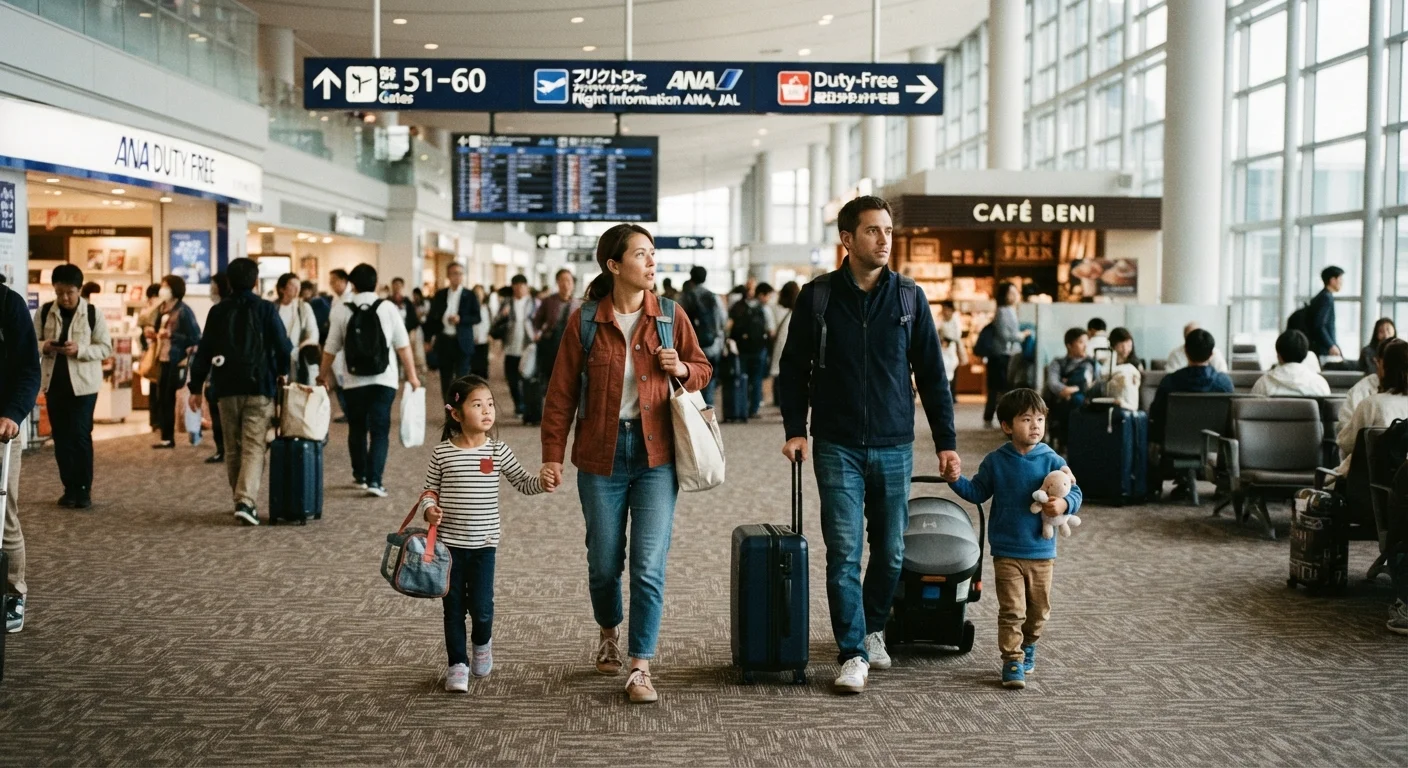
Busy airports, theme parks, markets, and transit hubs are environments where children can disappear from sight within seconds. Relying solely on physical closeness is not a safety plan. Before entering any crowded space, establish a meeting point, ensure older children know a contact number, and consider identification tools appropriate to your child's age. Review emergency preparedness strategies so you're not making decisions under pressure.
Medical Planning and Environmental Risks
Children's physiology means environmental hazards that adults shrug off can escalate quickly. Altitude sickness can affect children at lower elevations than adults and progress faster. Dehydration in hot climates becomes dangerous more rapidly in small bodies. Sun exposure at high altitudes or near the equator can cause burns within minutes.
2–3×
Faster dehydration rate in children vs. adults
Pediatric physiology research consistently shows children lose fluids proportionally faster than adults during physical activity or heat exposure.
30 min
Time to sunburn at high altitude without protection
UV radiation intensity increases significantly with altitude; at elevations above 8,000 feet, unprotected skin can burn in as little as 30 minutes.
Before departure, consult a pediatric healthcare provider — not just a general travel health clinic — about destination-specific risks. Confirm which over-the-counter medications are appropriate for your child's age and weight in the destination country, since formulations and availability vary. Our companion piece on health risks travelers overlook covers altitude, food safety, and water concerns that apply equally to traveling families.
For broader trip preparation that accounts for every family member's needs, family trip planning by age group offers practical pacing and logistics guidance.
This article provides general travel safety information for educational purposes. Always consult a qualified healthcare professional before traveling with children, particularly regarding medical preparations, vaccinations, and destination-specific health risks.