Why the Smart Home Needed a Common Standard
For years, buying smart home devices felt like choosing sides. A bulb made for one ecosystem might refuse to cooperate with another brand's hub. Switching platforms often meant replacing gear entirely. The fragmentation was real, and it frustrated both casual buyers and dedicated enthusiasts alike.
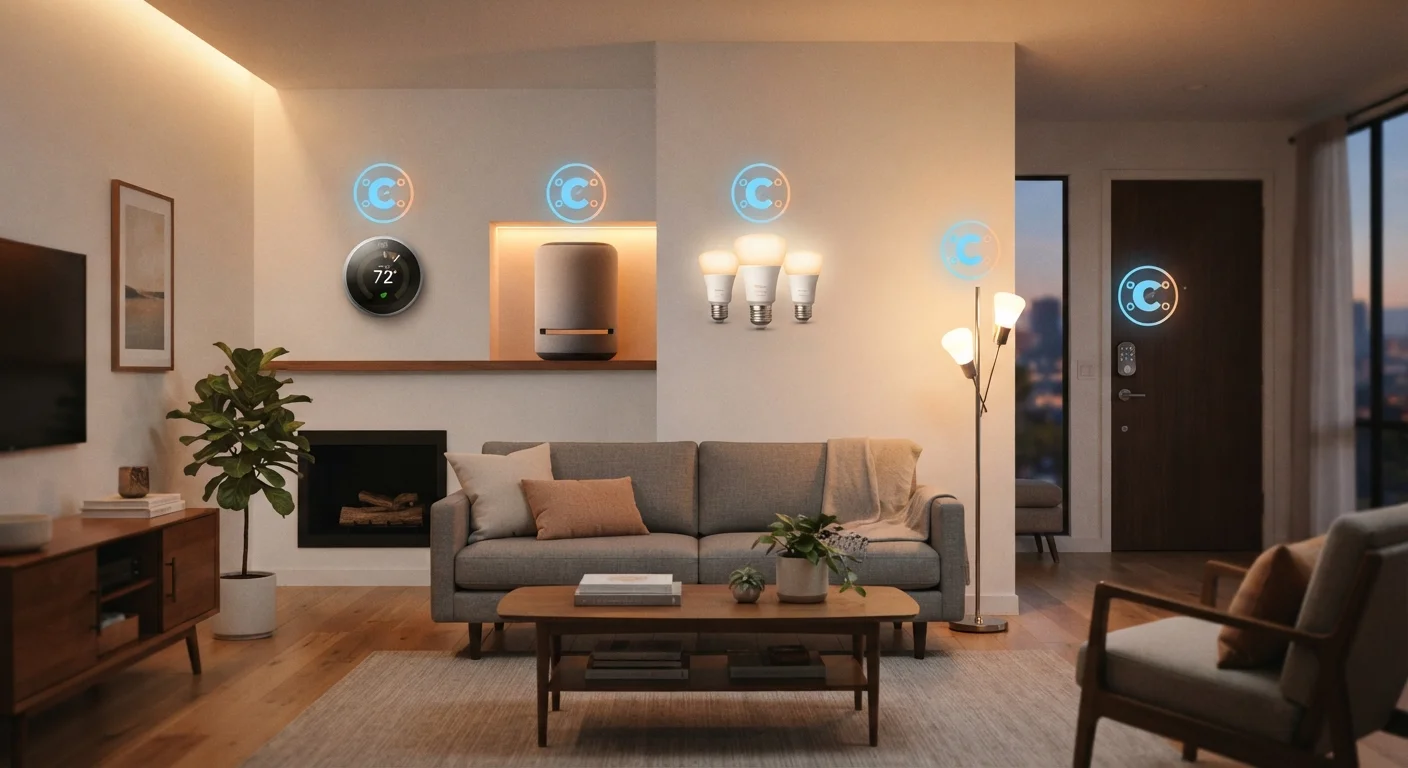
Matter was created to address that problem at its root. Instead of relying on proprietary protocols and closed platforms, Matter gives every certified device a shared foundation — so a smart lock from one manufacturer works just as naturally with your voice assistant of choice as it would with that brand's own app.
If you're exploring connected home technology for the first time, our smart home setup guide walks through the broader landscape before you commit to any hardware.
600+
Companies backing the Matter standard
The Connectivity Standards Alliance (CSA), which manages Matter, includes over 600 member companies spanning device makers, platform operators, and chipset manufacturers.
Local
Where Matter commands are processed
Unlike many earlier smart home systems, Matter is designed to process device commands on the local home network rather than routing them through remote cloud servers.
4+
Major platforms with native Matter support
Apple Home, Google Home, Amazon Alexa, and Samsung SmartThings each support Matter, allowing one device to work across all four simultaneously.
How Matter Actually Works
Matter operates on your local home network — using Wi-Fi, Ethernet, or a low-power mesh protocol called Thread. When you pair a Matter device, it registers with one or more controllers (like a smart speaker or hub) that manage it. Because the standard is open and shared, multiple platforms can control the same device without conflict.
This local-first design has a practical benefit: most commands never leave your home. If your internet goes down, your Matter lights and locks can still respond to automations and direct commands. That's a meaningful improvement over cloud-dependent systems that go dark during outages.
Each Matter device receives a digital certificate at the factory, verifying it as authentic and secure. This makes onboarding more trustworthy and streamlines the pairing process — one QR code scan is typically all it takes.
Check for the Matter Logo Before You Buy
Certified Matter products display the Matter logo on their packaging or product listing. This indicates the device has passed interoperability testing through the Connectivity Standards Alliance. Checking for this certification is the quickest way to confirm a device will work across platforms before you bring it home.
What Matter Means for Your Setup
The most immediate practical benefit is choice. If you already use Apple Home but your partner prefers Google Home, a Matter-certified thermostat can appear in both apps simultaneously — no workarounds needed. You can also switch platforms in the future without discarding your hardware investment.
It's worth being realistic, though. Matter doesn't make every device magically compatible with every feature on every platform. Advanced features — like specific automation triggers or proprietary integrations — may still only be available through a device's native app. For a grounded view of what connected home technology still can't do, our article on smart home myths and limitations is worth reading.
Matter also doesn't cover the full range of smart home device categories yet. The standard continues to expand with each specification update, but checking whether a specific device type is included before purchasing is a good habit.
Getting the Most Out of a Matter-Ready Home
If you're building or upgrading a smart home with Matter in mind, a few principles make the process smoother. First, confirm that your existing hub or smart speaker supports Matter — most current-generation devices from major platforms do. Second, look for the Matter logo on product packaging, which indicates the device has been certified through the Connectivity Standards Alliance.
Thread-based devices (often sensors and battery-powered accessories) require a Thread Border Router to connect to your network. Many modern smart speakers and hubs already include one built in, so you may not need separate hardware.
Understanding the language of how smart home platforms organize control — scenes, routines, and automations — also helps you get more out of any setup. Our guide to automations, routines, and scenes breaks down those distinctions clearly. And for anyone weighing the broader trade-offs of connected devices, our practical look at smart home devices covers privacy, cost, and complexity in plain terms.
Matter Is a Standard, Not a Feature
Matter functions as a foundational protocol — it's not something you activate or subscribe to. When you buy a Matter-certified device and pair it with a compatible controller, the standard works silently in the background. You won't see a 'Matter mode' toggle; you'll simply notice that setup is easier and cross-platform control works as expected.