Why Ingredient Labels Feel Like a Foreign Language
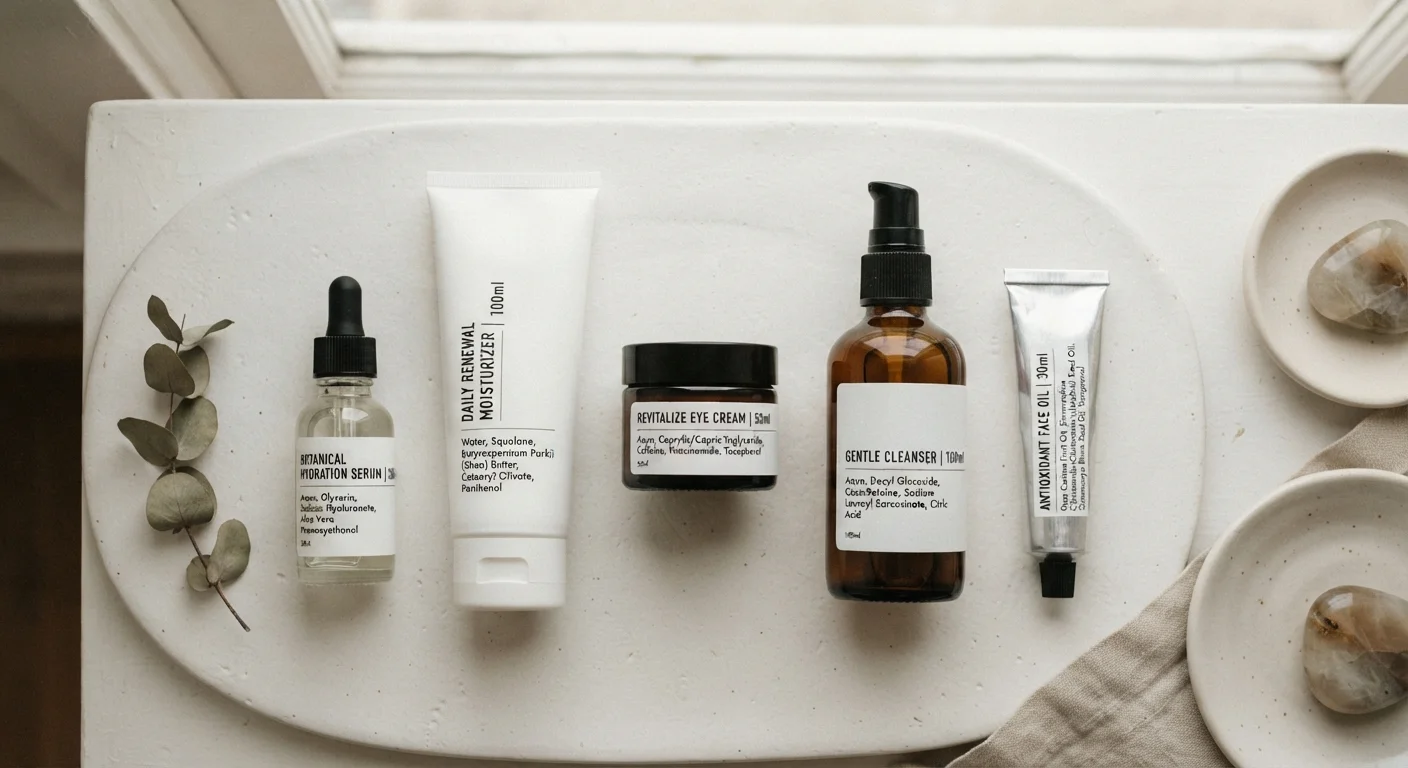
Skincare product labels are legally required to list ingredients in descending order of concentration — but that doesn't make them easy to read. A single moisturizer might contain 30 or more entries, mixing Latin botanical names, chemical compounds, and marketing terms that blend together in confusing ways. Understanding even a handful of key categories can change how you evaluate what you apply to your skin.
This reference guide defines the terms that appear most frequently, grouped by what they actually do. Whether you're building a routine from scratch or auditing products you already own, these definitions give you a practical framework — not a shopping list. For guidance on how to identify what your skin specifically needs, see our article on understanding your skin type.
Humectant
An ingredient that draws water toward the skin's surface, either from deeper layers or the surrounding air. Glycerin, hyaluronic acid, and urea are common examples.
Emollient
An ingredient that softens and smooths skin by filling gaps between surface cells. Oils, fatty acids, ceramides, and squalane are typical emollients.
Occlusive
An ingredient that forms a physical barrier over the skin to slow water loss. Petrolatum and dimethicone are widely used occlusives, often found in balms and barrier creams.
Retinoid
A class of vitamin A derivatives — including retinol and tretinoin — that influence skin cell turnover. They are among the most research-backed topical actives but require careful, gradual introduction.
AHA (Alpha Hydroxy Acid)
Water-soluble acids derived from natural sources (e.g., glycolic acid from sugarcane, lactic acid from milk) that exfoliate the skin surface by loosening bonds between dead cells.
BHA (Beta Hydroxy Acid)
Oil-soluble acids — primarily salicylic acid — that can penetrate into pores. Commonly used in formulations targeting acne-prone or congested skin.
Peptide
Short chains of amino acids used in skincare to support the skin's structural proteins. They are generally low in irritation potential and appear in a wide range of serums and moisturizers.
Antioxidant
An ingredient that neutralizes free radicals — unstable molecules generated by UV exposure and pollution — helping reduce oxidative stress on skin cells. Vitamin C and niacinamide are well-known examples.
Ceramide
Lipid molecules naturally found in the skin barrier. When included in topical formulations, they help reinforce the barrier and reduce moisture loss.
Niacinamide
A form of vitamin B3 used in skincare for its role in supporting the skin barrier, regulating sebum, and contributing to more even skin tone. It is generally considered well-tolerated.
Fragrance (INCI listing)
A single ingredient declaration that can represent a complex blend of undisclosed aromatic compounds. It is one of the more common causes of contact sensitivity for reactive skin types.
INCI Name
International Nomenclature of Cosmetic Ingredients — the standardized naming system used on product labels globally. INCI names are often Latin or chemical terms, distinct from the common or marketing names used in advertising.
Core Functional Categories: What Ingredients Are Doing on Your Skin
Most skincare ingredients fall into one of several functional roles. Knowing the role helps you predict how a product will feel and perform.
| Ingredient listing order | Descending by concentration (highest to lowest) (FDA cosmetic labeling regulations) |
| 1% threshold rule | Ingredients below 1% can be listed in any order (FDA cosmetic labeling regulations) |
| Most studied topical active | Retinoids (vitamin A derivatives) (Dermatology literature consensus) |
| Common contact sensitizer | Fragrance (can represent dozens of compounds under one entry) (American Contact Dermatitis Society) |
| Naming standard on labels | INCI (International Nomenclature of Cosmetic Ingredients) (PCPC / EU Cosmetics Regulation) |
| Humectant found in most formulas | Glycerin — effective, inexpensive, and broadly compatible |
Hydration and Moisture Retention
Humectants attract water molecules from the environment and from deeper skin layers, drawing them toward the surface. Common humectants include glycerin, hyaluronic acid, and panthenol. They're found across nearly every product category and generally suit all skin types.
Emollients smooth the surface by filling gaps between skin cells, softening texture and reducing rough patches. Oils, fatty acids, and ingredients like squalane and ceramides perform this role. Emollients tend to feel richer than humectants and are especially helpful for dry or compromised skin barriers.
Occlusives sit on top of the skin and physically slow water loss by forming a protective layer. Petrolatum, beeswax, and dimethicone are well-known examples. They're most effective as the final step in a routine — locking in hydration applied underneath.
Active Ingredients and Exfoliants
AHAs (alpha hydroxy acids) — such as glycolic and lactic acid — are water-soluble acids that loosen bonds between dead skin cells on the surface, promoting smoother texture and more even tone over time.
BHAs (beta hydroxy acids), primarily salicylic acid, are oil-soluble, meaning they can penetrate into pores. They are commonly used in formulations targeting congestion and excess sebum.
Retinoids are vitamin A derivatives — including retinol and prescription-strength tretinoin — that influence cell turnover and collagen production. They are among the most extensively studied skincare actives available. Because they require careful introduction and aren't suitable for everyone, our dedicated guide on retinoids explained is worth reading before you start.
Peptides are short chains of amino acids that can signal the skin to support structural proteins like collagen. Research is ongoing, but peptides are widely considered low-irritation actives appropriate for most skin types.
Antioxidants — including vitamin C (ascorbic acid), vitamin E (tocopherol), and niacinamide — help neutralize free radicals generated by UV exposure and pollution. They appear in serums, moisturizers, and sunscreens alike.
Reading Labels More Confidently
A few practical principles help when you're scanning an ingredient list. Ingredients present at less than one percent can appear in any order after that threshold, which means a headline ingredient listed near the bottom may be present in a very small amount. "Fragrance" is a single entry that can represent dozens of undisclosed compounds — a relevant consideration for those with sensitive or reactive skin.
"Fragrance-Free" vs. "Unscented" — Not the Same Thing
"Fragrance-free" means no fragrance compounds have been added. "Unscented" can still contain masking fragrances used to neutralize the natural smell of other ingredients. For sensitive or reactive skin, fragrance-free is the more reliable designation to look for. Always check the full INCI list rather than relying on front-label claims alone.
If you want to add new actives to your routine, introducing them gradually reduces the risk of irritation. Our article on introducing new skincare ingredients without irritating your skin covers patch testing and pacing in practical detail.
Ingredient literacy isn't about memorizing every compound — it's about recognizing the functional categories that matter to your skin's needs. With this foundation, label-reading shifts from overwhelming to genuinely informative.
This article is for general informational and educational purposes only. It is not a substitute for professional dermatological or medical advice. If you have a skin condition or concerns about a specific ingredient, consult a qualified healthcare provider or dermatologist.