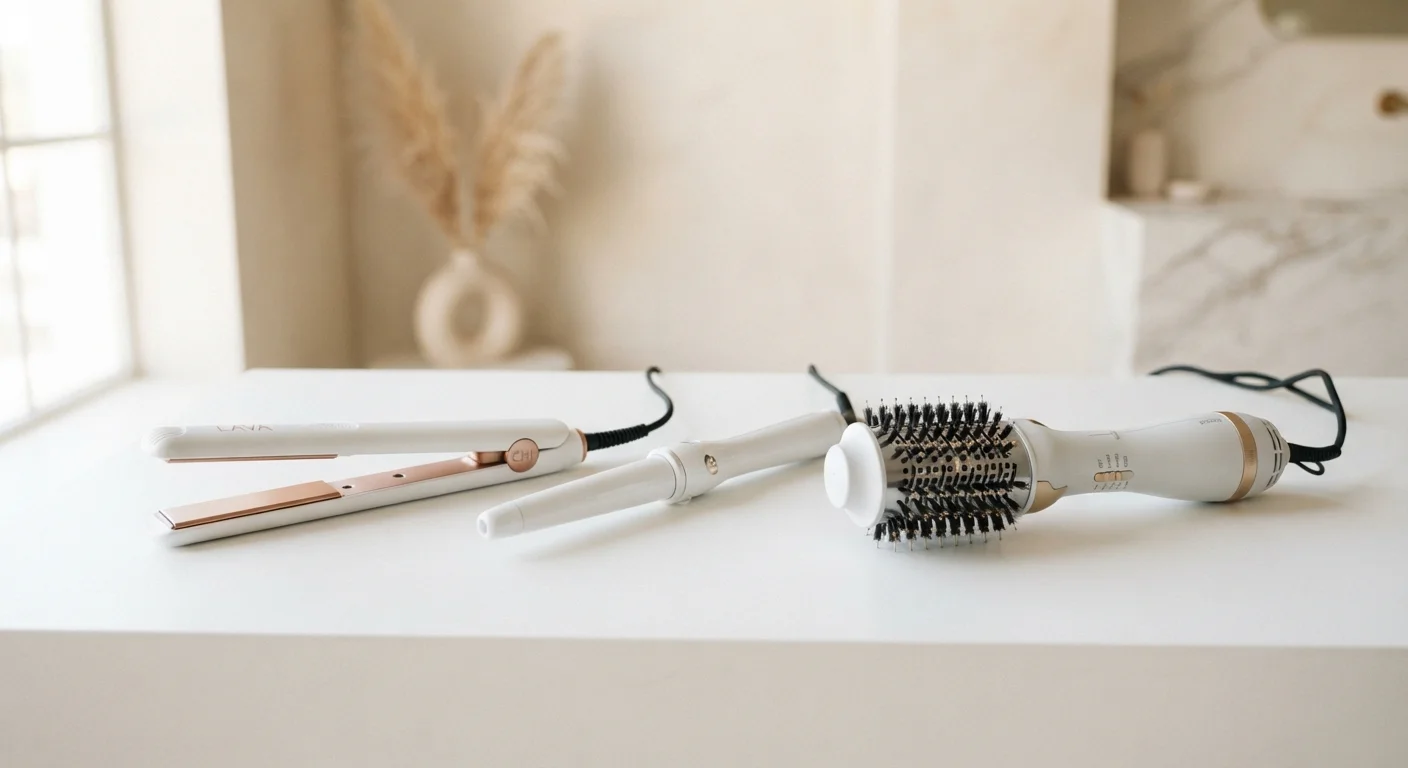
Why the Right Tool Makes a Measurable Difference
Heat styling tools are not interchangeable. Each one applies heat differently — through direct plate contact, a barrel with no clip, or a rotating bristle brush — and those mechanical differences determine the texture, hold, and finish you walk away with. Using the wrong tool for your hair type or styling goal doesn't just produce disappointing results; it can expose your strands to unnecessary damage.
Understanding what each tool is actually designed to do is the first step toward a more efficient, healthier routine. If you're still figuring out your natural texture, our guide on curl patterns and what they mean for your care routine is a useful starting point before investing in any heat tool.
| Flat Iron | Curling Wand | Hot Air Brush | |
|---|---|---|---|
| Primary result | Straight, smooth, or waved | Defined curls or waves | Voluminous blowout finish |
| Skill level required | Low to moderate | Moderate to high | Low |
| Best hair types | Most types | Most types, especially medium–thick | Fine to medium hair |
| Heat contact | Direct plate contact | Direct barrel contact | Diffused airflow + bristles |
| Style longevity | High | High | Moderate |
| Versatility | High (straight + waves) | Moderate (curl/wave only) | Low (blowout focus) |
| Damage risk (without protectant) | Moderate | Moderate to high | Lower than plates/barrels |
Flat Irons: Precision, Smoothness, and Versatility
A flat iron — two heated plates that clamp around a section of hair — is the most versatile heat tool in the category. At its most basic, it straightens, but with a twist of the wrist it can also create loose waves and soft flips. Ceramic and tourmaline plate materials distribute heat more evenly than older metal plates, which reduces hot spots that cause breakage.
Flat irons work on a wide range of textures, from fine straight hair to thick coily strands, though the ideal temperature varies considerably. Fine or damaged hair generally responds better to lower settings (around 300–350°F), while coarser textures may need higher heat to achieve lasting results. If your hair is colour-treated, the heat-use guidance for colour-treated strands is especially relevant, since chemical processing alters how hair tolerates thermal stress.
Section Size Affects Results More Than Temperature
Thinner sections transfer heat more efficiently and produce more consistent results regardless of which tool you use. Working with smaller portions of hair — roughly half an inch to one inch wide — often means you can use a lower temperature setting while still achieving your desired style, reducing cumulative heat exposure over time.
Curling Wands: Shape, Definition, and Technique
A curling wand is a clipless barrel that you wrap sections of hair around manually, holding them in place for several seconds before releasing. Without a clamp, there's no crease — the result is a smoother, more natural-looking curl or wave. Barrel diameter is the primary variable: smaller barrels (under 1 inch) produce tight ringlets, while larger barrels (1.5 inches and above) create loose, beachy waves.
The learning curve is real. Winding hair around a hot barrel without burning your fingers takes practice, and sections must be uniform in size for consistent results. That said, curling wands tend to produce longer-lasting style than many other tools, particularly on hair that holds curl well. Those with finer or straighter hair may find results fade more quickly without a light-hold finishing product.
Because wands expose hair to sustained direct heat, they carry a higher risk of heat damage when used at maximum settings. Always start at a lower temperature and work up only as needed.
Hot Air Brushes: Speed, Volume, and Beginner Friendliness
Hot air brushes combine a blow dryer's airflow with a round brush's shape-building function. Many models include rotating bristles that help grip and smooth hair as you work through sections. The result is typically a voluminous, blowout-style finish rather than structured curls or pin-straight smoothness.
For anyone who finds traditional blow-drying awkward — managing a dryer in one hand and a brush in the other — a hot air brush dramatically simplifies the process. It's also gentler than direct plate or barrel tools for many hair types, since the heat is slightly more diffused. The trade-off is less precision: you can't achieve the sharp definition of a flat iron or the tight curl of a small wand.
Hot air brushes work especially well on fine to medium hair with some natural wave or body. Very thick or highly textured hair may require multiple passes or a supplementary tool for full smoothness. For insight into how your washing routine affects tool performance, see our piece on hair washing habits that quietly damage your strands.
450°F
Maximum temperature many consumer tools reach
Dermatologists generally recommend styling at the lowest effective temperature to minimise protein and moisture loss in the hair shaft.
~230°C
Temperature at which hair keratin begins to degrade
Research published in hair science literature indicates sustained heat above this threshold can permanently alter hair's structural proteins.
Protecting Your Hair Regardless of Which Tool You Choose
Heat protectant is the single most important product in any heat-styling routine. Applied to damp or dry hair before styling, a good heat protectant forms a barrier that reduces moisture loss and slows protein degradation — the two main mechanisms behind heat damage. It is not optional, and no tool's built-in technology fully replaces it.
Beyond protectant, two habits significantly reduce long-term damage: styling at the lowest effective temperature rather than the maximum, and limiting heat tool use to a frequency your hair can reasonably recover from. Hair that is already compromised — whether from over-processing, colour, or previous heat damage — warrants extra caution. Products like leave-in conditioners can also support strand integrity between styling sessions; our overview of what leave-in conditioners, dry shampoos, and scalp sprays each actually do clarifies where each fits in a routine.
This article is for informational purposes only. Individual results vary based on hair type, condition, and technique. Consult a professional stylist if you have concerns about heat damage or hair health.