Why the First Meeting Matters More Than You Think
The moment a child and a new pet first encounter each other can ripple forward for years. A rushed or chaotic first meeting can leave a pet feeling unsafe and a child feeling confused or even frightened — while a calm, well-prepared introduction builds the foundation for a genuinely close bond. Whether you're bringing home a puppy, an adult rescue dog, a kitten, or a small animal, the principles are largely the same: slow down, prepare both parties, and let curiosity do the work.
For guidance on the broader picture of making animals and children thrive together long-term, see our guide to raising kids and pets under one roof. And if you're still in the early logistics phase, bringing a pet home for the first time covers everything from safe spaces to schedules.
What you will need
Step-by-Step: Making the Introduction Go Smoothly
Follow these steps in order. Skipping ahead — even with the best intentions — can unsettle a pet that hasn't had time to settle into a new environment.
Prepare the child before the pet enters the room
Sit down with your child and explain in simple, age-appropriate language what the pet might look and feel like, how it might behave, and — most importantly — how they should behave. Use clear, concrete instructions: "We use a quiet voice. We move slowly. We let the pet come to us." Role-playing with a stuffed animal can help younger children practice gentle touch before the real moment arrives.
Choose the right setting
Select a calm, enclosed space that feels neutral — ideally not the pet's primary sleeping area, which it may already be guarding as its own. Remove loud toys, limit the number of people in the room to essential adults only, and turn off the TV or music. For dogs, a backyard or quiet hallway can work well. For cats or small animals, a calm living room with limited exits is preferable.
Let the pet enter the space freely
Bring the pet into the room — or open its carrier — and allow it to investigate the space and the child at its own pace. Ask your child to sit still on the floor (lower = less intimidating to most animals) and simply wait. Do not carry or push the pet toward the child. This patience communicates safety to the animal and teaches the child that the pet's choices matter.
Guide the child's first touch
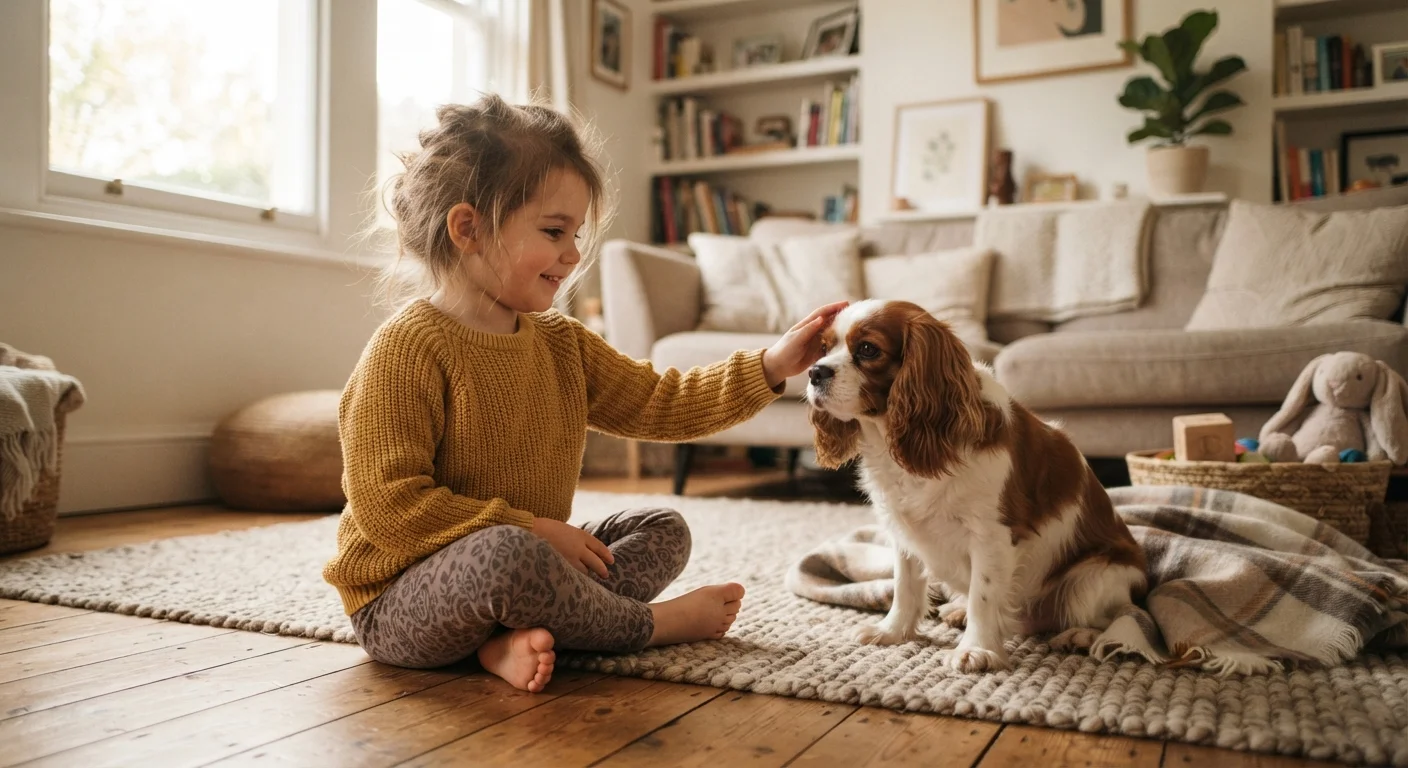
Once the pet has approached the child voluntarily, show the child how to offer the back of a hand for sniffing before any petting begins. Then guide them to stroke the pet gently along the side or back — not the head or tail, which many animals find startling. Keep strokes slow and light. Narrate quietly: "See how she's sniffing your hand? That's how she says hello."
End the meeting on a calm, positive note
Before either the child or the pet shows any sign of fatigue or overstimulation, wrap up the interaction. Give the pet a quiet retreat to its safe space and give the child a moment to talk about what they noticed — "What did it feel like? What do you think the pet was thinking?" This reflection reinforces empathy and sets the tone for how your child will relate to the animal going forward.
The Pet's Retreat Space Is Non-Negotiable
Every pet in a household with children needs a space it can go to that is completely off-limits to the child — a crate, a room with a baby gate, or a raised perch for cats. This is not optional. When a pet cannot escape an overwhelming situation, it may escalate to growling, hissing, or biting. Establishing and enforcing a safe retreat from day one protects both the animal and the child, and is one of the most important safety habits a family can build. Talk to your child clearly and early: "That's where the pet goes when it needs quiet time. We always leave her alone there."
Reading the Room: Signals That Tell You How It's Going
Even after a successful first meeting, ongoing supervision is essential. Young children often can't interpret animal body language, and pets can shift from relaxed to stressed quickly. Learn to recognise the signals on both sides.
Signs a pet is comfortable: relaxed posture, slow blinking (cats), loose tail wag at mid-height (dogs), curiosity-driven movement toward the child.
Signs a pet needs a break: flattened ears, tucked tail, yawning or lip-licking out of context, freezing in place, hiding, or moving away. These are requests for space — not rudeness — and should always be respected.
Signs a child needs coaching: reaching over the pet's head, moving too fast, raising their voice, or trying to pick the animal up without guidance.
Build Empathy From the Very First Day
Narrating the pet's perspective out loud — "She moved away because she needed a break" — helps even very young children start to develop empathy for animals. Over time, this habit shapes a child who naturally reads and respects animal body language rather than overriding it. It's a small shift in language with lasting impact on how your child relates to all living things.
If you have a resident pet and you're navigating a situation where a new baby is arriving rather than a new animal, our article on preparing a pet for a newborn addresses that distinct dynamic. For families whose children are a little older and engaging more independently with pet care basics, building these habits early pays dividends in safety and connection alike.