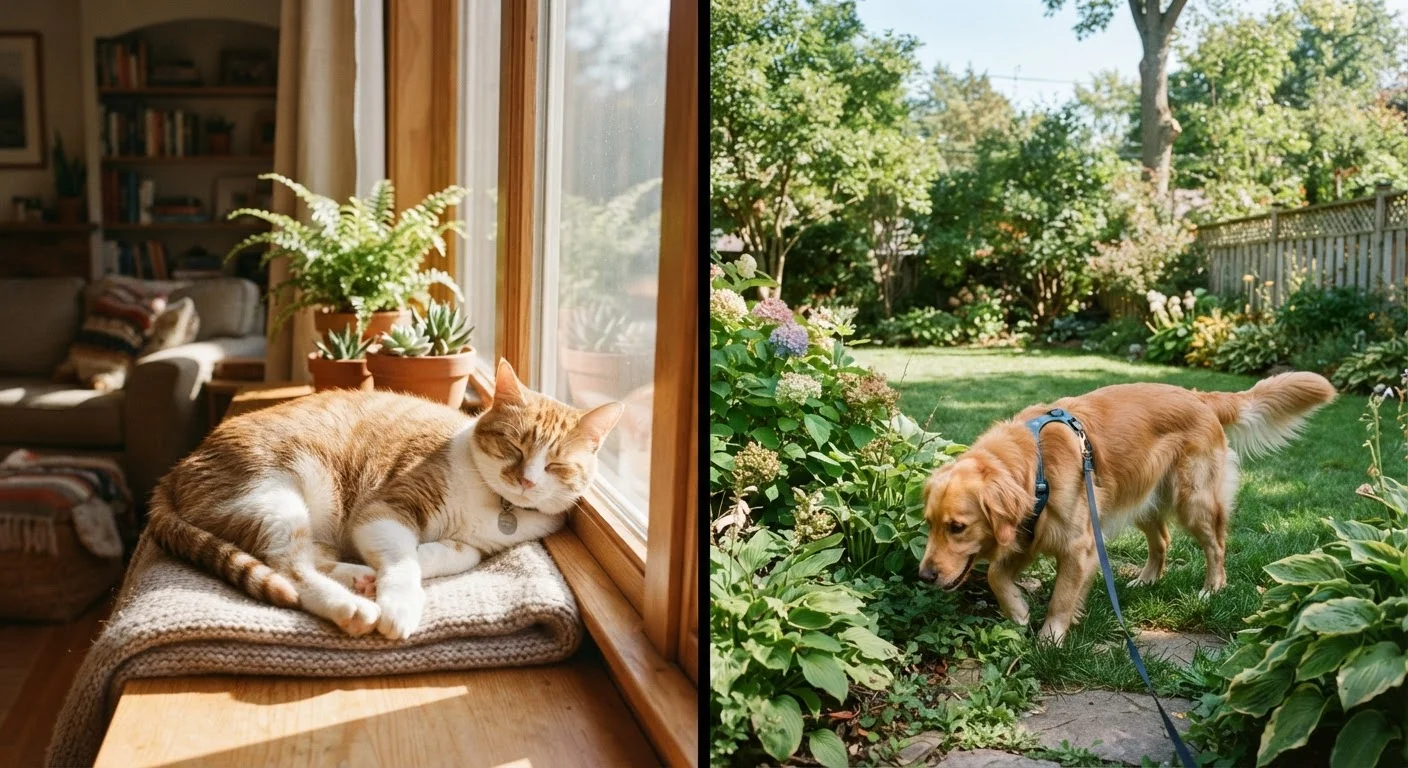
Why This Decision Matters More Than You Might Think
The question of where a pet spends most of its time touches nearly every aspect of their long-term health. It shapes their exposure to disease, their mental stimulation levels, their weight, and even their life expectancy. If you're welcoming a new pet into your home, this is one of the earliest and most consequential decisions you'll make.
There's no single correct answer. The right environment depends on your pet's species, breed, age, and individual personality — as well as your home's location, your household's schedule, and the safety features available to you. What matters is making an informed choice rather than a default one.
The Case for Indoor Living
Indoor environments offer significant protection. Pets kept primarily inside are shielded from traffic, predators, poisonous plants, and infectious diseases spread by wildlife or unvaccinated animals. For cats especially, research consistently suggests that indoor cats tend to live longer on average than those with outdoor access — largely because they avoid these external hazards.
Indoor living also makes it easier to monitor your pet's behavior, appetite, and health. Changes in a pet's routine — including shifts in sleeping patterns — are much easier to catch when an animal is always under the same roof.
The real challenge indoors is meeting enrichment and activity needs. Without adequate stimulation, pets — particularly cats and active dog breeds — can develop anxiety, destructive behaviors, or weight-related health problems. The solution isn't simply keeping them inside; it's creating an environment that genuinely engages them. Puzzle feeders, climbing structures, interactive play sessions, and rotated toys all make a meaningful difference. For dogs, structured daily walks remain non-negotiable regardless of how safe your home feels.
| Criterion | Indoor Living | Outdoor Living |
|---|---|---|
| Disease exposure | Lower risk overall | Higher — wildlife, parasites |
| Physical hazards | Minimal external hazards | Traffic, predators, toxins |
| Mental stimulation | Requires active enrichment | Naturally higher variety |
| Exercise opportunity | Depends on owner effort | Greater freedom of movement |
| Health monitoring ease | Easier to observe changes | Harder to track daily habits |
| Parasite risk | Lower — limited exposure | Higher — fleas, ticks common |
| Weight management | More owner-managed risk | Activity helps naturally |
The Case for Outdoor Living
Outdoor access provides forms of enrichment that are genuinely difficult to replicate inside: varied terrain, fresh air, natural scent stimulation, and the freedom to move at pace. For dogs especially, outdoor time supports healthy weight maintenance, cardiovascular fitness, and mental wellbeing. Understanding your specific pet's exercise needs across different pet types is a useful starting point before deciding how much outdoor time is appropriate.
The risks, however, are real and deserve honest consideration. Outdoor pets face exposure to fleas, ticks, intestinal parasites, and diseases such as leptospirosis or feline leukemia depending on species. Ingestion of garden chemicals, road traffic, and encounters with aggressive animals are among the leading causes of preventable pet injuries. If your garden or neighborhood has significant hazards, the risk calculus shifts considerably.
Vaccination and Parasite Prevention Still Apply Indoors
Even strictly indoor pets need core vaccinations and regular parasite prevention. Fleas can enter on clothing or other animals, and some diseases can be transmitted without direct outdoor exposure. Discuss an appropriate prevention schedule with your veterinarian based on your pet's lifestyle, not just their indoor or outdoor status.
A middle path — supervised outdoor time in a securely enclosed space — resolves many of these concerns. Catios (enclosed outdoor cat enclosures), secure dog runs, and leash-based outdoor exploration let pets experience the outdoors without full exposure to its hazards. This is worth exploring even if a fully outdoor lifestyle isn't practical for your situation.
Species-Specific Considerations
Dogs and cats are the most commonly debated, but the indoor/outdoor question applies across species. Rabbits and guinea pigs are often kept indoors for good reason — they are prey animals easily stressed by outdoor sounds and smells, and vulnerable to temperature extremes and predator encounters even through a hutch. Birds kept in aviaries benefit from natural light but need careful protection from wild bird contact, which can transmit disease.
Even within species, breed and individual temperament matter. A laid-back Persian cat may thrive indoors with minimal complaint, while a Bengal may become destructive without significant stimulation. A Basset Hound's exercise needs differ sharply from a Border Collie's. Matching the right animal to your household from the start means lifestyle decisions like this one become more natural rather than more fraught.
Whatever environment you choose, regular grooming checks are valuable. Grooming as a health habit — not just an aesthetic one — allows you to spot fleas, skin irritation, or lumps that might otherwise go unnoticed, particularly in outdoor pets with dense coats.
10–15 yrs
Median indoor cat lifespan
Veterinary sources generally cite indoor cats living 10–15 years on average, compared to estimates of 2–5 years for cats with full outdoor access, largely due to hazard exposure.
~50%
US pets considered overweight
The Association for Pet Obesity Prevention has estimated that roughly half of US dogs and cats are overweight or obese, a risk exacerbated by low activity levels in under-stimulated indoor pets.
This article provides general educational information about pet care environments and is not a substitute for advice from a licensed veterinarian. Always consult your vet for guidance tailored to your individual pet's health and needs.