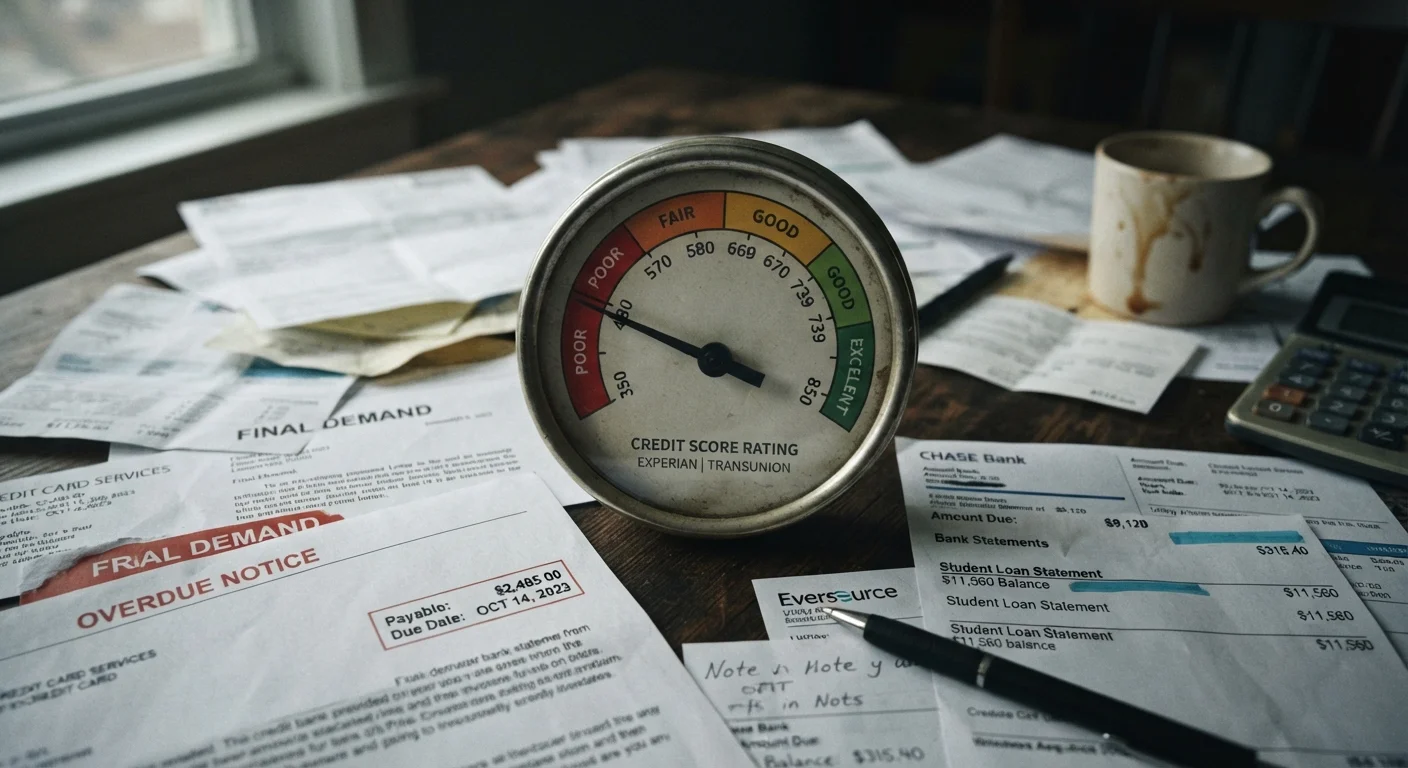
Why Scores Drift Down Without an Obvious Trigger
Credit scores often decline not because of a single dramatic event, but because of gradual, repeating patterns that compound over months or years. Understanding what actually drives a score — payment history, utilization, length of credit history, credit mix, and new inquiries — makes it easier to spot where quiet damage tends to accumulate.
It's also worth separating the score from the report it's drawn from. Credit scores and credit reports are related but distinct, and problems on the report frequently explain movement in the score. The mistakes below cover the most common culprits.
This article is for general informational purposes only and does not constitute personalized financial or credit advice. Consult a qualified financial professional for guidance specific to your situation.
The Most Common Mistakes That Chip Away at Credit
Each of these patterns is easy to fall into — and equally possible to correct once identified. Addressing even one or two can produce meaningful score improvement over time.
Carrying a high credit utilization ratio month after month.
Why it happens: Many people treat available credit as spending room and don't realize that consistently using a large percentage of their limit — even while paying on time — can suppress their score.
Making only minimum payments and allowing balances to grow over time.
Why it happens: Minimum payments keep accounts current, which feels adequate, but growing balances quietly increase utilization and total debt load.
Closing old or unused credit card accounts.
Why it happens: Unused accounts can feel wasteful or risky, so closing them seems logical — but the scoring impact is frequently misunderstood.
Applying for multiple new credit accounts within a short period.
Why it happens: Rate shopping, chasing sign-up rewards, or simply not realizing each application triggers a hard inquiry can lead to a cluster of inquiries in a short window.
Ignoring credit report errors that silently suppress the score.
Why it happens: Most people rarely check their credit reports and have no idea inaccurate accounts, duplicate entries, or fraudulent activity may be sitting uncontested.
Closing Cards Can Backfire
Canceling a credit card you no longer use might feel like responsible tidying up, but it can actually harm your score in two ways at once: it reduces your total available credit (raising utilization) and, if it was one of your older accounts, it can shorten your average credit history. Before closing an account, consider the potential scoring impact — especially if you plan to apply for a major loan soon.
Missed Payments Have Long-Term Consequences
A payment that is 30 or more days late can be reported to the credit bureaus and remain on your credit report for up to seven years. Because payment history is typically the single largest factor in a credit score, even one missed payment can produce a noticeable drop. Setting up autopay for at least the minimum due on each account is one of the most reliable ways to prevent this.
If you're evaluating whether to take on new credit as part of managing these patterns, it helps to ask the right questions first. See what to consider before taking on any new debt before signing any credit agreement.
And if you've encountered claims like "carrying a small balance builds credit" or "checking your score hurts it," those ideas are worth examining carefully. Common credit score myths, fact-checked addresses several of the most persistent ones.
~1 in 5
Consumers with a credit report error
A Federal Trade Commission study found roughly one in five consumers had an error on at least one of their three major credit reports.
30%
Utilization threshold widely cited by experts
Most credit scoring guidance suggests keeping revolving credit utilization below 30% of available limits to avoid negative scoring effects.
7 years
How long late payments stay on your report
Under the Fair Credit Reporting Act, most negative items — including late payments — can remain on a credit report for up to seven years.
For more foundational guidance on managing debt and building financial stability, the Saving & Debt hub offers a range of approachable resources.