Why Spending Categories Matter
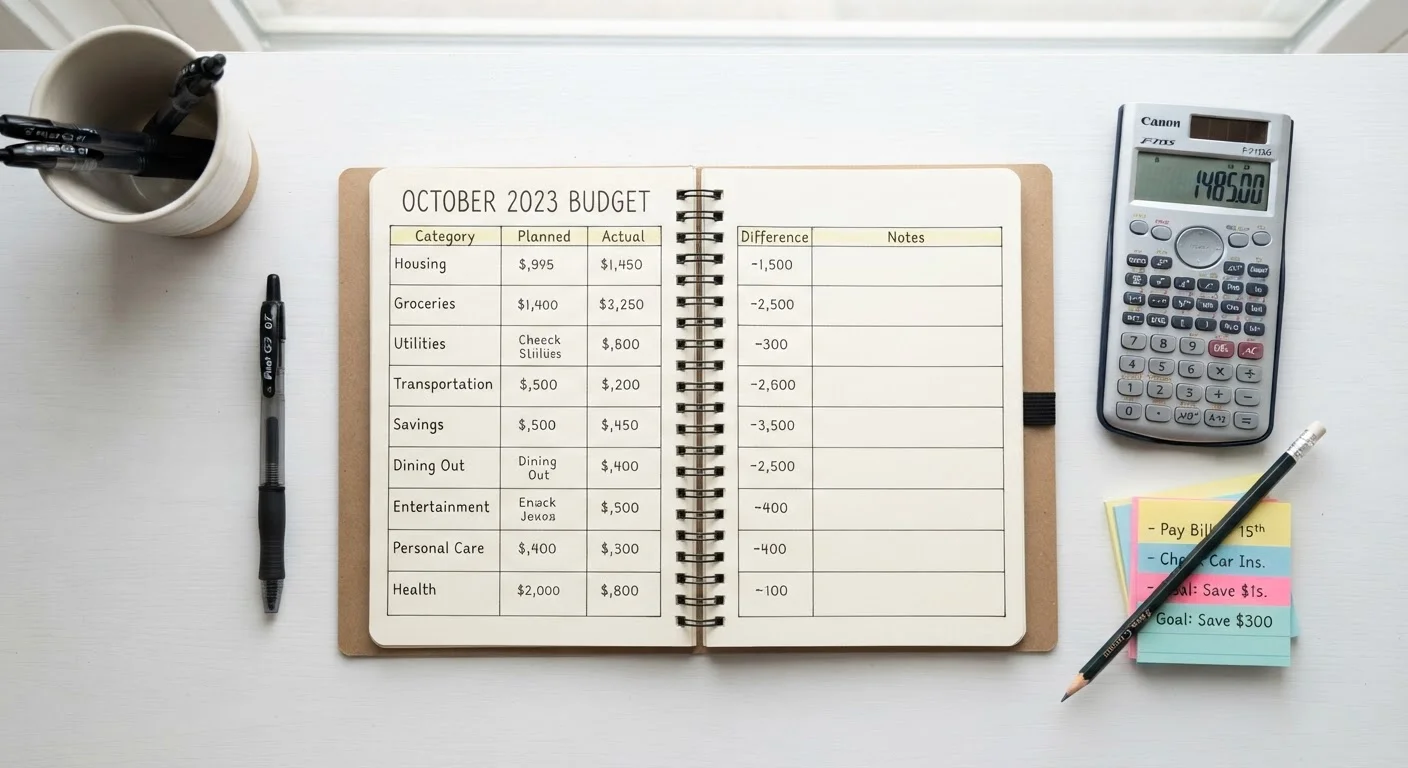
A budget without categories is little more than a single number — total income minus total spending — with no insight into where the money actually goes. Categories give your budget its skeleton: the structural framework that lets you see patterns, identify imbalances, and make deliberate trade-offs instead of guessing.
Most people underestimate how many distinct areas their spending covers. Housing feels obvious. Groceries too. But irregular costs like car repairs, annual insurance premiums, and gifts often go untracked until they break the budget. Understanding your full category landscape upfront is the first step toward a plan that holds. See our guide to fixed vs. variable expenses for a complementary framework that helps you understand how each category behaves month to month.
| Typical housing cost guideline | ≤30% of gross income (Commonly cited personal finance benchmark) |
| Core spending areas in most budgets | 10–15 categories (General personal finance guidance) |
| Irregular expenses: planning method | Annual estimate ÷ 12 = monthly set-aside |
| Savings treatment recommendation | Treat as a fixed line item, not a leftover (Personal finance best practice) |
| Subscription audit frequency | At least once per year |
The Core Budget Categories
The categories below cover the spending areas that appear in most household budgets. Use this as a starting checklist — not every category will apply to you, and you may need to add others that fit your life.
Fixed expense
A cost that stays the same amount each billing cycle, such as a rent or loan payment. Fixed expenses are easier to predict and plan around because they don't fluctuate.
Variable expense
A cost that changes in amount from month to month, such as groceries, gas, or dining out. Variable expenses require more active monitoring because they can shift significantly.
Irregular expense
A cost that doesn't occur every month but happens predictably at some point during the year — such as annual insurance premiums, car registration, or holiday gifts. These are best planned for by setting aside a monthly fraction of the estimated annual total.
Discretionary spending
Money spent on non-essential wants rather than basic needs — dining out, entertainment, hobbies, and subscriptions are common examples. This is often the most flexible part of a budget.
Budget category
A labeled grouping that organizes related expenses together within a budget. Categories make spending patterns visible and allow you to set intentional limits by area.
Escrow (housing context)
An account managed by a mortgage servicer that collects a portion of your monthly payment to cover property taxes and homeowner's insurance when they come due. If taxes and insurance are escrowed, they are already built into your monthly mortgage payment.
Housing
Typically the largest budget line for most households. Includes rent or mortgage payment, property taxes (if not escrowed), homeowner's or renter's insurance, HOA fees, and routine maintenance costs. A common guideline — often cited in personal finance — is to keep total housing costs at or below 30% of gross income, though this is a general benchmark, not a rule that fits every situation.
Food
Split this into two sub-categories: groceries (food purchased and prepared at home) and dining out (restaurants, takeout, coffee shops, food delivery apps). Keeping them separate makes it easier to spot where food spending is actually going.
Transportation
Covers car payments, fuel, auto insurance, registration fees, parking, tolls, public transit passes, and rideshare costs. Also factor in periodic costs like oil changes and tire replacement — these are irregular but predictable.
Utilities
Electricity, gas, water, trash, and sewer are the traditional utilities. Many budgeters also include internet and phone here, though those can go under a separate communications category depending on your preference.
Healthcare
Health insurance premiums (any portion you pay directly), copays, prescriptions, dental and vision care, and out-of-pocket medical expenses all belong here. This category can be highly variable, so a buffer is useful.
Debt Payments
Minimum payments on credit cards, student loans, personal loans, and any other outstanding debt. Tracking this separately — rather than folding it into the categories where the original spending occurred — makes your total debt load visible. For a deeper look at managing and reducing these obligations, the Saving & Debt hub is a useful starting point.
Savings and Investments
Emergency fund contributions, retirement account contributions (beyond automatic payroll deductions), and other savings goals. Many financial planners recommend treating savings as a fixed line item — sometimes called "paying yourself first" — rather than saving whatever happens to be left over.
Personal and Household
Clothing, household supplies, personal care products, laundry, and similar day-to-day needs. These tend to be variable but are often overlooked until they add up.
Subscriptions and Memberships
Streaming services, gym memberships, software subscriptions, news sites, and any recurring charges. This category is easy to underestimate — subscriptions accumulate quietly and are worth auditing periodically.
Entertainment and Recreation
Movies, concerts, sports events, hobbies, books, and other leisure activities. Some people also include vacation savings here, though a dedicated travel category is often cleaner for those who travel regularly. For guidance on budgeting travel costs specifically, see Building a Travel Budget That Actually Holds Up.
Irregular and Infrequent Expenses
Annual subscriptions, car registration, holiday gifts, home repairs, and similar costs don't hit every month — but they will hit. The most reliable approach is to estimate your annual total, divide by 12, and set that amount aside monthly. Building a Buffer walks through this process in detail.
Categories vs. Percentages: Don't Over-Engineer It
Percentage-based budgeting frameworks (like the 50/30/20 rule) can be a useful starting point, but they don't replace the need to understand your actual categories. The percentages only mean something once you know what spending falls in each bucket. Focus on identifying your categories first, then decide how much you want to allocate to each based on your income and goals.
Adapting Categories to Your Life
No standard list maps perfectly to everyone's situation. A freelancer needs a self-employment tax category. A parent may need separate lines for childcare and school expenses. Someone supporting a family member may have a caregiving category. The goal is for your categories to reflect your actual spending life — not an idealized one.
Once you've established your categories, consistent tracking is what turns them from a list into useful data. Tracking Your Spending Without Losing Your Mind covers practical approaches to logging expenses sustainably. If you're managing finances with a partner or household, Budgeting as a Household addresses how to align categories and priorities across more than one person.
Review your categories at least annually — life changes, and your budget structure should keep pace. The skeleton is only useful if it reflects the body it supports.
This article is for general informational and educational purposes only and does not constitute personalized financial advice. For guidance specific to your financial situation, consult a qualified financial professional.