Why Meal Planning Supports Balanced Eating
Research in behavioral nutrition consistently points to a link between planning and dietary quality. When meals are decided in advance, people are less likely to rely on highly processed convenience options and more likely to achieve adequate variety across food groups. The mechanism is straightforward: planning shifts decisions to a lower-pressure moment — the weekend or a quiet evening — rather than a hungry, time-pressed weeknight.
That said, the goal isn't perfection or dietary rigidity. Evidence suggests that overly strict food rules can increase psychological stress around eating, which itself has health implications. The most sustainable approach treats a meal plan as a flexible scaffold, not a script. Much like how over-scheduling a travel itinerary can undermine the experience, an overly rigid meal plan can undermine the habit itself.
This Is General Nutrition Education
The guidance in this article is intended for general informational purposes and does not constitute personalized medical or dietary advice. Individual nutritional needs vary based on health status, age, activity level, and other factors. Consult a registered dietitian or qualified healthcare provider before making significant dietary changes, especially if you have a chronic condition, food allergy, or specific health goal.
What You'll Need Before You Start
Getting the setup right makes the ongoing habit far easier to maintain. A few simple tools and a realistic picture of your week are all that's required.
What you will need
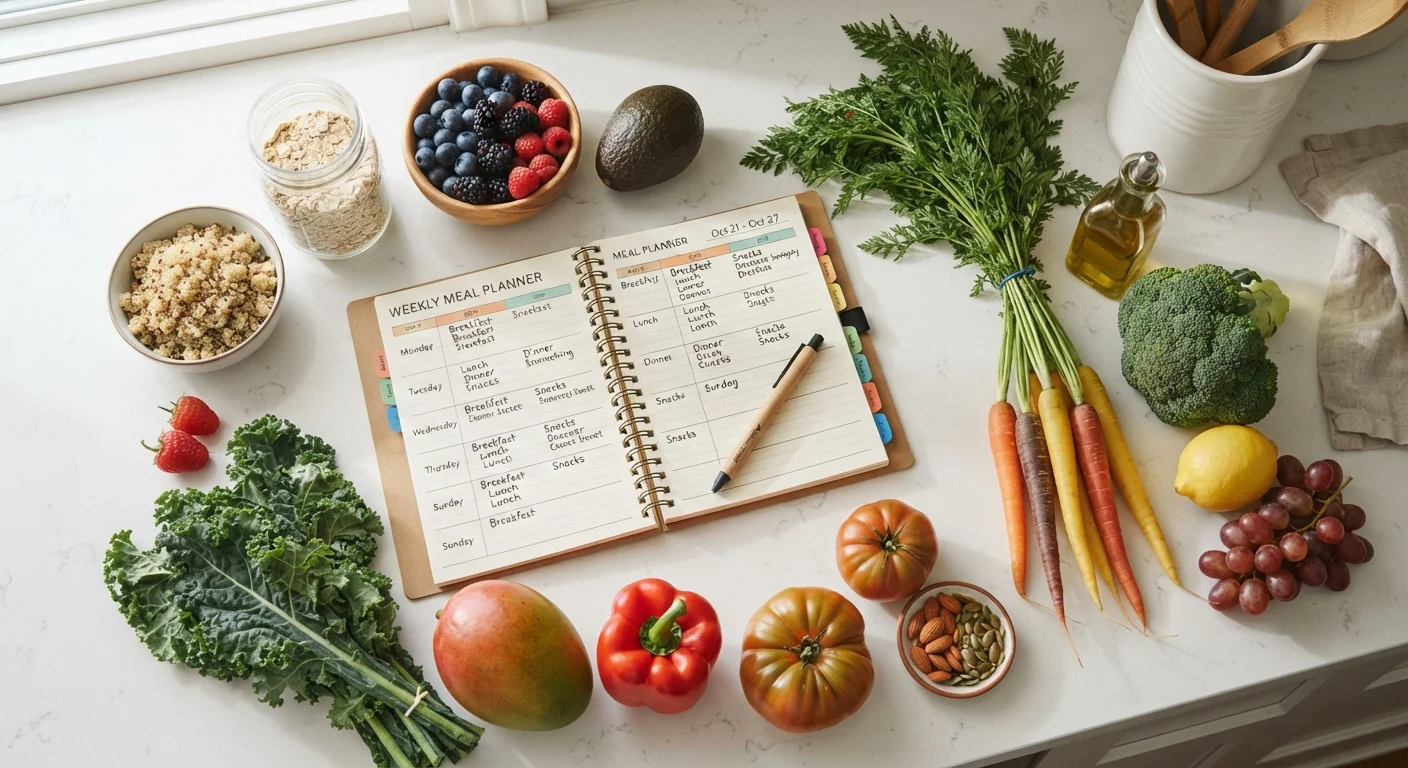
Weekly meal planner template
Provides a structured grid to map breakfast, lunch, dinner, and snacks across seven days.
Grocery list (physical or app-based)
Translates your weekly plan into an organized shopping list to avoid missed ingredients.
Food storage containers
Enables batch cooking and storing prepped components (grains, proteins, vegetables) for later in the week.
Kitchen scale or measuring cups
Useful for portioning staples like grains and legumes when cooking in bulk.
Start With What You Already Eat
The easiest starting point is mapping out meals you already enjoy and make reliably. Building new variety around familiar anchors reduces the learning curve and makes it far easier to stick with the habit long-term.
Step-by-Step: Building Your Weekly Meal Plan
Follow these steps once a week — ideally on the same day each time — to build a practical, nutrition-aware plan that fits your actual schedule. If you're also looking to pair your eating habits with consistent physical activity, our guide to building a weekly movement routine offers a complementary framework.
Audit Your Current Week
Before planning anything new, take stock of what a typical week actually looks like. Note which meals you cook reliably, which nights tend to be chaotic, and where nutritional gaps tend to appear — skipped vegetables, repetitive proteins, or lunches grabbed on the go. This honest baseline tells you where a plan will add the most value and which days need built-in flexibility rather than ambitious recipes.
Set a Realistic Structure
Choose a planning format that matches your actual lifestyle. A full seven-day plan works well for households with predictable schedules; a looser five-dinner framework with two flex nights suits those with irregular evenings. Map out which meals you'll cook at home versus eat out or grab ready-made, then slot your planned meals into that realistic skeleton rather than an idealized one.
Plan Around Food Groups, Not Just Recipes
Instead of filling your grid recipe by recipe, think first in terms of nutritional variety across the week. Aim to include a range of vegetables (leafy greens, cruciferous, colorful varieties), different protein sources (legumes, fish, poultry, eggs, or plant-based alternatives), whole grains, and healthy fats. Once you've identified your variety targets, selecting specific recipes becomes much easier and more intentional. For a structured way to evaluate whether your meals hit the nutritional bases, see our balanced plate self-check.
Build Your Grocery List From the Plan
Work through each planned meal and list every ingredient, then consolidate duplicates. Group items by store section (produce, proteins, pantry staples) to make shopping faster. Check your pantry first to avoid buying items you already have. A well-constructed grocery list is what transforms a meal plan from a wish list into something executable — it removes in-store decision-making and reduces impulse purchases that can derail a nutritional strategy.
Prep One or Two Batch Staples
Full meal prep isn't necessary to benefit from planning. Cooking a single batch staple — a pot of whole grains, a tray of roasted vegetables, or a portion of cooked legumes — gives you a ready component that speeds up multiple meals through the week. These versatile building blocks reduce the effort barrier on busy evenings without locking you into identical meals. If time on busy weekdays is a recurring challenge, our article on eating well on a tight schedule offers additional strategies.
Review and Adjust Each Week
At the end of each week, spend five minutes evaluating what worked. Which meals were skipped? Which were crowd favorites worth repeating? Where did the plan break down? This brief reflection loop gradually refines your planning instincts, making each subsequent week faster and more effective. Over time, you'll build a personal rotation of reliable meals that require minimal planning effort.
Avoid Overly Restrictive Planning
Meal plans that are too rigid or calorie-focused can increase stress around eating and may not support a healthy relationship with food. Aim for variety and balance rather than strict rules. If you find meal planning triggering around food control, consider speaking with a registered dietitian or mental health professional.
Adapting the Framework to Different Diets
This planning framework works regardless of your dietary pattern. Whether you follow a plant-forward approach, an omnivorous diet, or something in between, the core principle — planning around food-group variety rather than fixed recipes — applies equally. If you're weighing the nutritional trade-offs of different eating patterns, our evidence-based look at plant-based versus omnivorous diets can help inform your choices.
Special dietary needs — including those related to chronic conditions, pregnancy, older age, or specific deficiencies — require individualized guidance. In these cases, a registered dietitian can help tailor a meal planning approach that meets your specific nutritional requirements.
This article is for general informational and educational purposes only and does not constitute personalized medical or dietary advice. Always consult a qualified healthcare professional or registered dietitian for guidance specific to your health situation.