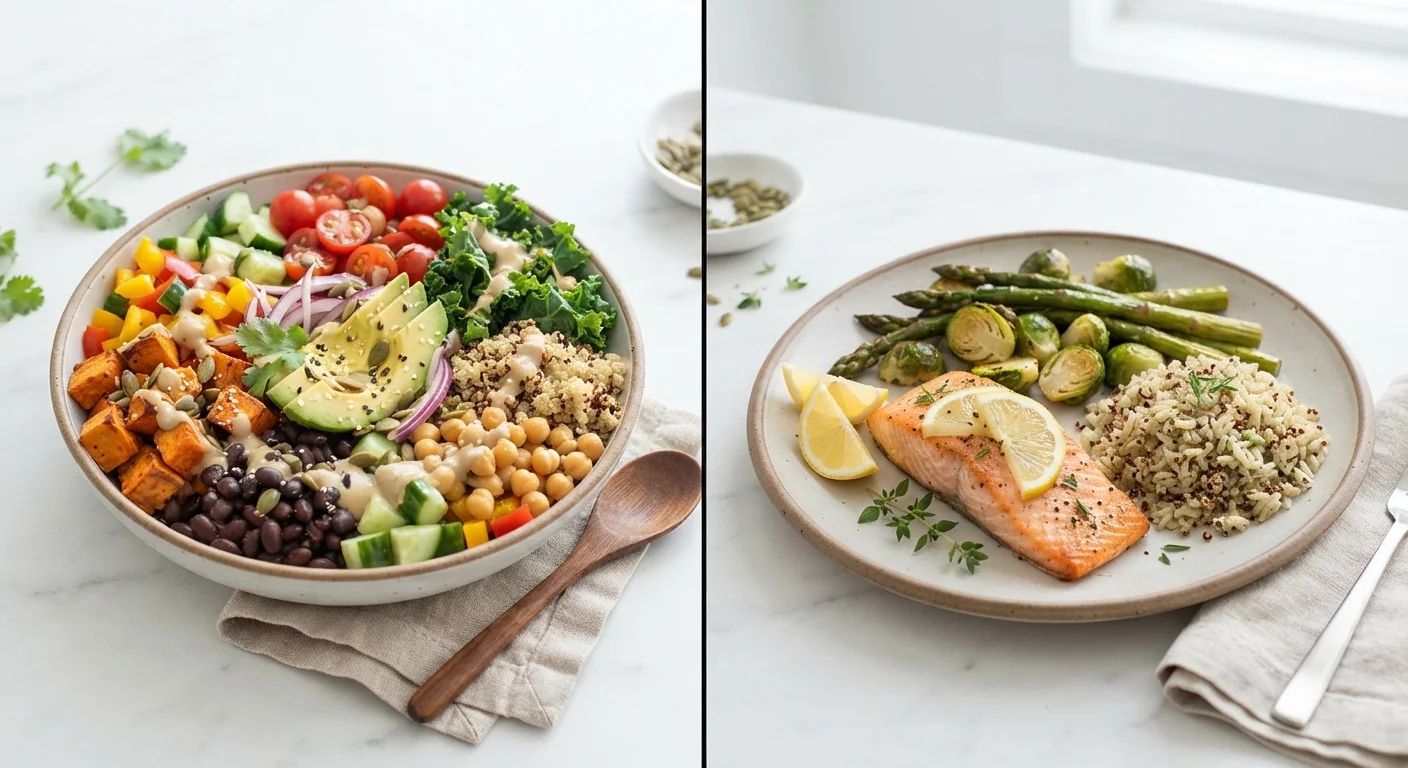
How Each Diet Is Defined
A plant-based diet broadly describes eating patterns where plants — vegetables, fruits, legumes, whole grains, nuts, and seeds — form the primary foundation. This spectrum ranges from fully vegan (no animal products) to flexitarian (mostly plants, with occasional animal foods). An omnivorous diet includes both plant and animal foods without systematic restriction, though quality and proportion vary widely.
The critical distinction in research is not simply whether someone eats meat, but what the overall dietary pattern looks like. A poorly planned vegan diet and a fast-food-heavy omnivorous diet both carry health risks. Conversely, a Mediterranean-style omnivorous diet and a diverse, whole-food plant-based diet both show strong associations with positive health outcomes.
For practical meal-building guidance under either pattern, see this structured self-check.
What the Research Actually Shows
Large observational studies, including data from the Adventist Health Studies and EPIC-Oxford cohort, suggest that plant-based eaters tend to have lower rates of type 2 diabetes, hypertension, and certain cardiovascular conditions compared to omnivorous groups. However, these studies reflect associations, not direct causation — lifestyle factors like physical activity, smoking status, and socioeconomic status often differ between groups.
Randomized controlled trials comparing dietary patterns are shorter in duration and harder to conduct, but meta-analyses published in journals such as the Journal of the American Heart Association consistently link higher plant food intake with reduced LDL cholesterol and improved blood pressure markers.
Omnivorous diets are not inherently disadvantageous. Research on Mediterranean and DASH eating patterns — both omnivorous — demonstrates comparable or equivalent cardiovascular benefits to plant-based approaches. The common thread is emphasis on whole, minimally processed foods and abundant vegetables.
~23%
Lower risk of heart disease in plant-based eaters
A meta-analysis in the Journal of the American Heart Association found vegetarian diets associated with roughly 23% lower ischemic heart disease risk compared to omnivorous diets.
18%
Increased colorectal cancer risk with high processed meat intake
The World Health Organization classifies processed meat as a Group 1 carcinogen, with high consumption linked to an estimated 18% increase in colorectal cancer risk.
~3%
Global population following a vegan diet
Dietary surveys and global nutrition research suggest approximately 3% of the world population identifies as fully vegan, with much larger numbers following flexitarian patterns.
Nutritional Trade-Offs and Gaps to Watch
Each pattern has specific nutritional considerations that require attention:
| Nutrient / Factor | Plant-Based Diet | Omnivorous Diet | |
|---|---|---|---|
| Vitamin B12 | Supplementation typically required | Generally adequate from animal foods | |
| Iron | Non-heme iron; lower bioavailability | Heme iron; higher bioavailability | |
| Omega-3 Fatty Acids | ALA from plants; EPA/DHA supplement advised | EPA/DHA from oily fish; easier to obtain | |
| Saturated Fat Intake | Typically lower | Varies; can be elevated with meat-heavy diet | |
| Fiber Intake | Generally high | Varies; often lower | |
| Dietary Flexibility | More planning required | Greater day-to-day flexibility | |
| Cardiovascular Risk Markers | Associated with lower LDL and blood pressure | Neutral to positive when diet quality is high |
Plant-based eaters face a genuine risk of deficiency in vitamin B12, which is found almost exclusively in animal-derived foods. Supplementation is generally recommended by dietitians for those following vegan diets. Iron and zinc from plant sources are less bioavailable than from meat, though pairing iron-rich foods with vitamin C can improve absorption.
Omnivorous diets, when high in processed and red meat, are associated with increased colorectal cancer risk — a finding supported by the World Health Organization's International Agency for Research on Cancer. Saturated fat intake is also typically higher and warrants monitoring.
Bridging the Nutritional Gaps
If you follow a plant-based diet, a registered dietitian can help identify which supplements — particularly B12 and potentially vitamin D and long-chain omega-3s — are warranted based on your specific intake. Omnivorous eaters benefit from auditing how much of their protein comes from processed versus whole sources. Either way, a diverse, vegetable-rich diet is the foundation of strong nutritional outcomes.
Practical Considerations for Everyday Life
Diet choice is rarely made on nutritional evidence alone. Cost, food access, cultural background, cooking time, and personal preference all play significant roles. Plant-based staples like lentils, beans, oats, and frozen vegetables are among the most affordable foods available, while some specialty plant-based products can be expensive and highly processed.
Omnivorous eating offers more flexibility in social settings and may be easier to navigate when eating out. For those managing demanding schedules, practical strategies for eating well on limited time apply equally to both patterns.
Structured meal planning helps either approach stay consistent. A weekly meal planning framework can reduce decision fatigue and help maintain nutritional variety regardless of which dietary pattern you follow. If you're also curious how dietary evidence applies to companion animals, common pet nutrition myths offers a similarly evidence-grounded look at that topic.
This article is for general informational and educational purposes only and does not constitute medical or dietary advice. Consult a registered dietitian or qualified healthcare professional before making significant changes to your diet, particularly if you have an existing health condition.