Why Fibre Is So Much More Than a Digestive Aid
Most people think of fibre narrowly — something you add when things slow down. But the science tells a broader story. Dietary fibre is involved in blood sugar control, cholesterol management, weight regulation, and the health of the trillions of bacteria that live in your gut. It's one of the few dietary components where higher consumption is consistently linked to lower rates of type 2 diabetes, cardiovascular disease, and colorectal cancer, according to research reviewed by institutions such as the Harvard T.H. Chan School of Public Health.
Despite this, the average American adult consumes only around 15 grams of fibre per day — roughly half the recommended intake. This isn't a minor gap; it's a consistent, population-wide shortfall that researchers sometimes call the "fibre gap." Understanding what fibre actually does is the first step toward closing it. For broader context on how fibre fits within your overall eating pattern, see our guide to macronutrients.
~15g
Average daily fibre intake for US adults
The Dietary Guidelines for Americans recommend 25–38g per day, putting most adults roughly 40–60% below target.
10–15%
Lower colorectal cancer risk with high-fibre diets
A large meta-analysis published in the Annals of Oncology found each 10g increase in daily fibre was associated with a reduced risk of colorectal cancer.
90%
Americans not meeting fibre recommendations
The Academy of Nutrition and Dietetics has identified dietary fibre as a widely under-consumed nutrient across virtually all demographic groups in the US.
Soluble vs. Insoluble: A Practical Distinction
Fibre broadly divides into two functional categories, and knowing the difference helps explain why variety in plant foods matters.
Soluble fibre dissolves in water and forms a thick gel in your digestive tract. This gel slows the absorption of glucose — helping to prevent blood sugar spikes after meals — and binds to LDL cholesterol in the small intestine, reducing how much is absorbed into the bloodstream. Oats, barley, psyllium husk, apples, and legumes are particularly rich in soluble fibre.
Insoluble fibre does not dissolve. Instead, it adds bulk to stool and helps food move more efficiently through the intestines, reducing the risk of constipation and supporting regular bowel movements. Whole wheat, bran, many vegetables, and the skins of fruits are good sources.
Most whole plant foods contain both types in varying ratios, which is one reason that food-first approaches to fibre intake tend to outperform reliance on any single supplement. Curious how fibre myths stack up against evidence? Our article on popular nutrition myths addresses several common misconceptions.
Start Low and Build Gradually
If you're currently eating a low-fibre diet, a sudden large increase can cause bloating, gas, and cramped digestion. Aim to add roughly 3–5 grams of additional fibre per week until you reach your target. This gives the gut microbiome time to adapt and keeps discomfort manageable.
Fibre and Your Gut Microbiome
One of the most significant — and underappreciated — roles of fibre is as fuel for your gut microbiome. Certain types of fibre, called prebiotics, resist digestion in the small intestine and arrive intact in the colon, where they are fermented by beneficial bacteria. This fermentation produces short-chain fatty acids (SCFAs) such as butyrate, propionate, and acetate.
SCFAs are not metabolic by-products to be ignored. Butyrate, in particular, serves as the primary energy source for the cells lining the colon and plays a role in reducing intestinal inflammation and maintaining the gut barrier — the protective layer that prevents harmful substances from leaking into the bloodstream. Research published in journals such as Cell Host & Microbe has linked diverse, fibre-rich diets to a more diverse gut microbiome, which is generally associated with better immune function and reduced systemic inflammation.
“The gut microbiome is increasingly understood as a key interface between the diet and host health. Dietary fibre — and the microbial fermentation it enables — is central to that relationship.”
— Justin Sonnenburg, Professor of Microbiology and Immunology, Stanford University School of Medicine, and co-author of research on diet and the microbiome
Practical Ways to Close the Fibre Gap
Increasing fibre intake doesn't require dramatic dietary overhaul. Small, consistent changes — emphasising whole plant foods over refined alternatives — are effective and sustainable.
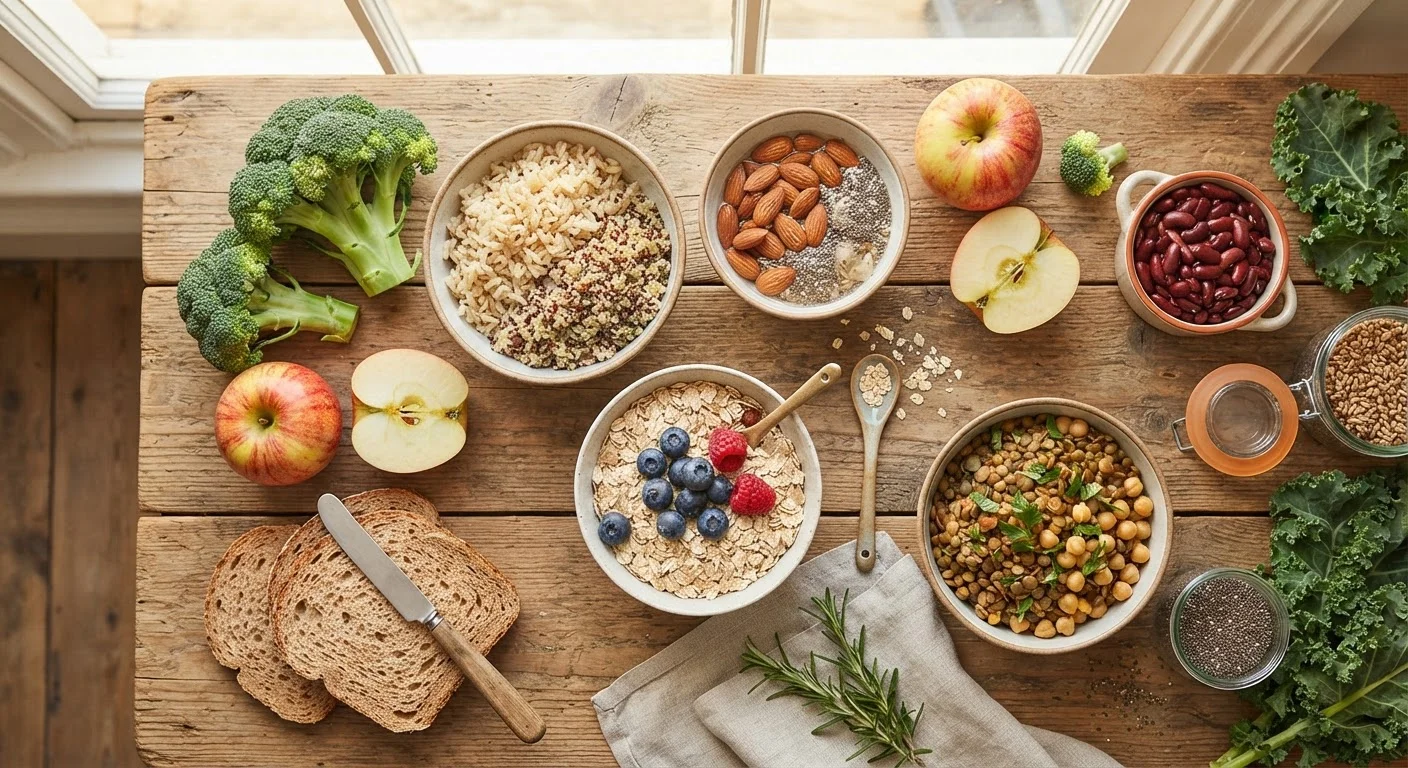
- Swap refined grains for whole grains: Choose oats, brown rice, whole wheat bread, or barley over their processed counterparts.
- Add legumes to familiar meals: Lentils in soup, chickpeas in salad, or black beans in a grain bowl are straightforward additions.
- Keep fruit and vegetable skins on: Many nutrients and a significant portion of fibre live in the skin of produce like apples, potatoes, and cucumbers.
- Snack on nuts and seeds: Particularly chia seeds, flaxseeds, and almonds, which deliver fibre alongside healthy fats.
One important caveat: fibre absorbs water. Increasing intake without maintaining adequate fluid intake can contribute to constipation rather than preventing it. Our guide to hydration and diet explains why fluid intake and food choices work together. Also increase fibre gradually — your gut microbiome needs time to adjust. Many people who struggle with high-fibre diets are simply increasing too fast.
When Good Intentions Fall Short
Even motivated, health-conscious eaters often underestimate how far their fibre intake falls short. A diet that feels healthy — with salads, grilled chicken, and the occasional piece of fruit — may deliver only 10–12 grams of fibre per day if legumes, whole grains, and higher-fibre vegetables are absent. This is a pattern explored in depth in our article on where nutrition habits go wrong.
Processed and ultra-processed foods — which now make up a substantial portion of calories in the average American diet — have had fibre largely stripped away during manufacturing. Refining wheat into white flour, for example, removes most of the bran and germ, slashing fibre content. The convenience-first structure of much of the modern food environment works against fibre intake by default, which means intentional choices are necessary. Tracking your intake for even a few days using a food diary can be a useful exercise — many people find the actual numbers surprising.
This article is for general informational and educational purposes only and is not a substitute for professional medical or dietary advice. Consult a qualified healthcare provider or registered dietitian before making significant changes to your diet, particularly if you have an existing health condition.