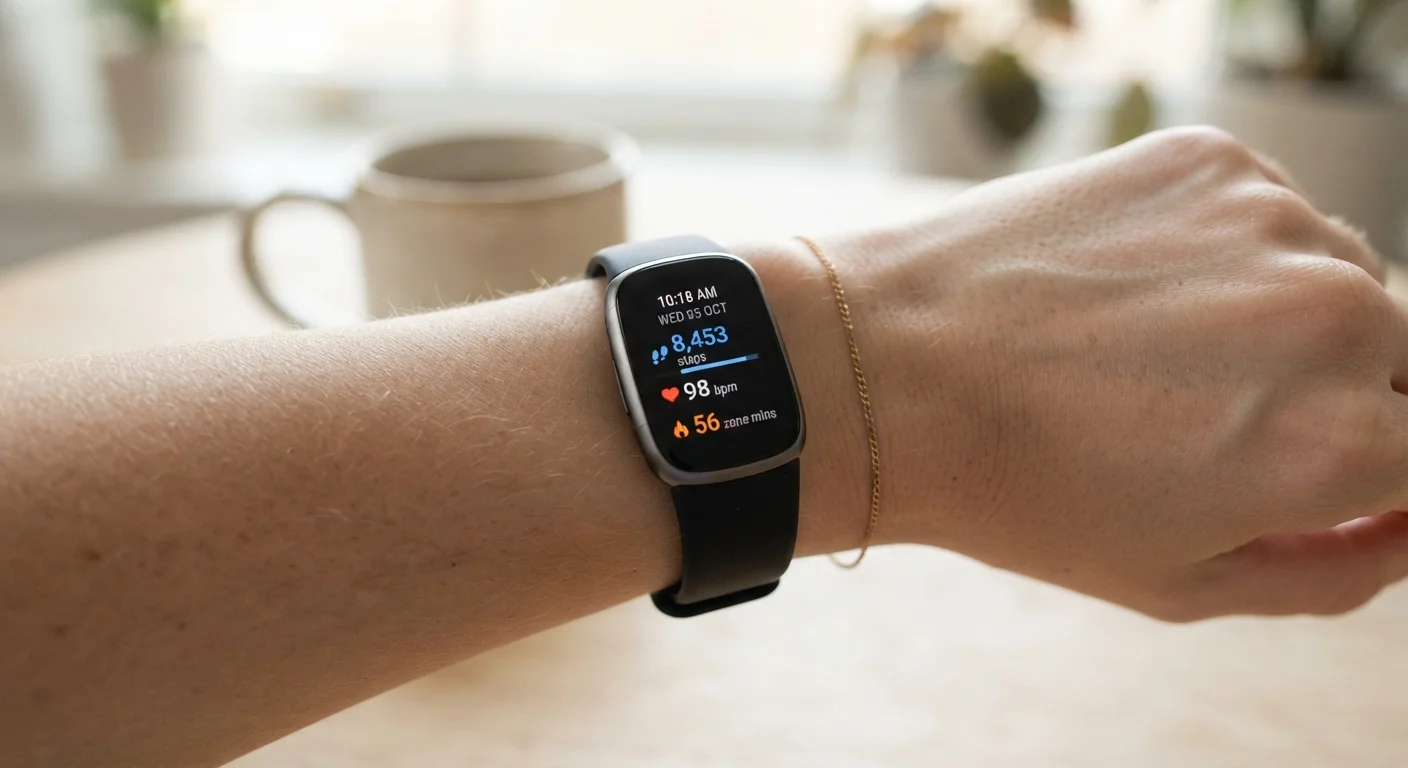
What Fitness Trackers Actually Measure
Modern fitness trackers use a small suite of sensors — primarily an accelerometer, optical heart rate sensor, and GPS — to generate the metrics displayed in their companion apps. Understanding what each sensor does clarifies how reliable the resulting data actually is.
Steps and movement are counted via accelerometer, which detects changes in acceleration in three dimensions. This is one of the more dependable metrics; studies comparing accelerometer-based step counts against direct observation generally show reasonable accuracy on flat surfaces during walking. Errors increase during activities like cycling or weight training, where arm motion doesn't correspond neatly to steps.
Heart rate is estimated using photoplethysmography (PPG) — light pulses shone through the skin to detect blood volume changes. At rest and during steady-state cardio, optical heart rate is broadly accurate. During high-intensity intervals or activities with wrist movement, readings can be significantly off. Wearable trackers and their accuracy limitations are worth understanding before relying on these figures for any health-related purpose.
Sleep tracking infers sleep stages from movement and heart rate variability. Consumer devices can broadly distinguish sleep from wakefulness, but accurately identifying specific sleep stages (REM, light, deep) remains a limitation — these readings are estimates, not clinical measurements.
~78%
Heart rate accuracy during rest or low activity
Research published in peer-reviewed sports science journals generally finds consumer optical heart rate sensors perform well during steady, low-intensity movement but less reliably during vigorous exercise.
Up to 90%
Potential overestimation in calorie burn
A Stanford-affiliated study published in the Journal of Personalized Medicine found some popular wearables overestimated energy expenditure by as much as 93% depending on activity type.
The Pros: Where Trackers Genuinely Help
Despite their imprecisions, fitness trackers deliver real behavioral value for many people.
Increases awareness of daily movement patterns
Seeing a concrete step count or active-minutes total throughout the day prompts many people to move more, particularly during sedentary stretches at work.
Supports long-term habit formation
Streak features, goal reminders, and weekly summaries create mild accountability loops that research suggests can help sustain physical activity over time.
Useful for tracking relative trends
Even if absolute numbers aren't perfectly accurate, consistent use of the same device lets you spot meaningful changes in resting heart rate, sleep duration, or weekly activity volume.
Low-friction way to quantify NEAT
Everyday movement outside structured exercise is easy to overlook; a wearable makes it countable, reinforcing that ordinary activity — walking, taking stairs — genuinely adds up.
Research consistently shows that self-monitoring is one of the stronger behavioral strategies for increasing physical activity. A tracker makes the invisible visible — including the kind of low-level movement that makes up what researchers call NEAT. Non-exercise activity thermogenesis — the energy spent on everything from walking to fidgeting — is difficult to perceive without some form of tracking, and wearables give it a number.
The Cons: Where the Numbers Fall Short
Knowing the limitations of tracker data helps avoid over-relying on metrics that may mislead rather than inform.
Calorie burn estimates carry significant error
Studies have found consumer wearables can overestimate energy expenditure during exercise by 20–90%, making calorie data an unreliable basis for nutrition decisions.
Sleep staging is an approximation, not a diagnosis
Consumer devices cannot replicate the electroencephalography (EEG) used in clinical sleep studies; their stage breakdowns are educated guesses based on proxy signals.
Data can create unhealthy focus on numbers
For some users, constant metric monitoring may increase anxiety or perfectionism around activity, potentially making movement feel like an obligation rather than a benefit.
Heart rate accuracy drops during intense movement
Optical sensors on the wrist struggle with rapid, irregular motion; users doing interval training or high-intensity workouts should treat real-time heart rate readings with caution.
Biometric data raises privacy considerations
Continuous collection of sleep, location, and heart rate data creates a detailed personal profile that is often stored and shared with third-party partners per the device's terms of service.
When to Talk to a Healthcare Provider
Fitness trackers are consumer wellness tools, not medical devices. If your tracker flags something unexpected — a persistently elevated resting heart rate, very disrupted sleep, or irregular rhythm notifications — treat it as a prompt to seek professional evaluation, not a diagnosis. Always consult a qualified healthcare provider for any symptom or health concern.
The broader picture of how connected devices shape wellness — including wearables, apps, and habits — is explored in this overview of technology and personal wellbeing.
Using Tracker Data Wisely
The most productive way to use a fitness tracker is as a consistency tool rather than a precision instrument. Focus on directional trends over days and weeks, not daily fluctuations. A day with fewer recorded steps doesn't necessarily mean you were less active — it may simply reflect sensor context.
Calibrate your expectations: calorie burn estimates in particular can carry meaningful error margins, so avoid using them to make precise dietary decisions. For anything health-specific — managing a chronic condition, monitoring cardiac symptoms, or tracking recovery — consult a qualified healthcare professional rather than relying on consumer device output.
Data privacy is also worth considering. Trackers collect continuous biometric and location data, often shared with third-party platforms. For a clearer picture of what connected devices record and how to manage that, see what your smart devices actually record.
This article is for general informational purposes only and does not constitute medical advice. Consult a qualified healthcare professional for guidance related to your personal health circumstances.