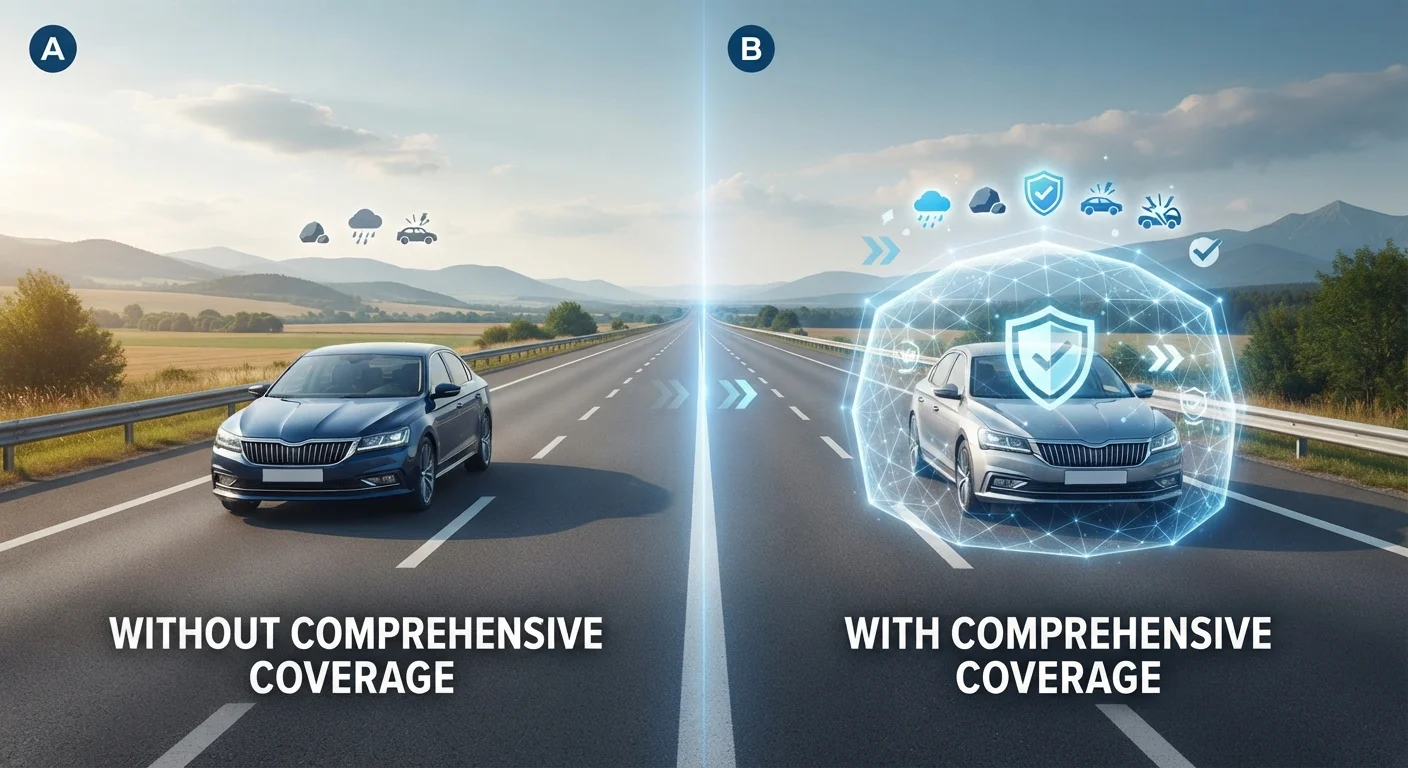
What Each Coverage Level Actually Means
Car insurance is not a single product — it exists on a spectrum of protection. The two most commonly compared levels are comprehensive and third-party cover, and the distinction between them is fundamental.
Third-party insurance pays for damage or injury you cause to other people, their vehicles, or their property. It does not pay anything toward your own vehicle's repair or replacement. In most jurisdictions, carrying at least this level of cover is a legal requirement before driving on public roads.
Comprehensive insurance includes everything third-party cover does, and extends protection to your own vehicle — covering repair or replacement costs resulting from collision, theft, fire, weather damage, vandalism, and certain other events, depending on the specific policy.
For drivers just starting out, understanding this distinction is foundational. See our guide for first-time car owners for a broader look at the responsibilities that come with owning a vehicle.
| Criterion | Comprehensive | Third-Party |
|---|---|---|
| Damage to other vehicles/property | Covered | Covered |
| Injury to other parties | Covered | Covered |
| Damage to your own vehicle | Covered | Not covered |
| Theft of your vehicle | Covered | Not covered |
| Weather or fire damage | Covered | Not covered |
| Vandalism | Covered | Not covered |
| Typical premium level | Higher | Lower |
| Meets legal minimum (most jurisdictions) | Yes | Yes |
Key Factors That Should Inform Your Decision
Choosing between these two levels of cover is not purely a cost calculation — it involves an honest assessment of your circumstances.
~77%
U.S. drivers with comprehensive cover
According to the Insurance Information Institute, approximately 77% of insured U.S. drivers carry comprehensive coverage on their vehicles.
1 in 8
Drivers estimated to be uninsured
The Insurance Research Council has estimated roughly one in eight drivers on U.S. roads carries no insurance at all, underscoring why liability cover matters.
Vehicle Value
The higher your car's current market value, the stronger the case for comprehensive cover. If the vehicle were written off tomorrow, could you absorb that financial loss without disruption? If not, comprehensive cover deserves serious consideration.
Your Financial Buffer
Think of insurance as a hedge against costs you could not comfortably handle alone. Third-party cover leaves your own vehicle entirely unprotected. A single at-fault accident or theft could mean losing your car with no insurance payout. Car insurance costs are generally treated as a fixed expense in household budgets — understanding how fixed and variable expenses differ can help you plan for these commitments more accurately.
How and Where You Drive
High-mileage drivers, those parking in urban areas, or anyone operating in regions with severe weather patterns face statistically higher exposure to the kinds of incidents comprehensive cover addresses — theft, hail, flooding, and multi-vehicle collisions among them.
Lender Requirements May Decide for You
If you are financing or leasing your vehicle, your lender typically requires comprehensive (and often collision) coverage as a condition of the loan agreement. This requirement remains in place until the loan is paid off or the lease ends. Dropping to third-party cover on a financed vehicle without lender approval can result in the lender force-placing their own insurance — usually at a significantly higher cost — on your behalf. Always check your financing agreement before changing your cover level.
Common Exclusions Worth Understanding
Neither policy level is unlimited. Both comprehensive and third-party insurance carry exclusions that can surprise drivers who haven't read their policy documents carefully.
- Mechanical or electrical breakdown — standard policies do not cover wear-and-tear or mechanical failure.
- Driving under the influence — claims arising from impaired driving are typically void across all policy types.
- Unlicensed drivers — coverage is usually suspended if the vehicle is operated by someone not listed on the policy or without a valid license.
- Commercial use — using a personal vehicle for hire or commercial delivery may void cover unless a specific endorsement is added.
- Intentional damage — deliberate acts by the policyholder are excluded.
Reading the Product Disclosure Statement (or equivalent policy document) before signing is not optional — it is how you confirm what you are actually purchasing. If terms are unclear, insurers are generally required to explain them; ask before committing.