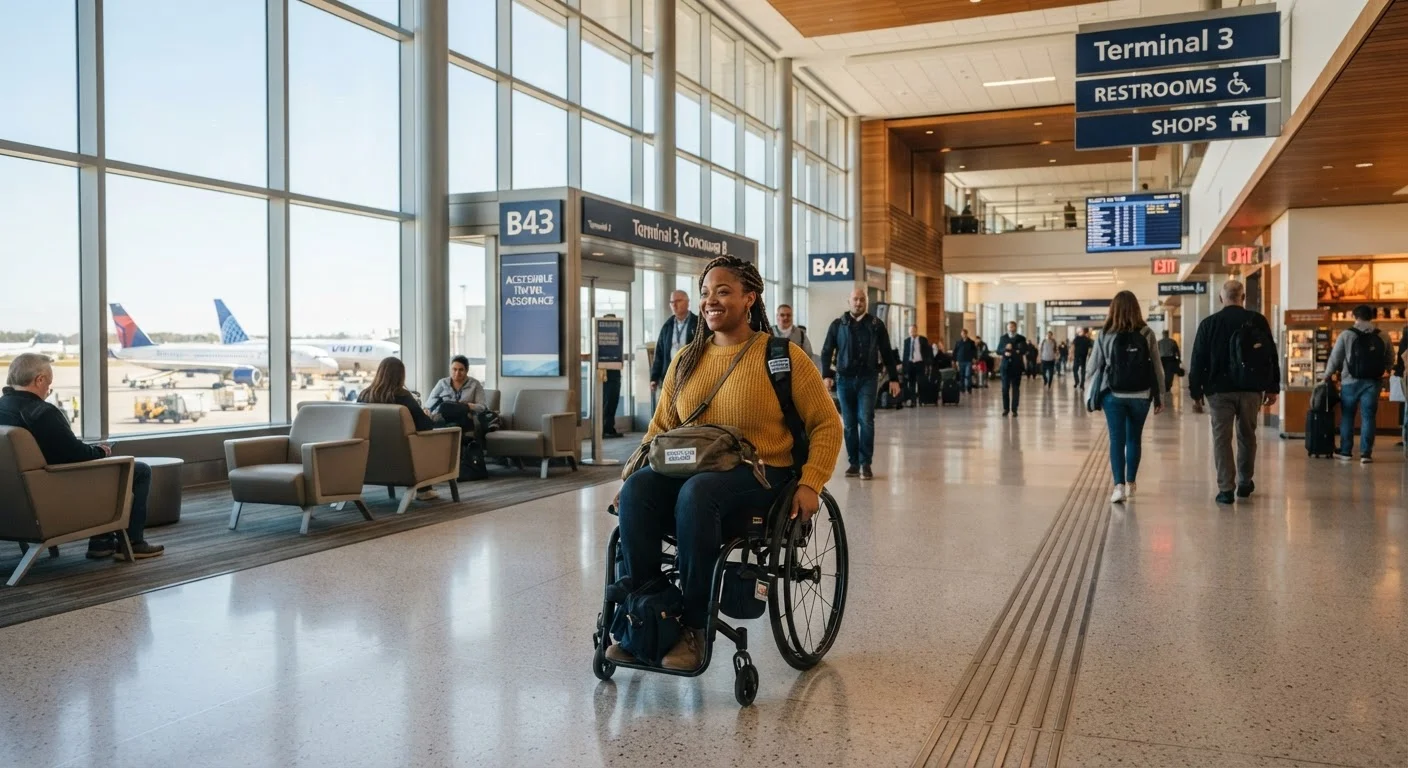
Why Accessibility Planning Deserves Its Own Framework
Accessible travel is not a niche concern — it affects millions of travelers in the United States alone, including people with mobility limitations, visual or hearing impairments, chronic health conditions, and cognitive disabilities. Yet standard trip-planning frameworks rarely address these variables explicitly. Treating accessibility as an afterthought often leads to avoidable disruptions, extra costs, or situations where travelers cannot fully participate in their own itinerary.
The foundation of any accessible trip is early, detailed research. As our guide to travel research methods explains, knowing how to gather reliable destination information before you book anything is essential — and this is doubly true when accessibility infrastructure is a core requirement rather than a preference.
A useful starting point is identifying which specific accommodations or conditions your trip requires, then working backwards through every leg of the journey — transport, lodging, activities, and emergency contingencies — to verify that each element meets those needs.
| US travelers with disabilities | ~61 million adults (CDC, Disability and Health Data System) |
| Key planning domains | Transport, lodging, destination infrastructure, medical contingency |
| When to contact carriers | At booking and again 48–72 hours before departure (General industry guidance) |
| Standardization of 'accessible room' | Not universal — verify specific features directly with each property |
| Reliable accessibility sources | Official tourism boards, disability travel advocacy organizations |
Key Areas to Research Before Booking
Accessible travel planning spans several interconnected domains. Missing a detail in any one of them can compromise the entire trip.
Transportation
Research whether airports, train stations, or bus terminals at your origin and destination offer step-free access, assistive listening systems, and accessible restrooms. Confirm that airlines or rail operators have documented policies for passengers with disabilities — including equipment stowage, pre-boarding procedures, and on-board seating options. Always contact carriers directly to verify, since general website descriptions may not reflect current conditions at specific terminals.
Accommodation
"Accessible room" is not a standardized designation across all countries or even all properties within a country. Request specific details: roll-in shower vs. grab-bar tub, bed height, door widths, elevator availability, and proximity to accessible parking or drop-off zones. Reviewing guest feedback from travelers with similar needs can provide ground-level insight that official listings omit.
Destination Infrastructure
Sidewalk continuity, curb cuts, tactile paving, public restroom availability, and the terrain of popular sites vary enormously by destination. Many historic city centers and natural landmarks have limited accessibility, and this is rarely prominently disclosed in marketing materials. Official tourism board websites and disability travel advocacy organizations are more reliable sources than general travel blogs for infrastructure specifics.
Step-free access
A route through a facility that avoids all steps, typically achieved through ramps, lifts, or level pathways. It is a key indicator of wheelchair and mobility-aid usability at a venue.
Roll-in shower
A shower design with no threshold or lip, allowing wheelchair users to enter directly. It is a more functional option than a tub with grab bars for many wheelchair users.
Tactile paving
Textured ground surface indicators installed on sidewalks and transit platforms to assist visually impaired travelers in navigating pedestrian environments.
Assistive listening system
Technology — such as hearing loops or FM systems — installed in public spaces to transmit sound directly to hearing aids or receivers, improving audio clarity for people with hearing loss.
Pre-boarding
A policy offered by many airlines and transit operators that allows passengers with disabilities or mobility limitations to board before the general public, providing additional time and space to settle safely.
For trips involving older relatives or family members with varying mobility levels, the family trip planning guide offers additional frameworks for coordinating mixed-need groups.
Documentation, Communication, and Contingency Planning
Travelers with accessibility needs often benefit from carrying documentation of medical equipment, mobility aids, or prescriptions — particularly when crossing international borders. This can simplify customs processes and help in the event equipment is lost or damaged in transit.
Communicating your needs in advance — with airlines, hotels, tour operators, and even restaurants — gives providers time to prepare and reduces friction on arrival. Many accessibility failures occur not because infrastructure is absent, but because requests were not made early enough for arrangements to be confirmed.
Verify Accessibility Claims Before Arrival
Properties and operators sometimes list accessibility features that are partial, outdated, or not suited to all types of mobility needs. Calling ahead and asking specific questions — door widths, shower type, elevator dimensions — is more reliable than relying solely on online listings. Wherever possible, get confirmations in writing so you have a record to reference if conditions differ on arrival.
Contingency planning is equally important. Identify accessible medical facilities near your destination, understand your travel insurance coverage for disability-related interruptions, and have a plan for equipment failure or unexpected mobility challenges. The Travel Safety hub is a practical reference for building safety layers into any itinerary.
Accessible travel planning integrates naturally into the broader trip-planning process. The anatomy of a well-planned trip shows how research, booking, and preparation phases connect — and each phase has accessibility checkpoints worth building in deliberately.
This article provides general informational guidance only. Readers should verify all accessibility details directly with service providers and consult relevant medical or specialist professionals for advice specific to their individual conditions and needs.