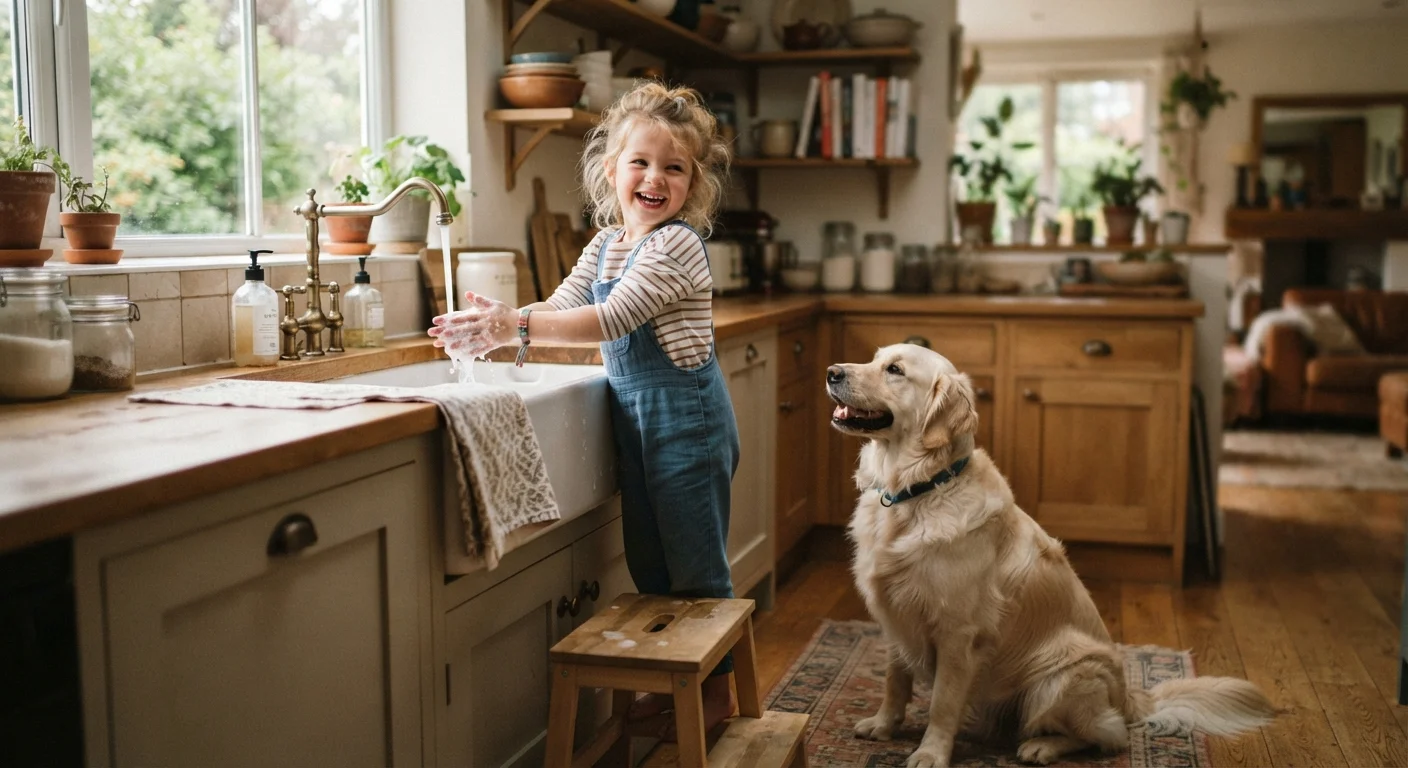
Pets and Kids: Balancing Joy with Practical Hygiene
Pets make childhood richer — there's real research behind that feeling. But sharing a home with animals also means sharing space with fur, dander, saliva, and the occasional muddy paw. For families with children, a few consistent hygiene habits can make all the difference between a household that thrives and one that spends too much time dealing with preventable illness.
The goal isn't to sterilize your home or treat your pet like a biohazard. It's simply to build routines that protect children's health without draining the joy from the relationship. Whether you have an indoor cat, a backyard dog, or a mix of both, these practices travel well across different pet situations — and the earlier children learn them, the more naturally they stick. For a broader look at how your pet's living arrangement shapes family dynamics, see our comparison of indoor and outdoor pet lifestyles.
Core Hygiene Practices for Pet-Owning Families
These six habits address the most common routes through which pet-related germs reach children — without requiring clinical-level precautions or making your home feel less like a family space.
Make handwashing after pet contact a non-negotiable household rule.
Hands are the primary route through which pet-related germs — including bacteria like Salmonella and Campylobacter — reach children's mouths and eyes. Establishing a consistent 'pet, then wash' habit removes this pathway before children even think about touching their faces. The CDC recommends washing with soap and water for at least 20 seconds.
Keep pets current on veterinary care, including vaccines and parasite control.
A healthy pet is a safer pet. Routine deworming and flea and tick prevention significantly reduce the chance that parasites cycle into your home environment. Vaccinations protect against illnesses that, in rare cases, can affect humans. Regular vet visits also catch conditions early before they become household concerns.
Establish clear pet-free zones, especially around sleep and eating areas.
Children spend long hours in bed and at the dining table — two places where concentrated allergen and germ exposure matters most. Keeping pets off beds and out of eating spaces doesn't require harsh boundaries; it simply limits the highest-risk contact points while giving the relationship room to thrive elsewhere in the home.
Clean pet areas and food bowls regularly on a consistent schedule.
Pet bowls, litter boxes, and bedding can harbor bacteria and mold if neglected. Litter boxes in particular should be scooped daily and fully cleaned regularly — and children should not handle litter box maintenance due to the risk of Toxoplasma gondii. Keeping these areas clean reduces the ambient germ load for the whole household.
Teach children not to let pets lick their faces, especially near the mouth or eyes.
Pet saliva contains bacteria that are harmless to the animal but can cause infections in children, particularly around open skin, eyes, or mucous membranes. This isn't about rejecting affection — it's about redirecting it. Children can love on pets in plenty of other ways without this specific contact point.
Groom pets regularly to reduce shedding, dander, and outdoor contaminants tracked indoors.
Regular brushing and bathing (appropriate to the animal's species and coat type) cuts down on the allergens and debris pets carry into shared living spaces. Outdoor pets especially tend to bring in environmental contaminants on their fur. Grooming is a health habit as much as an aesthetic one, and it benefits the whole family.
Zoonotic Diseases: Rare but Worth Knowing
Zoonotic diseases are illnesses that can pass between animals and people. While transmission in healthy, well-cared-for pet households is relatively uncommon, children, pregnant individuals, the elderly, and anyone immunocompromised may face higher risk. If anyone in your household has a weakened immune system, talk with both your family's physician and your veterinarian about tailored precautions. This article is general educational information, not medical advice.
Start Today: Quick Wins That Make an Immediate Difference
You don't need to overhaul your household at once. A few targeted changes — implemented this week — can meaningfully reduce risk right away.
For more on building the kind of safety awareness that supports long-term wellbeing, explore our article on safety habits every pet-owning family should build early. And if you're thinking about allergen concerns specifically, our piece on children and pet allergies separates common myths from what the evidence actually shows.
Making Hygiene a Family Value, Not a Chore
The most effective hygiene habits are ones children understand, not just obey. When you explain why handwashing happens after petting the dog — in simple, non-scary terms — kids become partners in the routine rather than reluctant participants. That understanding also helps them generalize the habit to other settings, like a friend's home or a petting zoo.
“Children who grow up with pets can develop strong immune responses and emotional resilience — but the foundation is a household that treats basic hygiene as a shared responsibility, not a burden.”
— American Academy of Pediatrics, Guidance on children's health in pet-owning households
Pets and children can absolutely build lasting bonds that genuinely benefit the whole family. Consistent hygiene is part of how that relationship stays healthy — for everyone involved, including the pet.
This article is for general informational purposes only and does not constitute medical advice. If you have concerns about your child's health or specific risks in your household, please consult a qualified healthcare professional and your veterinarian.