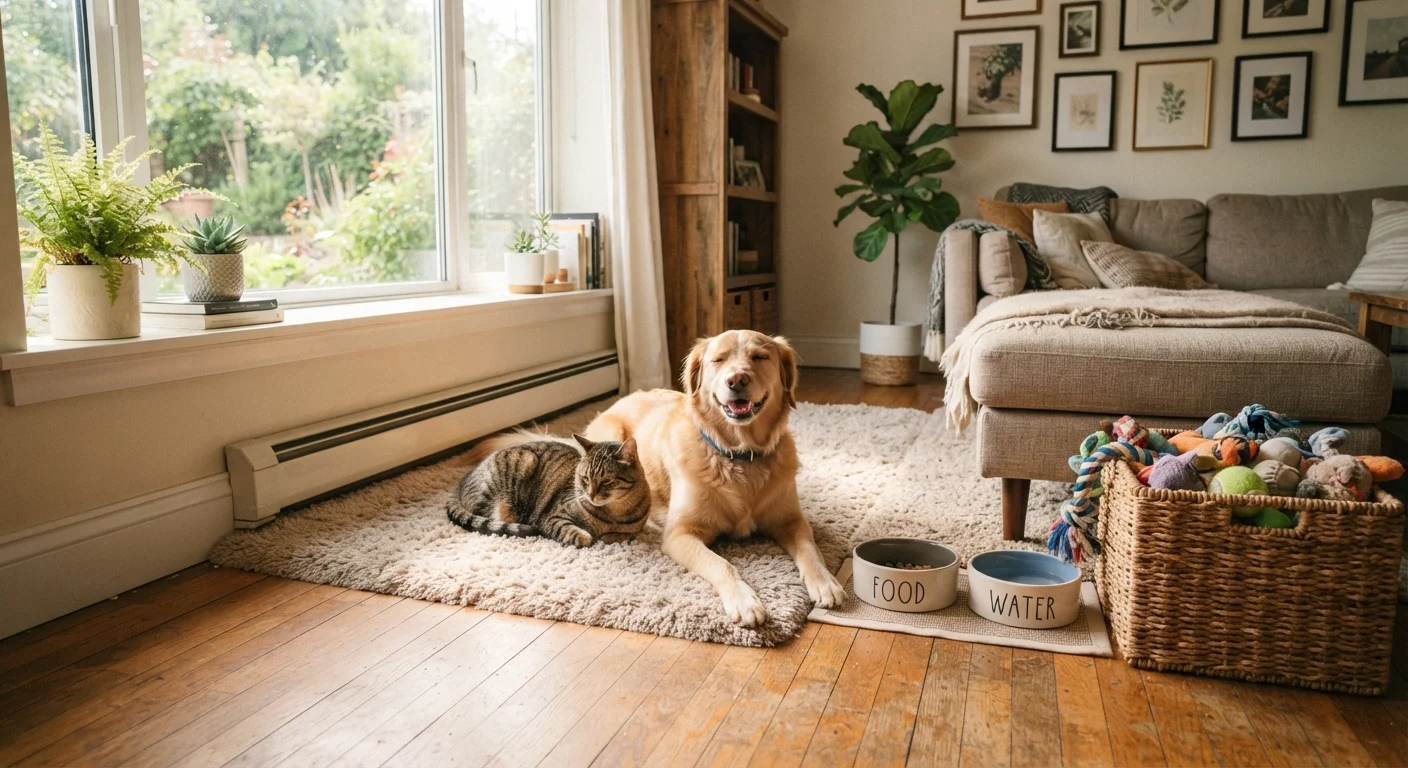
Nutrition: The Foundation Beneath Everything Else
What a pet eats drives nearly every aspect of their health — coat condition, energy levels, immune function, and even mood. Species-appropriate nutrition means understanding that a dog's dietary needs differ fundamentally from a cat's, and that both differ from rabbits, birds, or fish. Cats, for example, are obligate carnivores that require specific nutrients like taurine found only in animal tissue.
Fresh, clean water available at all times is equally non-negotiable. Dehydration can cause rapid organ stress, particularly in cats prone to urinary and kidney issues. When in doubt about what and how much to feed, your veterinarian is the most reliable source for recommendations tailored to your pet's age, weight, and health status.
56%
US pets estimated to be overweight or obese
According to the Association for Pet Obesity Prevention, more than half of dogs and cats in the US are overweight — a condition largely driven by overfeeding and insufficient exercise.
1 in 3
Pets will need emergency vet care each year
The American Veterinary Medical Association notes that roughly one in three pets requires some form of emergency or unexpected veterinary treatment annually.
15+ years
Average indoor cat lifespan with proper care
Indoor cats who receive consistent nutrition, veterinary attention, and enrichment routinely live into their mid-to-late teens, compared to shorter lifespans for outdoor-only cats.
Shelter and Safety: More Than a Roof Overhead
Shelter for a pet means more than a physical structure — it means a safe, comfortable space where they can rest undisturbed, regulate their body temperature, and feel secure. Indoor pets need areas free from toxic plants, open windows, exposed electrical cords, and household chemicals. Outdoor or partially outdoor animals require protection from extreme weather and predators.
Enriching the physical environment matters, too. Cats benefit from vertical space — shelving and perches — while dogs need a designated resting spot that's their own. A sense of physical safety directly influences a pet's stress levels and behavior. Animals who feel chronically unsafe often develop anxiety, aggression, or destructive habits.
Exercise and Mental Stimulation: Two Sides of the Same Coin
Physical activity keeps joints healthy, maintains a healthy weight, and burns off energy that might otherwise become destructive behavior. But exercise without mental engagement only meets half the need. Puzzle feeders, training sessions, nose work activities, and social play all challenge a pet's brain in ways that a walk around the block simply cannot.
For families weighing their options, understanding the activity demands of different species is crucial. Our comparison of dogs versus cats as family pets explores how lifestyle fit plays into this decision. A bored pet is often a misbehaving pet — meeting their mental needs is an investment in household harmony.
Mix Up Mental Stimulation Weekly
Rotating your pet's toys and introducing new activities — a different walking route, a sniff-based game, or a training trick — keeps them engaged and prevents boredom habituation. Even small variations in routine can have a meaningful positive effect on a pet's mental health.
Companionship, Routine, and Preventive Health
Social connection is not a luxury — it's a core need for most companion animals. Dogs that spend excessive hours alone frequently develop separation anxiety, while even seemingly independent cats can show signs of distress without enough human interaction. Building a consistent daily routine — feeding, walks, play, and quiet time — gives pets a sense of predictability that reduces stress significantly.
Preventive veterinary care ties all the pillars together. Annual wellness exams, vaccinations, parasite control, and dental checks catch problems before they escalate. Our article on annual preventive care habits walks through exactly what to expect. And don't overlook grooming — as covered in our guide on grooming as a health habit, it's one of the most accessible ways to monitor your pet's physical condition at home.
If you're still in the planning stages, everything families should consider before a first pet is a thoughtful starting point before day one.