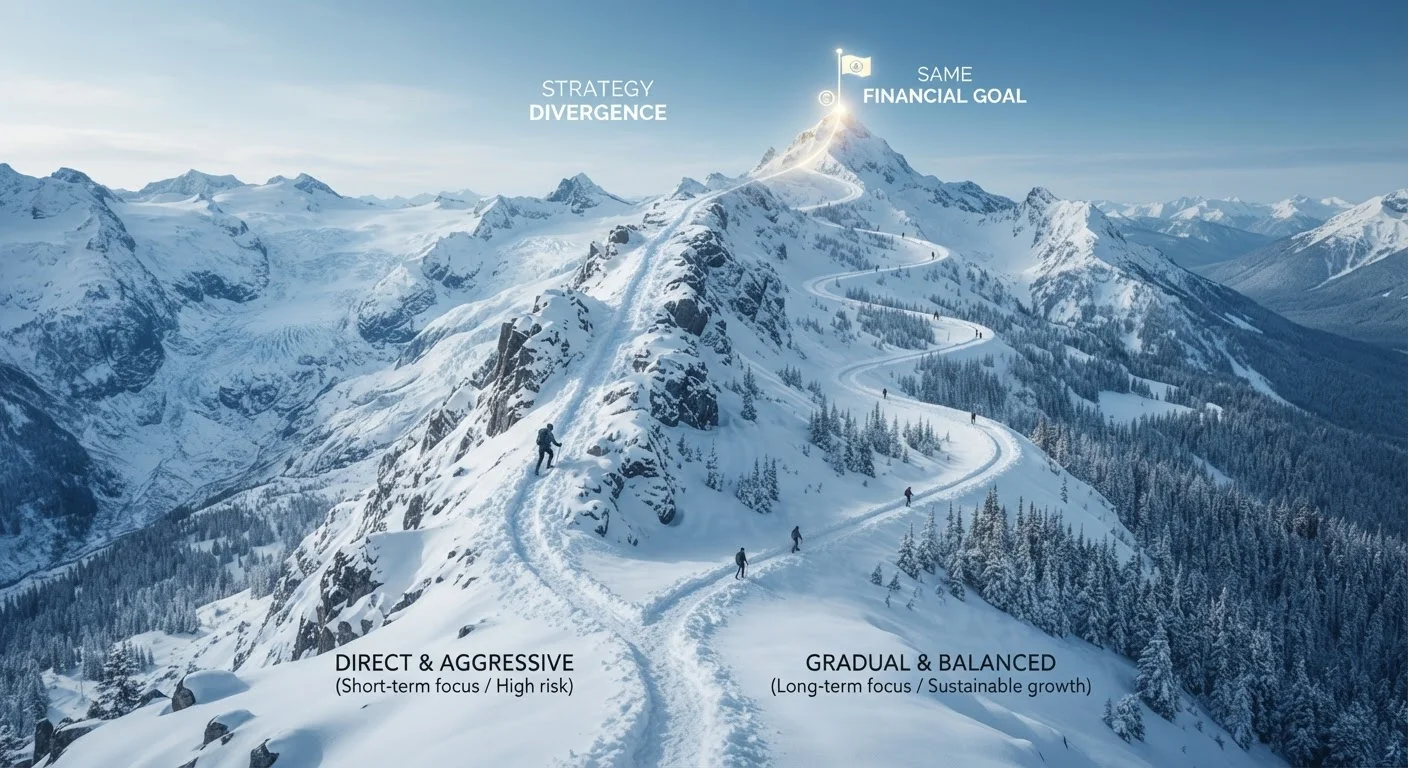
How Each Method Works
Both the avalanche and snowball methods share the same core mechanic: you make minimum payments on every debt you carry, then direct any extra money toward one designated priority debt. The difference lies entirely in how you choose that priority debt.
With the avalanche method, you rank your debts by interest rate, highest to lowest. Extra payments go toward the highest-rate balance first. Once that debt is paid off, you roll the freed-up payment amount into attacking the next-highest rate — and so on down the list. The result is that you limit how much interest accumulates across the life of your debts.
With the snowball method, popularized by personal finance educator Dave Ramsey, you rank debts by outstanding balance, smallest to largest — regardless of interest rate. Extra payments attack the smallest balance first. When that account reaches zero, you roll its payment into the next-smallest balance. The idea is that eliminating individual debts entirely creates a sense of momentum and accomplishment.
If you're still building your overall picture of how debt works, the beginner's guide to managing personal debt is a useful starting point before diving into repayment tactics.
| Criterion | Avalanche Method | Snowball Method |
|---|---|---|
| Repayment priority | Highest interest rate first | Smallest balance first |
| Primary benefit | Minimizes total interest paid | Builds momentum through quick wins |
| Best motivational fit | Long-term, goal-oriented thinkers | Those who need visible early progress |
| Time to first payoff | Potentially longer | Typically faster (smaller balances close first) |
| Mathematical efficiency | Higher — reduces interest costs | Lower — may pay more interest overall |
| Behavioral research support | Less studied for adherence | Linked to higher debt-elimination rates |
| Complexity | Requires tracking rates carefully | Straightforward balance ranking |
The Math vs. The Psychology
On paper, the avalanche method almost always wins. By neutralizing high-interest balances sooner, you reduce the total amount of interest you pay — sometimes by a meaningful margin depending on the rates involved. If you carry a credit card charging 22% APR alongside a personal loan at 9%, every extra dollar applied to the credit card is doing more damage-reduction work.
22%+
Typical APR on US credit card debt
According to the Federal Reserve, average credit card interest rates have exceeded 20% APR in recent years, amplifying the cost of carrying balances.
~$6,500
Average US credit card balance per holder
The Federal Reserve Bank of New York's consumer credit data reflects substantial revolving debt burdens for many American households.
But personal finance research consistently shows that behavior matters as much as mathematics. A widely cited study published in the Journal of Marketing Research found that people who focused on paying off smaller accounts first — the snowball approach — were more likely to eliminate their overall debt than those who optimized purely for interest reduction. The act of closing an account entirely appears to deliver a psychological reward that sustains effort over time.
This doesn't mean the snowball method is objectively better. It means the best strategy is the one you'll actually stick with. A mathematically superior plan that you abandon after three months produces worse outcomes than a slightly less efficient plan executed consistently over three years.
For a broader view of how repayment strategies fit into your overall financial picture, see the complete framework for balancing savings and debt reduction.
Practical Considerations Before You Choose
Before selecting a method, take stock of a few key variables in your debt profile:
- Interest rate spread: If your debts carry similar rates, the avalanche's mathematical advantage shrinks considerably, and the snowball's motivational edge may dominate.
- Number of accounts: Carrying many small balances can make the snowball especially effective — eliminating accounts simplifies your financial picture and reduces mental load.
- Income stability: Both methods depend on consistently directing extra funds toward debt. A solid monthly budget is a prerequisite. The budgeting basics hub offers strategies for freeing up that extra cash.
- Emotional relationship with debt: Honest self-assessment matters. If you know you're prone to losing motivation, design your plan around maintaining it.
A Hybrid Approach Is Valid Too
Some people find it useful to start with the snowball method — clearing one or two small accounts to build confidence — then switch to the avalanche method for the remaining, higher-balance debts. There's no rule requiring you to follow one strategy exclusively for the entire journey. What matters is that your approach is deliberate and documented, not improvised month to month.
You might also consider whether debt consolidation is relevant to your situation before choosing a repayment order. Debt consolidation can simplify repayment, but its suitability depends heavily on the terms you're offered — it's worth understanding how it works before deciding.
Whichever method you choose, the mechanics are secondary to the commitment. Both strategies require a disciplined budget, consistent extra payments, and a clear-eyed view of your full debt picture. Consider speaking with a nonprofit credit counselor or certified financial planner who can help you tailor an approach to your specific circumstances.
This article is for general informational and educational purposes only and does not constitute personalized financial advice. Please consult a qualified financial professional for guidance specific to your situation.