How Withholding Actually Works
Every time you receive a paycheck, your employer calculates a slice of it to forward directly to the IRS. This isn't money your employer keeps — it's a prepayment of the federal income tax you're expected to owe at year's end. By the time you file your return, those payments are tallied up and compared against your actual tax liability.
The system exists because the U.S. uses a pay-as-you-go tax structure. Rather than asking taxpayers to write one large check in April, the IRS collects incrementally. Your employer determines the withholding amount using two inputs: the IRS tax tables and the information you provided on your Form W-4 when you were hired (or last updated it).
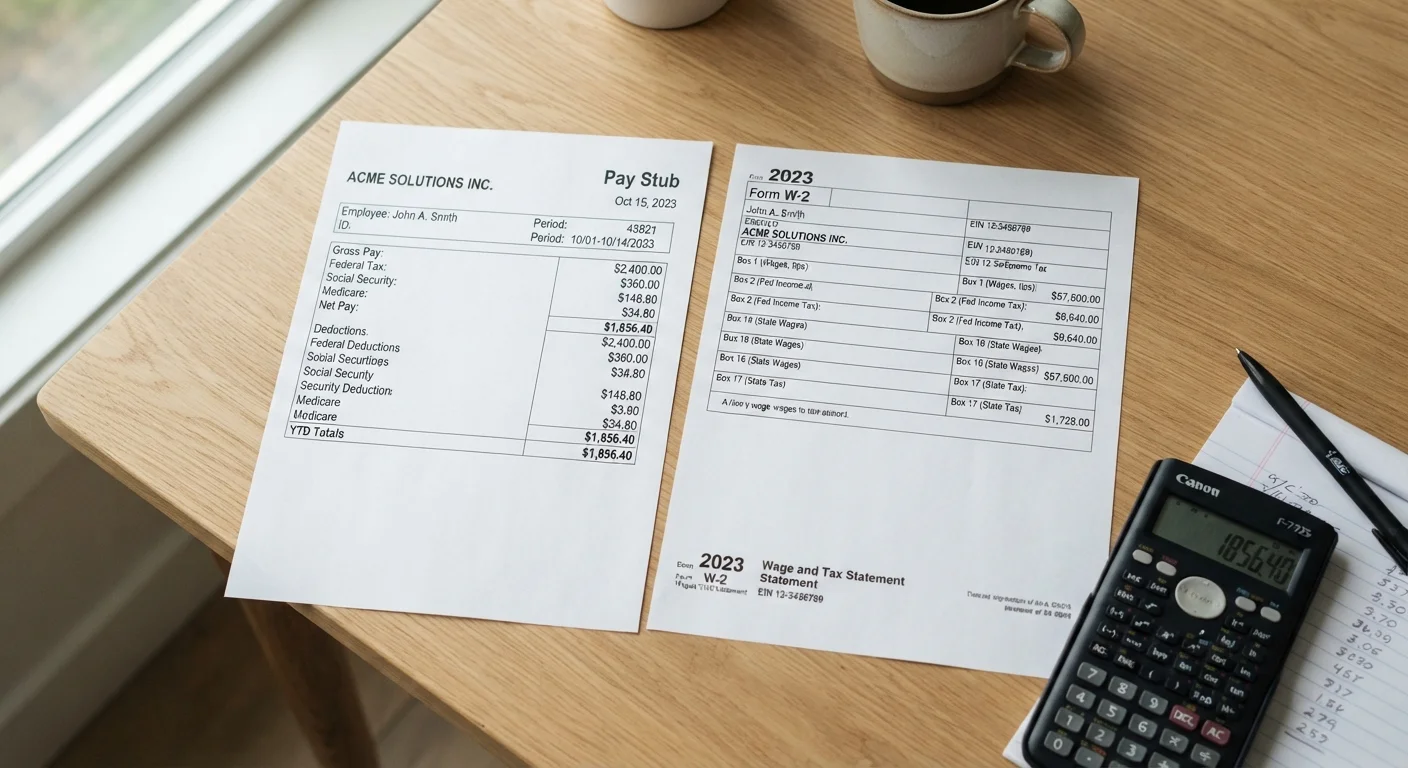
Your W-2 form at year's end reports the total withheld in Box 2 — and comparing that figure to the tax calculated on your return is what produces a refund or a balance due.
~75%
U.S. taxpayers who receive a refund
According to IRS filing statistics, roughly three in four individual tax filers receive a refund in a typical filing year, indicating widespread over-withholding.
$3,000+
Average federal tax refund amount
IRS data consistently shows the average refund exceeds $3,000, underscoring how significantly withholding can diverge from actual tax liability.
Why the Numbers Don't Line Up
Withholding is an estimate, and estimates are imperfect. Several common situations cause it to drift from reality:
- Multiple jobs or dual-income households. Each employer withholds as if their paycheck is your only income. When combined, your total income may fall into a higher bracket than either employer anticipated.
- Life changes not reflected on your W-4. Getting married, having a child, or buying a home can shift your deductions and credits significantly. If your W-4 hasn't been updated, withholding won't account for the change. Learn how your filing status affects your tax bracket and what you owe.
- Side income. Freelance or gig work typically has no withholding at all. That income is still taxable, meaning your regular withholding may cover far less than your total bill. If you manage irregular income, a structured budget plan helps — see our guide on budgeting with variable income.
- Large deductions or credits. If you're eligible for substantial tax credits or deductions, your actual liability could be far lower than your withholding assumed — producing a bigger-than-expected refund.
Use the IRS Withholding Estimator
The IRS provides a free online Tax Withholding Estimator at irs.gov that walks you through your income, deductions, and expected credits to recommend W-4 settings. It takes about 10–15 minutes and works best when you have your most recent pay stubs on hand. Using it once a year — or after any major life change — is a practical way to keep your withholding accurate.
Refunds and Balances Due: What They Really Mean
A tax refund is not a windfall — it's your own money returned to you. It means you withheld more than necessary throughout the year, essentially giving the IRS an interest-free loan. Conversely, a balance due means your prepayments fell short of your actual liability.
Neither outcome is inherently good or bad, but both are signals worth paying attention to. If you consistently receive large refunds, adjusting your W-4 to claim fewer withholding adjustments could put more money in each paycheck — money you could direct toward savings or paying down debt. If you routinely owe at filing, increasing withholding or making estimated tax payments during the year can smooth out the surprise.
This article is for general informational purposes only and does not constitute tax or financial advice. For guidance specific to your situation, consult a qualified tax professional or licensed financial adviser.