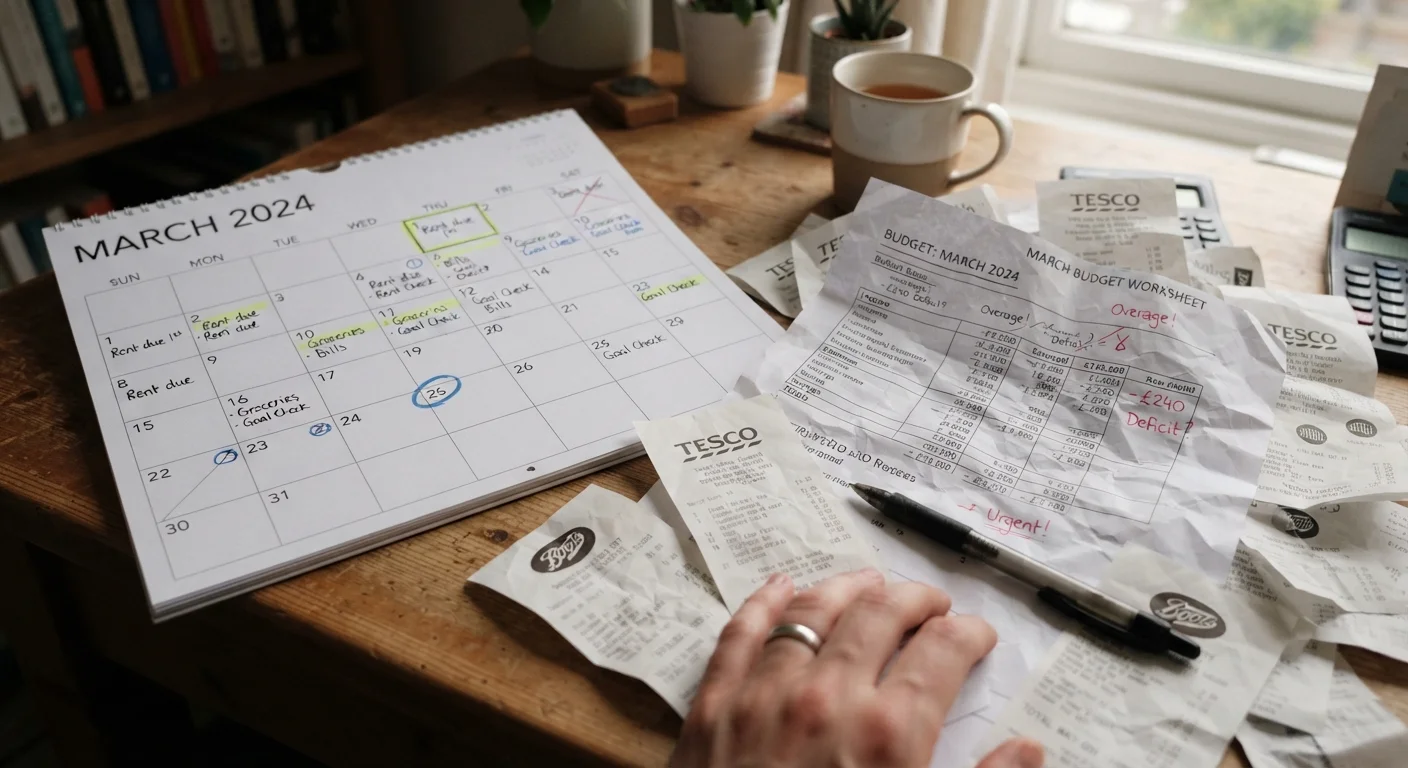
Why the Third Month Is the Breaking Point
The first month of a new budget feels energizing. You track every dollar, cook at home, and feel genuinely in control. The second month, the novelty fades but determination holds. By the third month, an unexpected car expense appears, a social obligation strains the "fun money" category, and suddenly the whole system feels impossible. Most people quietly abandon it.
This pattern isn't a character flaw — it's a structural one. Most budgets are designed for ideal conditions, not real life. They're built on averages, willpower, and optimism, rather than on how spending actually behaves over time. Understanding why budgets unravel at this stage is the first step toward building one that lasts. If you've ever wondered whether certain money habits are feeding this cycle, patterns like lifestyle creep and avoidance behaviors are often quietly working against you in the background.
The Most Common Mistakes That Derail Budgets
These aren't obscure errors. They're the same predictable traps that catch most people — and each one has a practical fix.
Setting categories based on what you wish you spent rather than what you actually spend.
Why it happens: People start budgets in an aspirational mindset, underestimating habitual spending on food, entertainment, or convenience. The numbers feel motivating but have no basis in past behavior.
Ignoring irregular expenses until they arrive and blow up the plan.
Why it happens: Monthly budgets naturally focus on recurring monthly costs. Annual, quarterly, or unpredictable expenses feel distant and are easy to leave out.
Treating any overspend as a budget failure and abandoning the whole system.
Why it happens: Many people approach budgets with an all-or-nothing mindset. One bad week in a category feels like proof that budgeting doesn't work for them personally.
Building a budget that's too complex to maintain consistently.
Why it happens: Detailed, granular budgets feel thorough and in control at the start. But 20-category tracking requires significant time and attention that becomes unsustainable within weeks.
Not scheduling a regular time to review and update the budget.
Why it happens: Many people set up a budget once and assume it runs on autopilot. Without check-ins, small drifts in spending go unnoticed until they've compounded into a significant problem.
This article is for general informational purposes only and does not constitute personalised financial advice. For guidance specific to your situation, consider consulting a licensed financial professional.
Building a Budget That Survives Real Life
~80%
People who abandon budgets within months
Personal finance research consistently finds that most people who create a budget stop following it within the first few months, often citing rigidity and unexpected expenses as the primary reasons.
~$1,000
Average annual irregular expense gap
Estimates from household spending surveys suggest many families undercount irregular and infrequent expenses by several hundred to over a thousand dollars annually, leaving budgets structurally short.
The difference between a budget that collapses in month three and one that holds up for a year usually comes down to flexibility and feedback loops. A rigid budget treats every category as fixed and every deviation as failure. A durable one treats categories as targets, not ceilings, and builds in a structured review to catch drift early.
One of the most underrated tools is a monthly review — sitting down at the end of each month to ask where money actually went and why. This isn't about guilt; it's about data. A structured end-of-month checklist can turn that review from an uncomfortable reckoning into a useful, routine check-in.
Equally important is accounting for spending that doesn't show up every month. Annual subscriptions, irregular medical costs, seasonal gifts, and car maintenance all land unpredictably — but they're not truly unpredictable if you plan for them. Building a buffer for irregular expenses is one of the most effective ways to stop one-off costs from blowing up an otherwise solid plan. And if you're still skeptical about whether budgeting is even worth the effort, common budgeting myths may be shaping that hesitation more than the facts warrant.
Don't Restart From Scratch Every Time
A common response to a failing budget is scrapping it entirely and starting over. This resets the learning process and means you never build on what the previous attempt revealed. Instead, diagnose what specifically broke down — one or two categories, a missing buffer, an unrealistic income assumption — and fix only that. Iteration, not reinvention, is what produces a durable system.