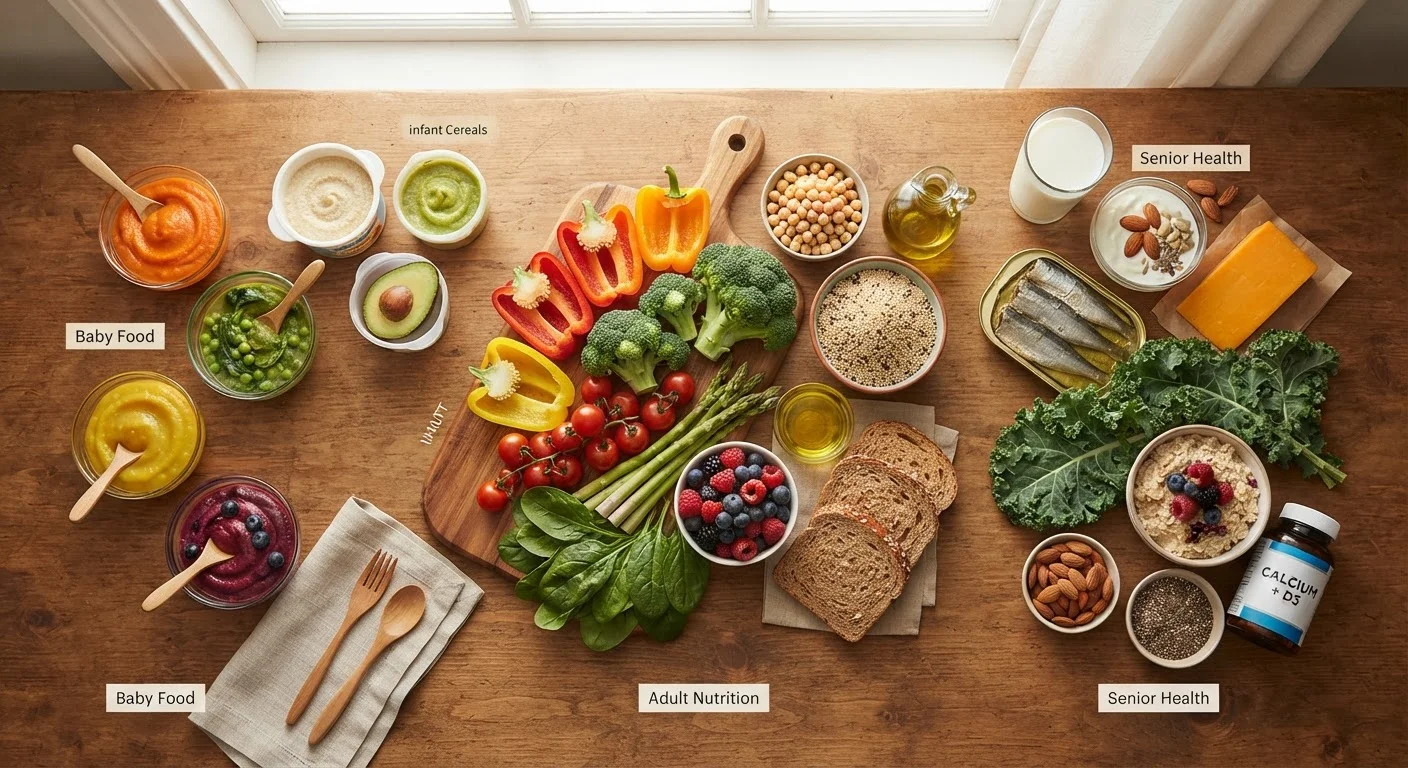
Why Nutritional Needs Change Over Time
The human body is not static, and neither are its nutritional demands. Growth, hormonal fluctuations, metabolic shifts, and changes in physical activity all alter the quantities and types of nutrients the body requires at different life stages. What fuels a seven-year-old adequately may be nutritionally insufficient for a teenager in a growth spurt — or excessive for a sedentary adult in their 70s.
Understanding these shifts helps individuals and families make more informed food choices at each stage. The Dietary Guidelines for Americans, published jointly by the U.S. Department of Agriculture and the Department of Health and Human Services, provide age-specific recommendations updated every five years, offering a useful framework grounded in nutritional science. This article translates those principles into practical insight for everyday life.
Pair this guide with our complementary resource on how exercise needs shift with age for a fuller picture of healthy aging.
90%
Peak bone mass built by late adolescence
According to the National Institutes of Health, the vast majority of bone density is established before age 20, making adolescent calcium intake critically important.
~95%
U.S. adults falling short on dietary fiber
The Dietary Guidelines for Americans identifies dietary fiber as a 'nutrient of public health concern,' with most adults consuming well under the recommended daily amount.
1–2%
Per-decade decline in resting metabolic rate
Research in metabolism and aging suggests basal metabolic rate decreases gradually after early adulthood, influencing caloric needs across the lifespan.
Childhood: Building the Foundation
Between ages 2 and 12, children are laying down bone density, developing organ systems, and building neural pathways at a remarkable rate. Energy needs are proportionally high relative to body size, and micronutrient adequacy during this window has lasting consequences.
Key Nutrients in Childhood
- Calcium and Vitamin D: Essential for bone mineralization. Dairy products, fortified plant milks, and leafy greens are reliable sources. Vitamin D supports calcium absorption and is often low in children with limited sun exposure.
- Iron: Supports cognitive development and oxygen transport. Lean meats, beans, lentils, and fortified cereals are important sources. Iron deficiency remains one of the most common nutrient deficiencies in young children globally.
- Fiber: Supports gut health and healthy weight patterns. Whole grains, fruits, and vegetables should be consistent meal components.
Variety matters as much as quantity. Exposing children to a wide range of whole foods early in life can positively influence food preferences well into adulthood. See our balanced plate self-check for a practical tool applicable to family meals.
Iron Deficiency in Young Children Is Underdiagnosed
Iron deficiency is the most common nutritional deficiency among young children in the United States, yet it often presents with subtle signs such as fatigue, pale skin, or reduced attention — symptoms easily attributed to other causes. Pediatric screening guidelines recommend iron status checks at key developmental checkpoints. If you have concerns about your child's nutrition or energy levels, speak with their pediatrician rather than self-supplementing, as excess iron can also be harmful.
Adolescence: Rapid Growth and Shifting Demands
Adolescence — roughly ages 12 to 18 — is marked by the fastest growth rate outside of infancy. Hormonal changes, sexual maturation, and significant increases in lean body mass drive caloric and micronutrient needs to their lifetime peak in many categories.
What Adolescents Need Most
- Protein: Critical for muscle development and tissue repair. The recommended dietary allowance rises during adolescence. Sources include poultry, fish, eggs, legumes, and dairy.
- Calcium: Approximately 90% of peak bone mass is established by late adolescence. Adequate calcium intake during these years is one of the most impactful ways to reduce fracture risk later in life.
- Iron: Adolescent girls have heightened iron needs due to menstrual losses. Iron deficiency during this stage is associated with fatigue, reduced concentration, and impaired athletic performance.
- Folate (Vitamin B9): Supports rapid cell division; particularly relevant for adolescent girls who may become pregnant in young adulthood.
Encourage teenagers to eat breakfast containing both protein and complex carbohydrates — this combination supports sustained attention and energy through the school day.
Adolescent brains are still developing, and glucose availability from balanced morning meals is linked to improved cognitive performance and reduced mid-morning fatigue in multiple school-based nutrition studies.
For adults over 65, spreading protein intake evenly across three meals — rather than concentrating it at dinner — may be more effective for maintaining muscle mass.
Research on muscle protein synthesis suggests older adults benefit from consistent leucine exposure throughout the day, as the anabolic response to protein can become less efficient with age.
Adolescence also brings increased autonomy over food choices — and a heightened vulnerability to diet culture, restrictive eating patterns, and ultra-processed food consumption. Creating a positive, non-judgmental food environment is as nutritionally important as the foods themselves.
Adulthood: Maintenance, Prevention, and Balance
In adulthood (roughly ages 19 to 64), the nutritional focus shifts from growth to maintenance, disease prevention, and sustained energy. Metabolic rate tends to decline gradually — a change of roughly 1–2% per decade after age 20 — meaning caloric needs often decrease while micronutrient needs remain stable or increase.
Priorities in Adult Nutrition
- Omega-3 fatty acids: Associated with cardiovascular health and inflammation reduction. Fatty fish, flaxseed, chia seeds, and walnuts are established sources.
- Magnesium: Involved in over 300 enzymatic reactions, yet surveys consistently show many U.S. adults fall short of recommendations. Nuts, seeds, whole grains, and dark leafy greens are good sources.
- Fiber: Most American adults consume well below the recommended daily amount. A higher-fiber diet is associated with reduced risk of type 2 diabetes, heart disease, and colorectal cancer.
For adults managing packed schedules, the practical challenge is consistency. Our guide on eating well on a tight schedule offers realistic, evidence-informed strategies for maintaining diet quality during demanding weeks.
Calorie Restriction Without Nutrient Awareness Is Risky
As adults age and caloric needs decline, cutting calories without attention to nutrient density can result in inadequate intake of vitamins, minerals, and protein. Diets that are low in calories but high in ultra-processed foods are especially problematic. Focus on the quality of what you eat, not only the quantity, and seek professional input if you are managing weight alongside a health condition.
Later Life: Protecting Muscle, Bone, and Cognitive Health
Adults over 65 face what nutrition researchers call the "nutrient density paradox": caloric needs often decline due to reduced physical activity and metabolic changes, yet the body's requirements for many key nutrients remain the same or increase. This means every food choice carries greater nutritional weight.
Critical Nutrients for Older Adults
- Protein: Sarcopenia — the age-related loss of muscle mass — is a significant public health concern. Research suggests older adults may benefit from protein intakes at the higher end of general recommendations, spread across meals rather than concentrated in one sitting.
- Vitamin B12: Absorption diminishes with age as gastric acid production declines. Fortified foods or supplementation is often recommended; individuals should discuss this with their healthcare provider.
- Calcium and Vitamin D: Bone loss accelerates in later life, particularly post-menopause. Both nutrients remain essential, though supplement use should be guided by a clinician as evidence on optimal dosing continues to evolve.
- Hydration: The thirst sensation diminishes with age, increasing dehydration risk. Consistent fluid intake — even in the absence of thirst — is important. Explore the relationship between fluids and nutrition in more depth via hydration and diet.
Cognitive health in later life is also increasingly linked to dietary patterns. The MIND diet — a hybrid of the Mediterranean and DASH dietary approaches — has been associated in observational research with slower cognitive decline, though it should not be viewed as a guaranteed intervention.
Dietary Patterns Matter More Than Individual Foods
Both the MIND diet and Mediterranean dietary patterns are defined by overall eating habits — abundant vegetables, fruits, legumes, whole grains, fish, and olive oil — rather than any single superfood. Emerging research on diet and cognitive aging is promising but largely observational; these findings show association, not guaranteed causation. Adopting these patterns is a reasonable, low-risk approach to later-life nutrition, but should not replace regular medical follow-up.
Practical Strategies at Every Stage
Understanding nutritional theory is valuable; applying it at the dinner table is what matters. The following principles hold across most life stages and provide a practical starting point.
- Prioritize whole foods: Minimally processed foods — vegetables, fruits, whole grains, legumes, lean proteins, and dairy or fortified alternatives — consistently outperform highly processed alternatives across most nutritional metrics.
- Adjust portions, not patterns: When caloric needs decrease (as in mid-to-later adulthood), the solution is generally smaller portions of the same nutrient-dense foods rather than a different diet.
- Revisit dietary habits at life transitions: Pregnancy, post-menopause, retirement, or the onset of a chronic condition are natural checkpoints to reassess dietary patterns with professional guidance.
- Don't overlook mental and emotional wellbeing: Nutrition does not exist in isolation. Mental wellbeing across a lifetime is shaped by and intertwined with physical health, including diet.
“Food is not just fuel. It is information that talks to your genes and instructs them on how to express themselves — and that conversation changes throughout your life.”
— Mark Hyman, Physician and author specializing in functional medicine and nutrition
No single dietary plan fits every person at every age. Consulting a registered dietitian — particularly during transitional life phases — is one of the most evidence-based investments anyone can make in their long-term health.
This article is for general informational and educational purposes only and is not a substitute for professional medical or nutritional advice. Always consult a qualified healthcare provider or registered dietitian before making significant changes to your diet, especially if you have an underlying health condition or are managing a specific life stage such as pregnancy, childhood, or older adulthood.