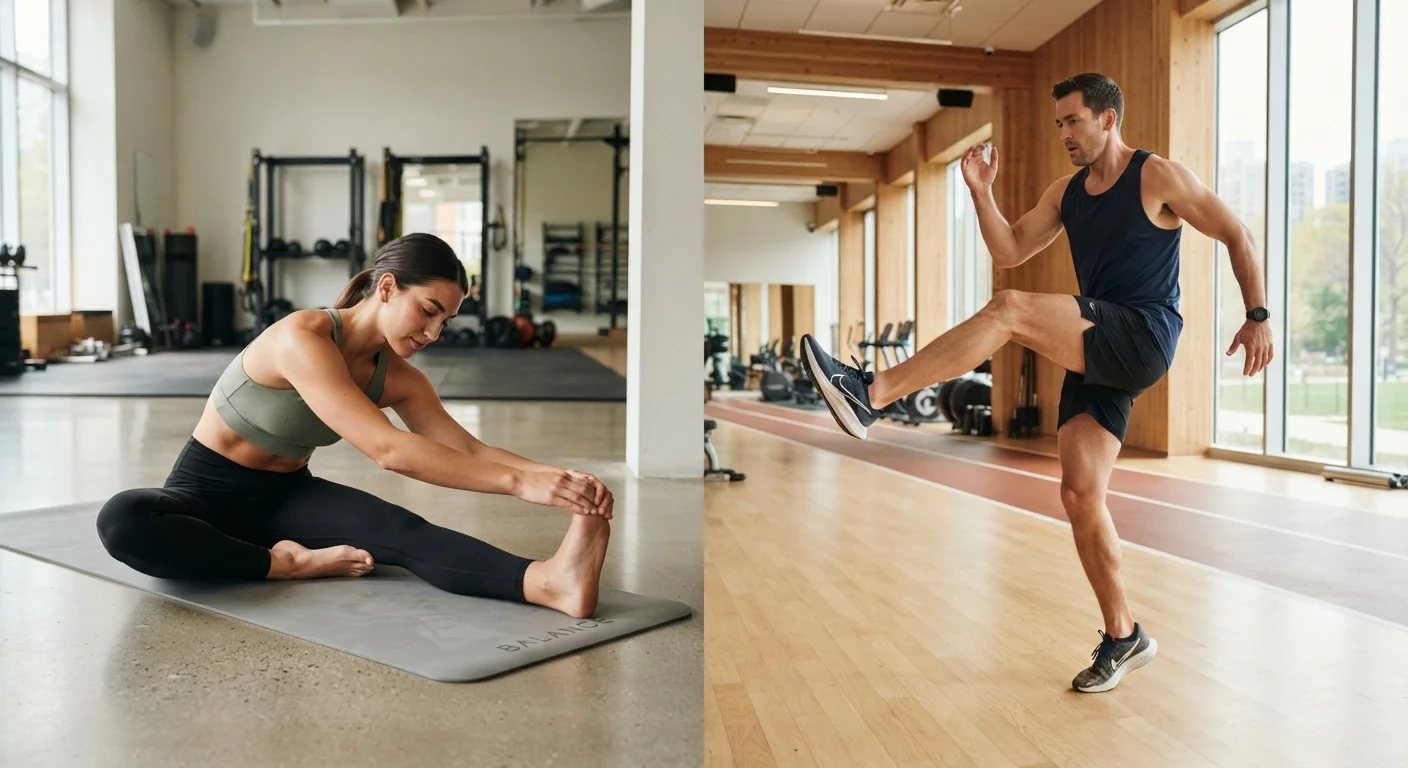
The Core Difference Between Static and Dynamic Stretching
Stretching is one of the most universally practiced elements of fitness, yet it is also one of the most misapplied. The two dominant approaches — static and dynamic — are not interchangeable. Each works through a different mechanism and delivers distinct physiological effects.
Static stretching involves moving a muscle to the edge of its comfortable range of motion and holding that position, typically for 15 to 60 seconds. Common examples include a seated hamstring stretch or a standing quad pull. The goal is to lengthen the muscle fiber and associated connective tissue over time.
Dynamic stretching, by contrast, uses controlled, rhythmic movements that take a joint through its full range without holding any single position. Leg swings, arm circles, walking lunges, and hip rotations are classic examples. The movement itself is the stimulus — it increases blood flow, raises muscle temperature, and activates the neuromuscular pathways that coordinate movement.
Understanding which to use and when is more useful than debating which is superior. As explored in common misconceptions about stretching, the evidence does not support a one-size-fits-all approach to either form.
| Criterion | Static Stretching | Dynamic Stretching |
|---|---|---|
| Movement type | Stationary hold | Controlled, rhythmic motion |
| Ideal timing | Post-workout cooldown | Pre-workout warm-up |
| Primary benefit | Increases long-term flexibility | Primes muscles and nervous system |
| Effect on performance | May reduce power if done pre-workout | Improves readiness and coordination |
| Example movements | Hamstring hold, standing quad stretch | Leg swings, hip circles, arm rotations |
| Suitable for beginners | Yes — low complexity | Yes — adaptable to any fitness level |
Timing Is Everything: When to Use Each Type
Research consistently shows that performing static stretching immediately before explosive or strength-based exercise can temporarily reduce muscle force output. A review published in the Scandinavian Journal of Medicine & Science in Sports found measurable short-term decreases in strength and power when prolonged static stretches preceded intense activity. This does not mean static stretching is harmful — it means it is poorly timed in that context.
Dynamic stretching before exercise, on the other hand, has been shown to improve performance readiness. By actively moving through ranges of motion, the body elevates core temperature, lubricates joints, and signals the nervous system to prepare for coordinated effort.
~5–8%
Strength reduction from pre-exercise static stretching
Research published in the Scandinavian Journal of Medicine & Science in Sports found acute decreases in strength output when prolonged static stretching preceded high-intensity exercise.
5–10 min
Recommended dynamic warm-up duration
Exercise science guidelines generally suggest five to ten minutes of dynamic movement before moderate-to-vigorous physical activity to adequately prepare the musculoskeletal system.
20–30 sec
Minimum effective static hold duration
The American College of Sports Medicine recommends holding each static stretch for at least 20 to 30 seconds to achieve meaningful improvements in flexibility over time.
After exercise, the calculus reverses. Muscles are already warm and more extensible, making post-workout cooldowns the ideal window for static stretching. This is when the technique delivers its real value: gradually increasing flexibility and supporting the recovery process. For more on how recovery fits into a complete program, see the role of rest days in an active lifestyle.
A sustainable routine that pairs dynamic warm-ups with static cooldowns aligns with the broader principle that consistency beats intensity over the long run. Small, well-placed habits compound into real results.
A Note on Individual Variation
Not everyone responds to stretching the same way. Factors like age, joint structure, training history, and existing injuries all influence how much flexibility training is needed and which type is most appropriate. If you are managing a specific musculoskeletal condition, work with a physical therapist or qualified trainer to tailor your approach rather than applying general guidelines directly.
Building Both Into a Realistic Routine
The practical challenge is integration — most people either skip stretching entirely or default to a single approach regardless of context. A simple framework makes it easier to build both types into a sustainable movement habit.
Before any workout, dedicate five to ten minutes to dynamic movements that mirror what you are about to do. Before a lower-body session, include leg swings, bodyweight squats, and hip circles. Before an upper-body workout, add shoulder rotations and thoracic twists. The movements do not need to be elaborate — they just need to be active.
After exercise, transition to static holds for major muscle groups worked during the session. Hold each stretch for at least 20 to 30 seconds and breathe steadily. Discomfort is normal; sharp or radiating pain is not — stop if you experience the latter.
For those combining resistance and cardiovascular training, both stretching types complement what a balanced strength and cardio routine already recommends: structured preparation and intentional recovery.
This article is for general informational and educational purposes only and is not a substitute for personalized medical or fitness advice. Consult a qualified healthcare professional or certified fitness specialist before beginning any new exercise program, especially if you have existing injuries or health conditions.