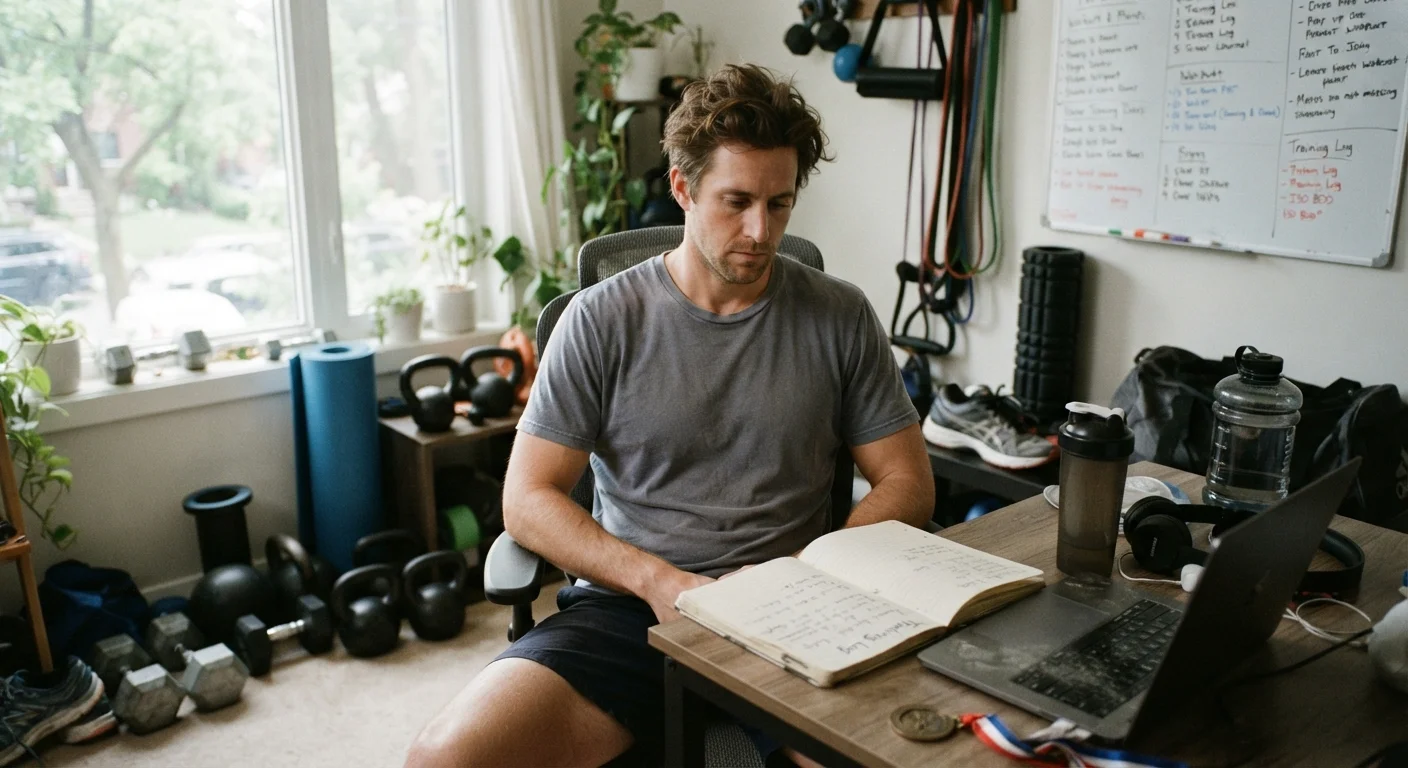
Why Active People Can Still Sit Too Much
Meeting the recommended 150 minutes of moderate aerobic activity per week is a genuine achievement — but it represents a small fraction of total waking hours. The remaining time, how it is spent matters more than most exercisers realise.
Public health researchers use the phrase "active couch potato" to describe individuals who exercise regularly yet spend the bulk of their day sedentary. Studies suggest that prolonged uninterrupted sitting is associated with metabolic changes — including effects on blood glucose regulation and cardiovascular markers — that a morning workout does not fully reverse.
Exercise Doesn't Cancel Out Prolonged Sitting
Research published in journals including the Annals of Internal Medicine has found that prolonged uninterrupted sitting is independently associated with poorer metabolic and cardiovascular outcomes — even among people who meet weekly exercise guidelines. This is not a reason for alarm, but it does mean that a daily workout is necessary yet not sufficient on its own. Integrating movement throughout the full day is the more complete picture.
Understanding this isn't about guilt or adding more structured exercise. It's about recognising that consistency across the whole day — not intensity in isolated sessions — is what the evidence most reliably supports.
Common Sedentary Habits That Quietly Offset Your Effort
Treating one daily workout as a licence to sit without interruption for the rest of the day.
Why it happens: It's easy to feel that exercise 'earns' a sedentary recovery period, and structured schedules often leave little natural reason to get up once desk work begins.
Measuring activity only in workout minutes rather than total daily movement.
Why it happens: Fitness culture focuses heavily on structured sessions, which makes non-exercise movement feel invisible or irrelevant to health outcomes.
Defaulting to passive screen time during all downtime, including evenings and weekends.
Why it happens: After a demanding day, screens offer low-effort reward, making extended passive sitting the path of least resistance during hours that could include light activity.
Sitting in a fixed, unsupported position during prolonged work or study sessions.
Why it happens: When focused on a task, people rarely notice posture or physical tension until discomfort is significant enough to distract.
Skipping incidental movement by optimising for convenience — elevators, drive-throughs, close parking.
Why it happens: Time pressure and convenience culture have made labour-saving choices the automatic default, reducing ambient physical activity without conscious decision.
Sitting After Exercise Is Still Sitting
Many people finish a morning run or gym session and then sit with minimal movement for the remaining eight to ten hours of the day. Research suggests that this pattern — sometimes called the 'active couch potato' effect — can blunt some of the metabolic gains achieved during exercise. The goal isn't more intense workouts; it's redistributing movement across the whole day.
If you want to build a more complete movement practice without overhauling your schedule, a flexible weekly framework can help bridge structured workouts and daily incidental movement. Similarly, understanding what drives long-term consistency — explored in research on exercise motivation patterns — makes habit change more durable.
9–10 hrs
Average daily sitting time for US adults
Research from the American Journal of Epidemiology and related national surveys consistently places average US adult sitting time between nine and ten hours per day.
34%
Higher mortality risk linked to prolonged sitting
A meta-analysis in Annals of Internal Medicine found that sitting for extended, uninterrupted periods was associated with significantly elevated all-cause mortality risk, independent of exercise habits.
This article is for general informational purposes only and is not a substitute for personalised medical or health advice. Consult a qualified healthcare professional before making significant changes to your physical activity or lifestyle, particularly if you have an existing health condition.